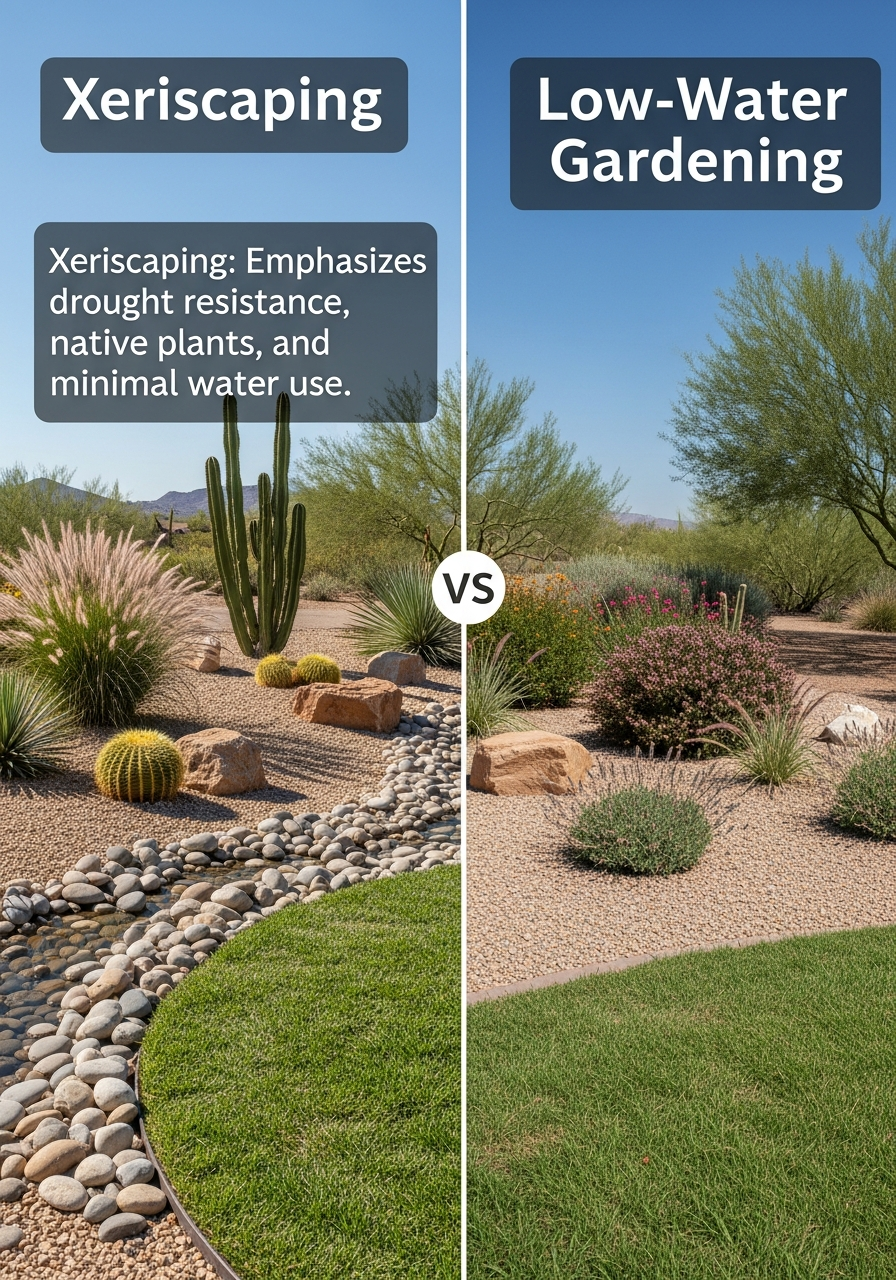
If you’re trying to reduce water use in your landscape, you’ve probably heard the terms xeriscaping and low-water gardening used interchangeably. While they share similar goals, they’re not exactly the same.
Understanding the difference can help you choose the right approach for your yard, climate, and personal style.
What Is Xeriscaping?

Xeriscaping is a landscaping philosophy focused on maximum water conservation. The term comes from the Greek word xeros, meaning “dry.”
Key Characteristics of Xeriscaping
- Designed to minimize irrigation
- Uses native and highly drought-tolerant plants
- Often includes gravel, stone, and mulch
- Prioritizes efficient irrigation (or none at all)
- Focuses on long-term sustainability
Common Xeriscape Plants
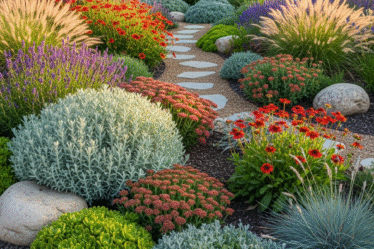
- Succulents and cacti
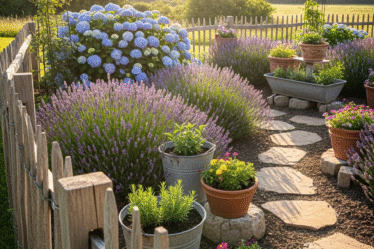
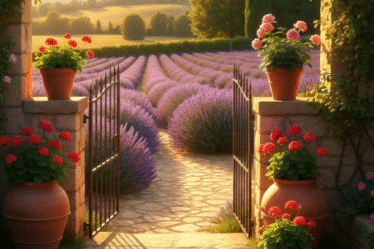
- Lavender
- Yarrow
- Native grasses
- Sage and rosemary
Xeriscaping is especially popular in arid and desert climates, where water conservation is essential.
What Is Low-Water Gardening?

Low-water gardening is a broader, more flexible approach. It focuses on reducing water use, but without strict limitations on style or plant choices.
Key Characteristics of Low-Water Gardening
- Reduces water use but allows some irrigation
- Combines drought-tolerant plants with select moderate-water plants
- Emphasizes efficient watering, not elimination
- Can look lush and traditional
- Adapts to many climates and garden styles
Low-water gardens often include flowering perennials, shrubs, and even small lawn areas—just used more strategically.
Side-by-Side Comparison
| Feature | Xeriscaping | Low-Water Gardening |
|---|---|---|
| Water Use | Extremely low | Reduced but flexible |
| Irrigation | Minimal or none | Limited, efficient |
| Plant Choices | Mostly native & drought-tolerant | Wider plant selection |
| Aesthetic | Natural, arid, minimalist | Lush, traditional, modern |
| Lawn Areas | Rare or none | Small or alternative lawns |
| Best For | Dry climates, strict water limits | Most climates, small yards |
Which One Is Right for You?
Choose Xeriscaping If:
- You live in a dry or desert climate
- Water restrictions are strict
- You want minimal maintenance
- You prefer a natural or modern look
Choose Low-Water Gardening If:
- You want to reduce water use without drastic changes
- You enjoy flowers and greenery
- You live in a mixed or moderate climate
- You want flexibility in plant choices
Can You Combine Both Approaches?

Absolutely. Many homeowners use a hybrid approach, combining xeriscape principles (efficient irrigation, mulch, drought-tolerant plants) with the softer, greener look of low-water gardening.
For example:
- Xeriscaped side yards
- Low-water planting beds near living areas
- Drought-tolerant lawn alternatives
This balanced approach often offers the best of both worlds.
Common Myths About Xeriscaping and Low-Water Gardens
- Myth: Xeriscaping means rocks only
Truth: Plants are essential to successful xeriscapes. - Myth: Low-water gardens always look dry
Truth: Many look lush with proper design. - Myth: You can plant anything and just water less
Truth: Plant choice and placement matter.
Final Thoughts
Both xeriscaping and low-water gardening aim to conserve water—but they do so in different ways. Xeriscaping is a strict, conservation-focused approach, while low-water gardening offers flexibility and aesthetic variety.
The best choice depends on your climate, water availability, and personal preferences. In many cases, combining elements of both creates the most practical and attractive landscape.