Companion planting is one of the easiest ways to create a healthier and more productive backyard garden—especially when you keep the layout simple. By growing plants that naturally support each other, you can reduce pests, improve growth, and enjoy better harvests without complicated planning. This guide shares simple companion planting garden bed layout ideas for backyard gardens that are easy to follow and proven to work.
What Is Companion Planting?
Companion planting means placing certain plants near each other because they provide natural benefits. These benefits can include pest control, improved soil health, better growth, or increased yields.
Benefits of Companion Planting
- Fewer pests without chemicals
- Healthier plants
- Better use of garden space
- Improved soil quality
- More productive harvests
When paired with a basic garden bed layout, companion planting becomes beginner-friendly and effective.
Why Keep Garden Bed Layouts Simple?
Simple layouts are easier to maintain and less overwhelming—especially for backyard gardeners.
Advantages of Simple Layouts
- Easier watering and harvesting
- Less overcrowding
- Better airflow and sunlight exposure
- Fewer planting mistakes
- Ideal for beginners and small gardens
Simple doesn’t mean less productive—it often means more successful.
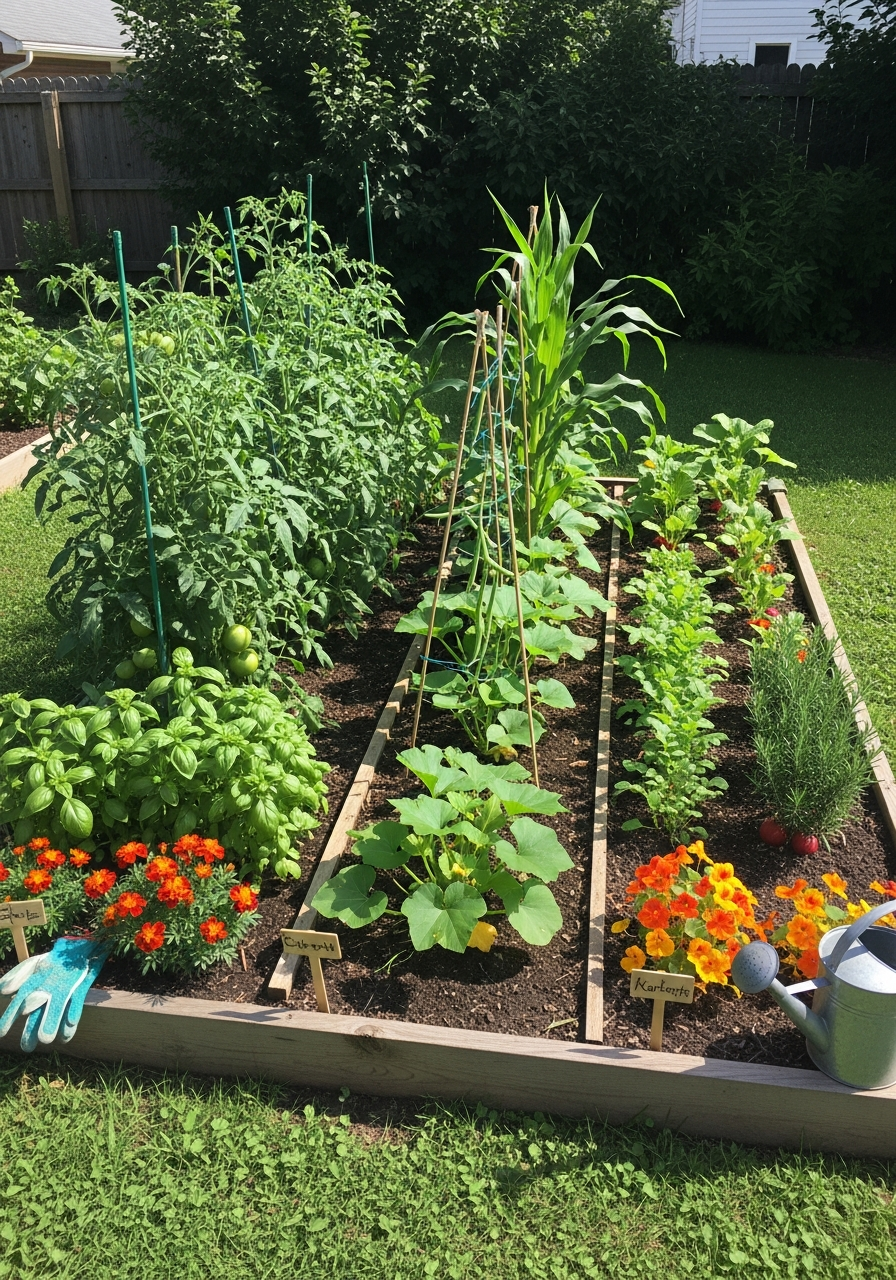
1. Tomato and Basil Garden Bed Layout
This classic combination is one of the easiest companion planting layouts.
Why it works: Basil helps repel pests and may improve tomato flavor.
Simple layout idea:
- Plant tomatoes in the back or center of the bed
- Place basil plants around the base of each tomato
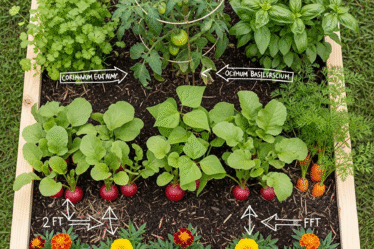
2. Lettuce and Radish Easy Layout
Radishes grow quickly and help protect lettuce.
Why it works: Radishes deter pests and are harvested early.
Simple layout idea:
- Plant lettuce in blocks
- Scatter radish seeds between lettuce plants
3. Carrot and Onion Garden Bed Layout
This pairing helps reduce pest problems naturally.
Why it works: Onions repel carrot flies.
Simple layout idea:
- Alternate rows or sections of carrots and onions
4. Pepper and Herb Companion Layout
Herbs are easy to grow and great for backyard gardens.
Why it works: Herbs repel pests and attract beneficial insects.
Simple layout idea:
- Plant peppers in the center
- Surround with basil, oregano, or chives
5. Cucumber and Nasturtium Layout
This layout is simple, colorful, and effective.
Why it works: Nasturtiums repel aphids and beetles.
Simple layout idea:
- Grow cucumbers on a trellis
- Plant nasturtiums along the edges
6. Beans and Corn Beginner Layout
This easy pairing improves soil naturally.
Why it works: Beans add nitrogen to the soil for corn.
Simple layout idea:
- Plant corn in small blocks
- Add beans once corn is established
Basic Garden Bed Layout Tips for Backyards
Keep these simple rules in mind:
- Place taller plants on the north side of the bed
- Avoid overcrowding
- Group plants with similar water needs
- Use herbs or flowers as borders
- Label plants to stay organized
These tips help companion planting work smoothly.
Plants to Avoid Planting Together
Some plants don’t grow well as neighbors.
Avoid These Pairings
- Tomatoes and potatoes
- Onions and beans
- Cucumbers and sage
- Fennel with most vegetables
Keeping incompatible plants apart prevents problems.
Common Mistakes to Avoid
- Planting too closely
- Ignoring mature plant size
- Forgetting crop rotation
- Overcomplicating the layout
Simple planning prevents these issues.
Final Thoughts: Simple Layouts, Better Backyard Gardens
Simple companion planting garden bed layout ideas for backyard gardens prove that you don’t need complex designs to grow healthy, productive plants. By starting with easy plant pairings and keeping your layout straightforward, you can enjoy fewer pests, stronger plants, and better harvests—all while making gardening more enjoyable.
Happy backyard gardening!