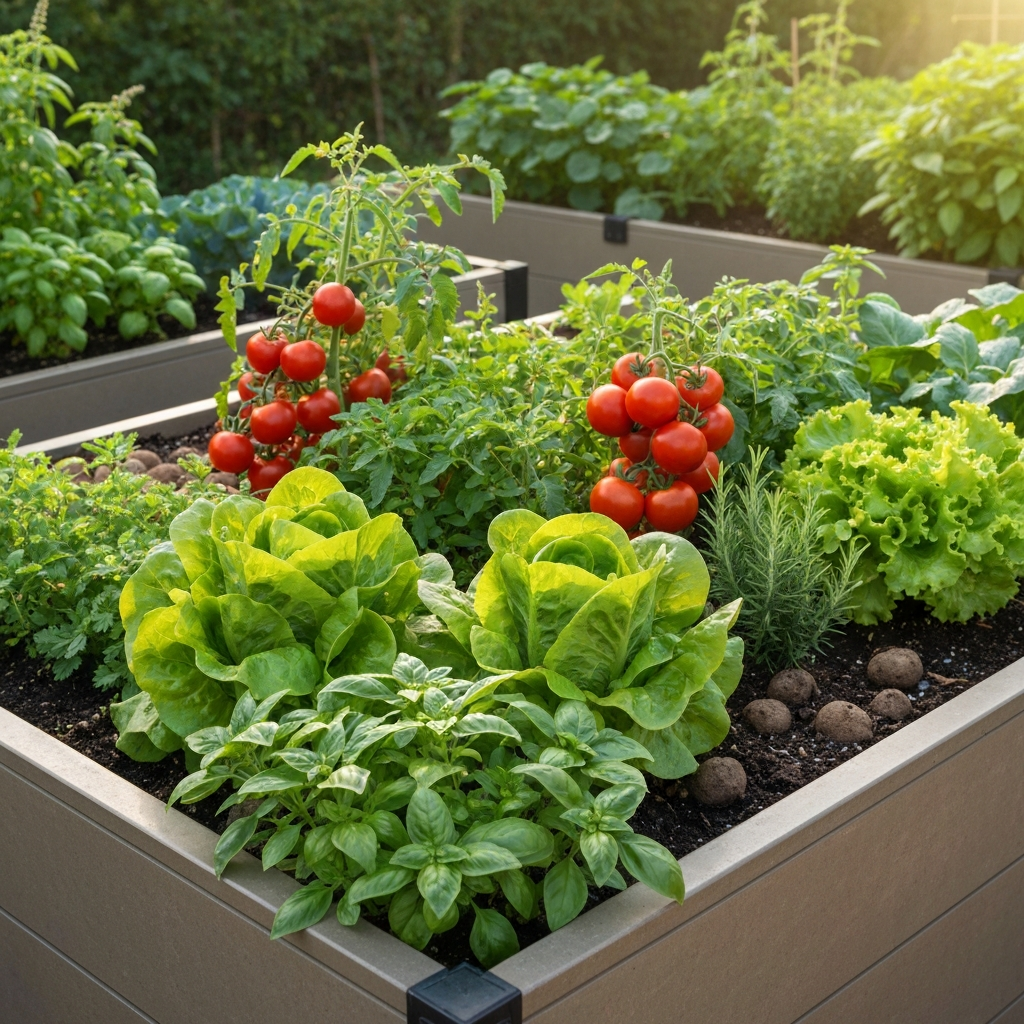
A raised bed vegetable garden is one of the most efficient ways to grow healthy, productive plants—especially when you combine it with companion planting. By planning your raised bed layout carefully and grouping compatible vegetables together, you can improve yields, reduce pests naturally, and make better use of space. This guide will walk you through how to design a raised bed vegetable garden layout using companion planting for long-term success.
Why Raised Beds Are Ideal for Vegetable Gardening
Raised beds offer better control over growing conditions compared to traditional in-ground gardens.
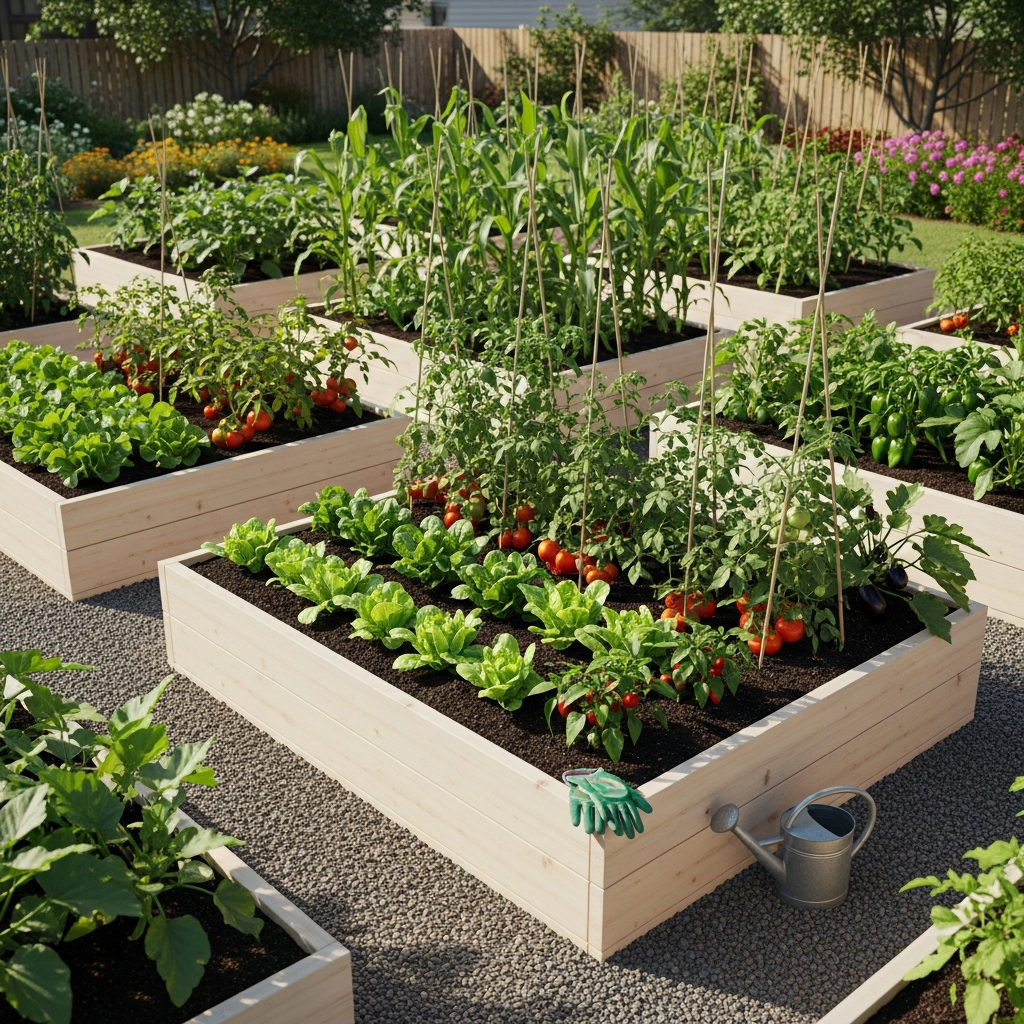
Benefits of Raised Bed Vegetable Gardens
- Improved soil quality and drainage
- Easier weed control
- Better spacing and organization
- Higher yields in smaller spaces
- Easier access for planting and harvesting
When combined with companion planting, raised beds become even more productive and low-maintenance.
What Is Companion Planting?
Companion planting is the practice of growing certain plants together because they benefit one another. Some plants repel pests, others attract beneficial insects, and some improve growth or flavor when planted nearby.
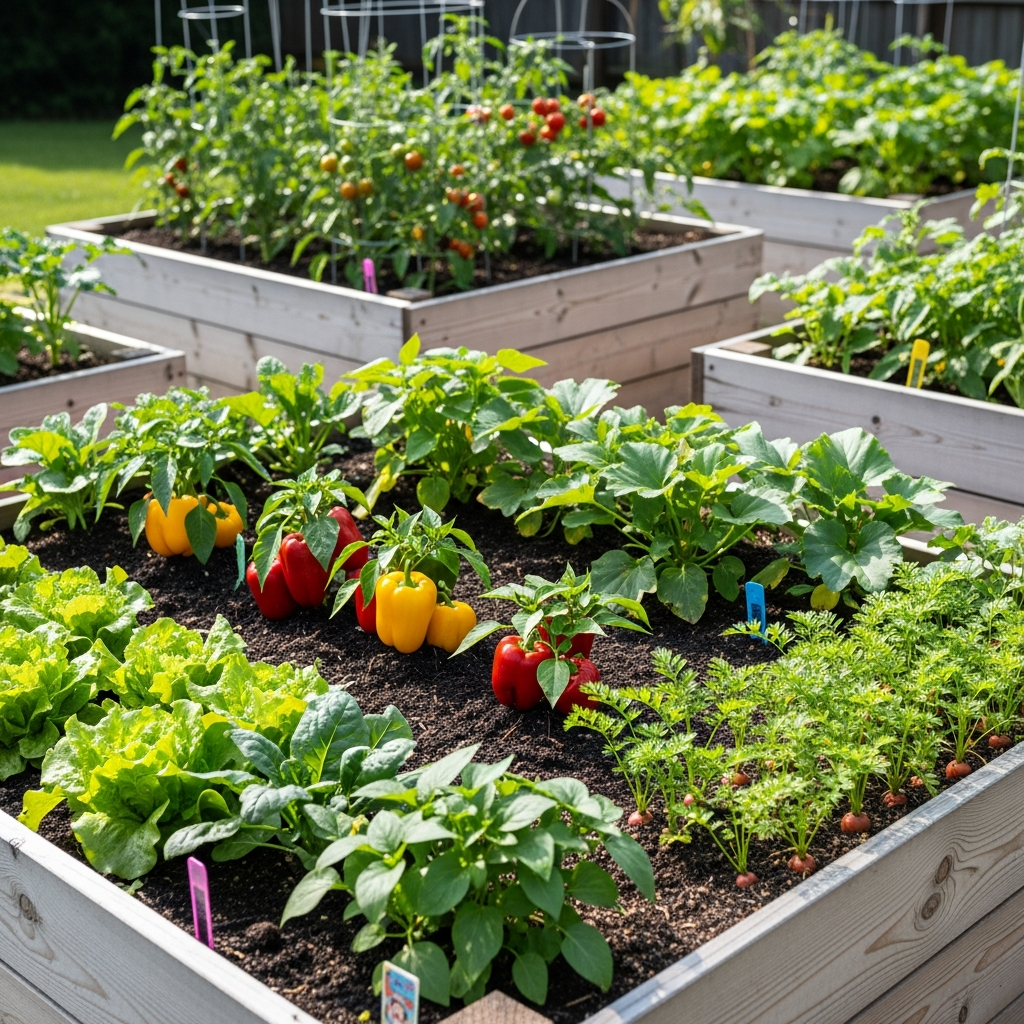
Benefits of Companion Planting
- Natural pest control
- Improved plant health
- Better use of garden space
- Increased harvests
- Reduced need for chemicals
Planning Your Raised Bed Vegetable Garden Layout
Before planting, it’s important to plan your layout based on plant needs and bed size.
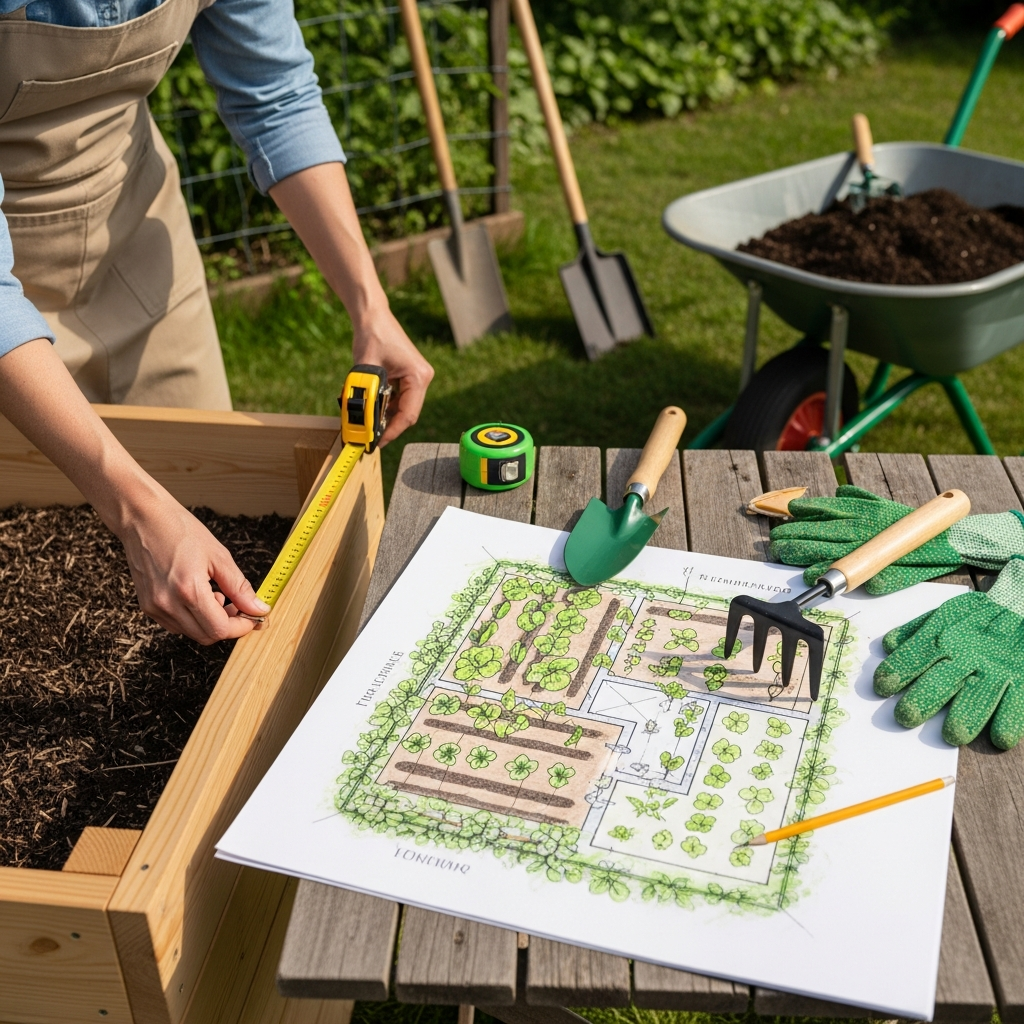
Key Factors to Consider
- Bed size: Common sizes include 4×4 ft and 4×8 ft
- Sunlight: Most vegetables need 6–8 hours of sun daily
- Plant height: Place taller plants on the north side to avoid shading
- Spacing: Allow room for plants at full maturity
- Crop rotation: Avoid planting the same crops in the same spot each year
A well-planned layout sets the foundation for successful companion planting.
Popular Raised Bed Layout Styles
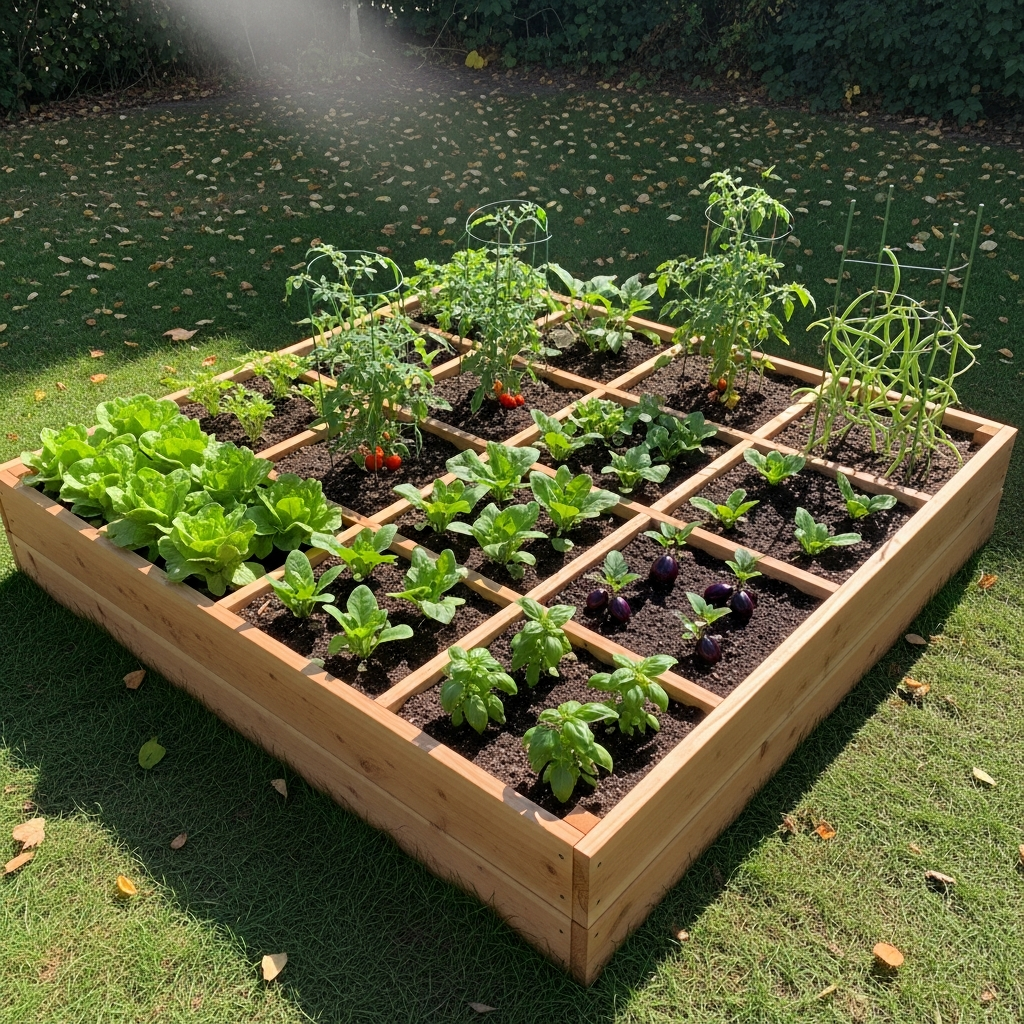
1. Square Foot Gardening
Divide the raised bed into small squares, planting one crop per square. This method is great for beginners and small spaces.
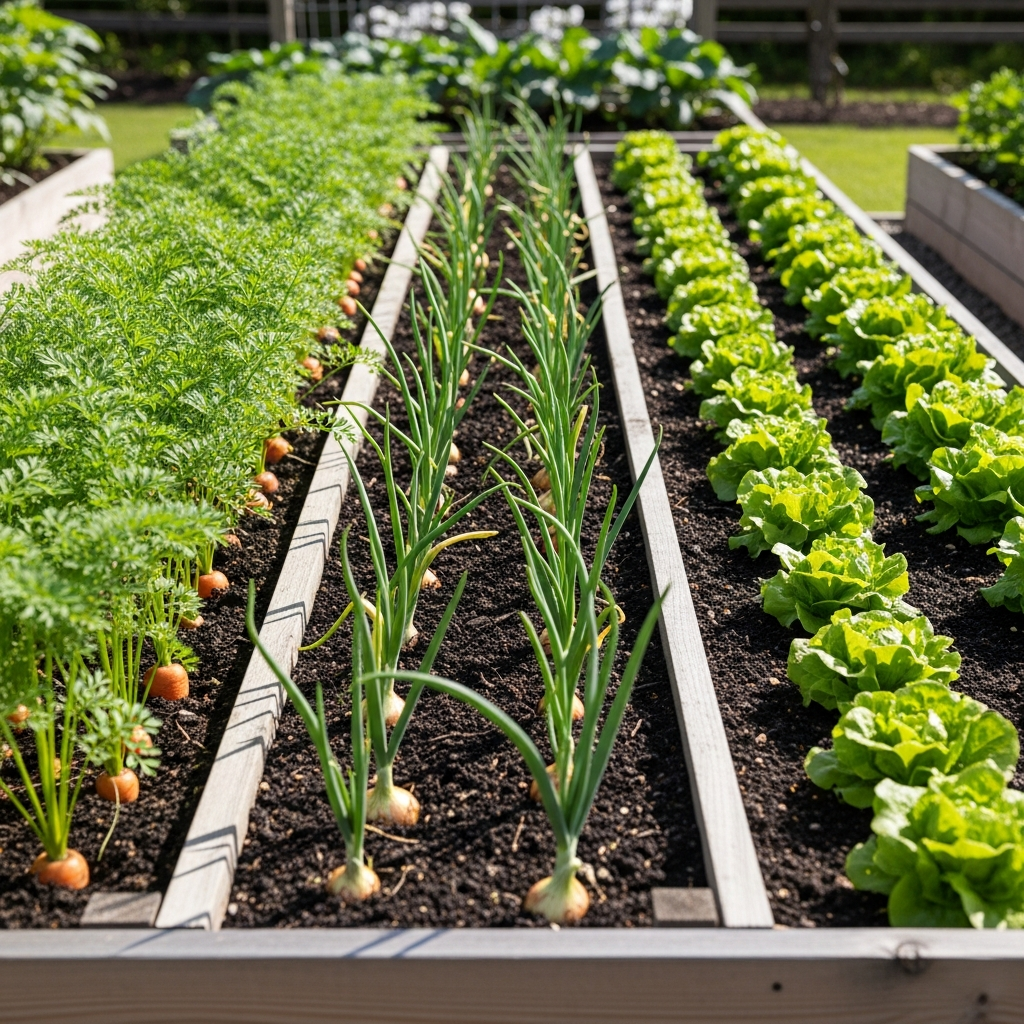
2. Row-Based Layout
Plant vegetables in rows within the raised bed. This works well for crops like carrots, onions, and lettuce.
3. Mixed Companion Layout
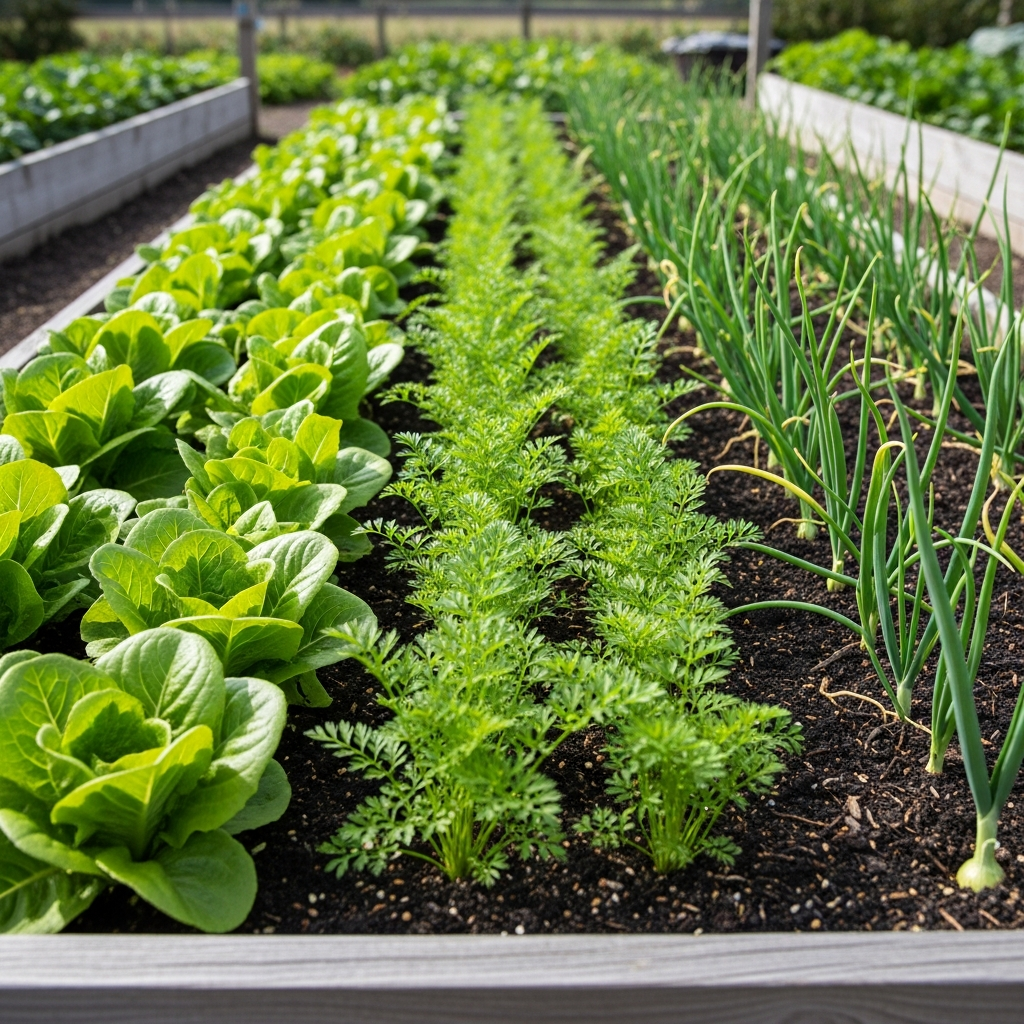
Group compatible plants together instead of strict rows, mimicking natural growing patterns.
Best Companion Planting Combinations for Raised Beds
Vegetables That Grow Well Together
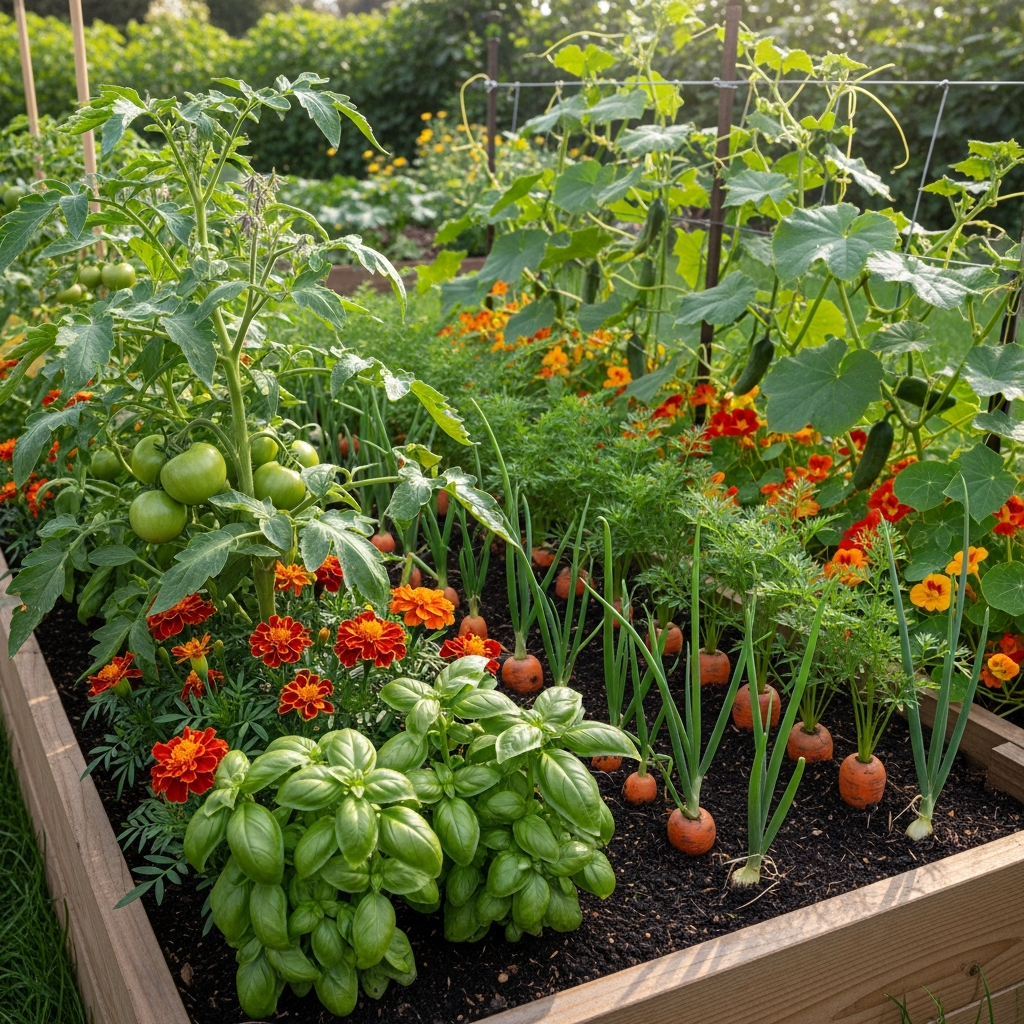
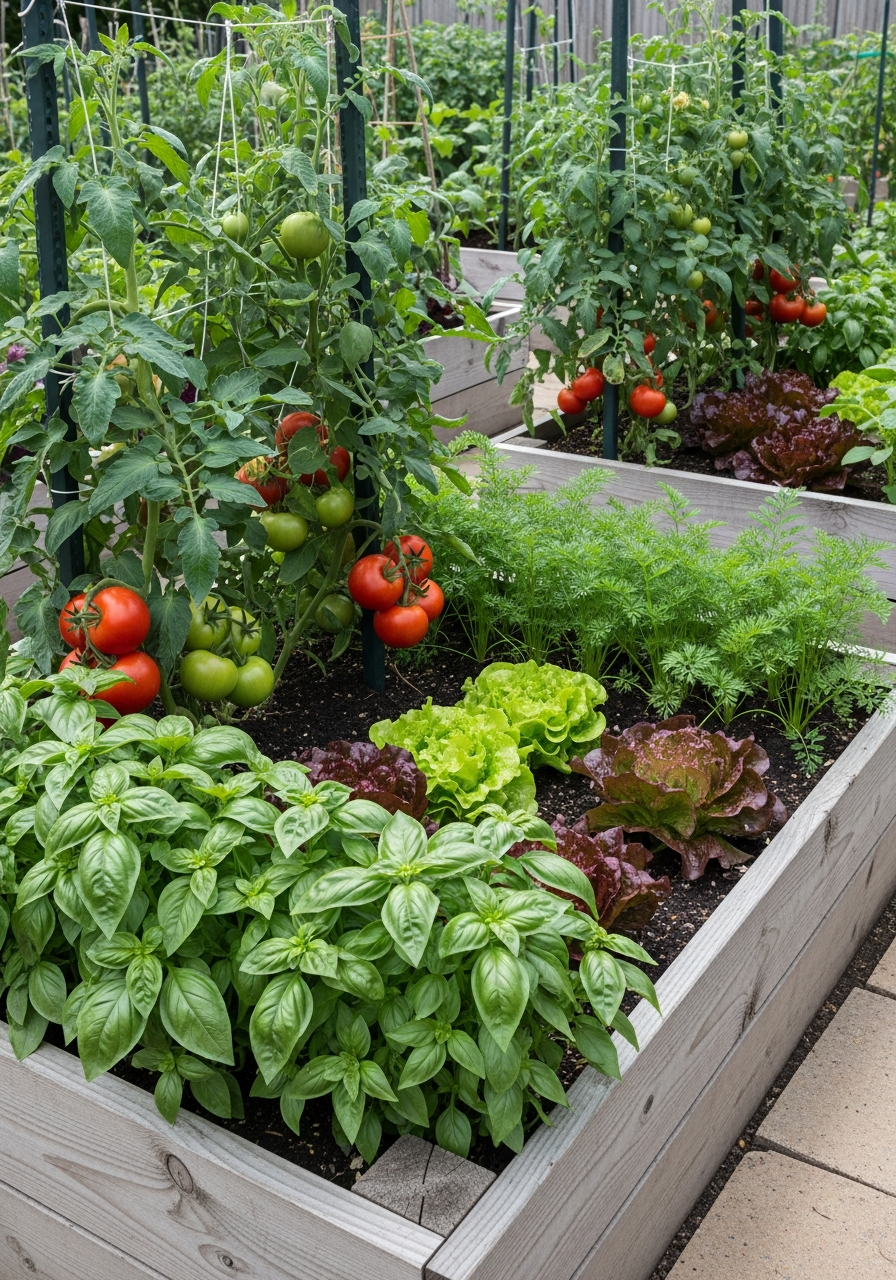
- Tomatoes + Basil + Marigolds – improves flavor and repels pests
- Carrots + Onions – deters carrot flies
- Cucumbers + Nasturtiums – repels aphids and beetles
- Corn + Beans + Squash – the classic “Three Sisters” combination
- Lettuce + Radishes – radishes grow quickly and protect lettuce
Herbs as Companion Plants
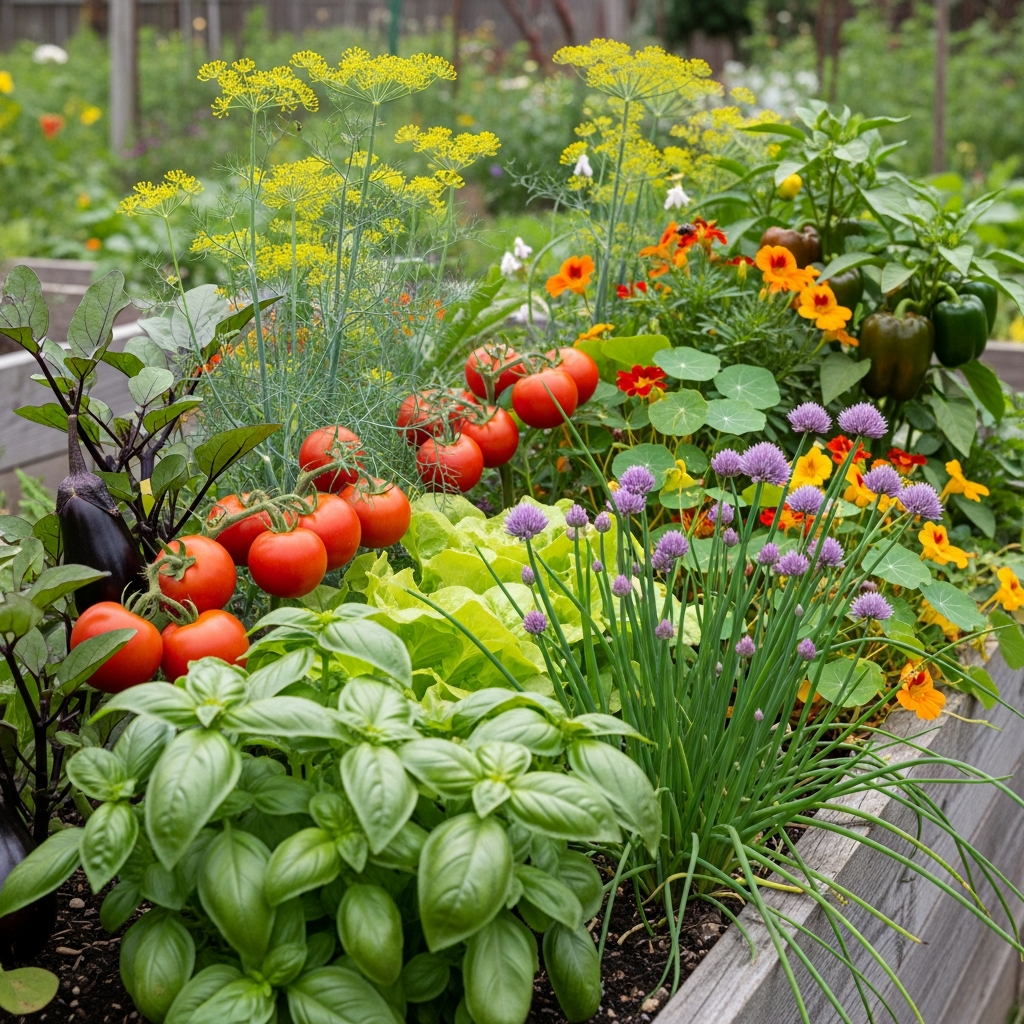
- Basil supports tomato growth
- Dill attracts beneficial insects
- Chives repel aphids
- Rosemary deters cabbage pests
Plants to Avoid Planting Together
Some vegetables compete for nutrients or attract the same pests.
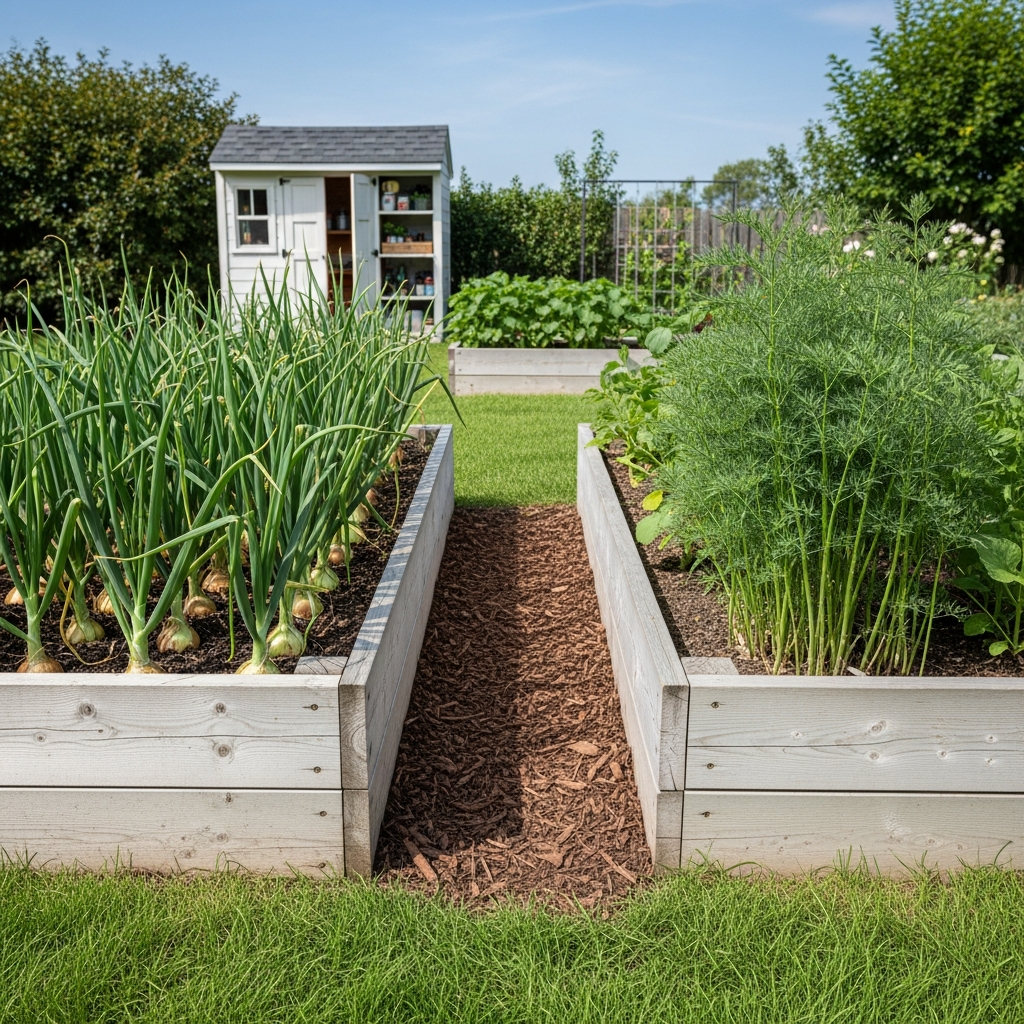
Poor Companion Pairings
- Tomatoes and potatoes
- Onions and beans
- Cucumbers and sage
- Fennel with most vegetables
Keeping incompatible plants apart helps prevent disease and poor growth.
Sample Raised Bed Companion Planting Layout
Example: 4×8 Raised Bed
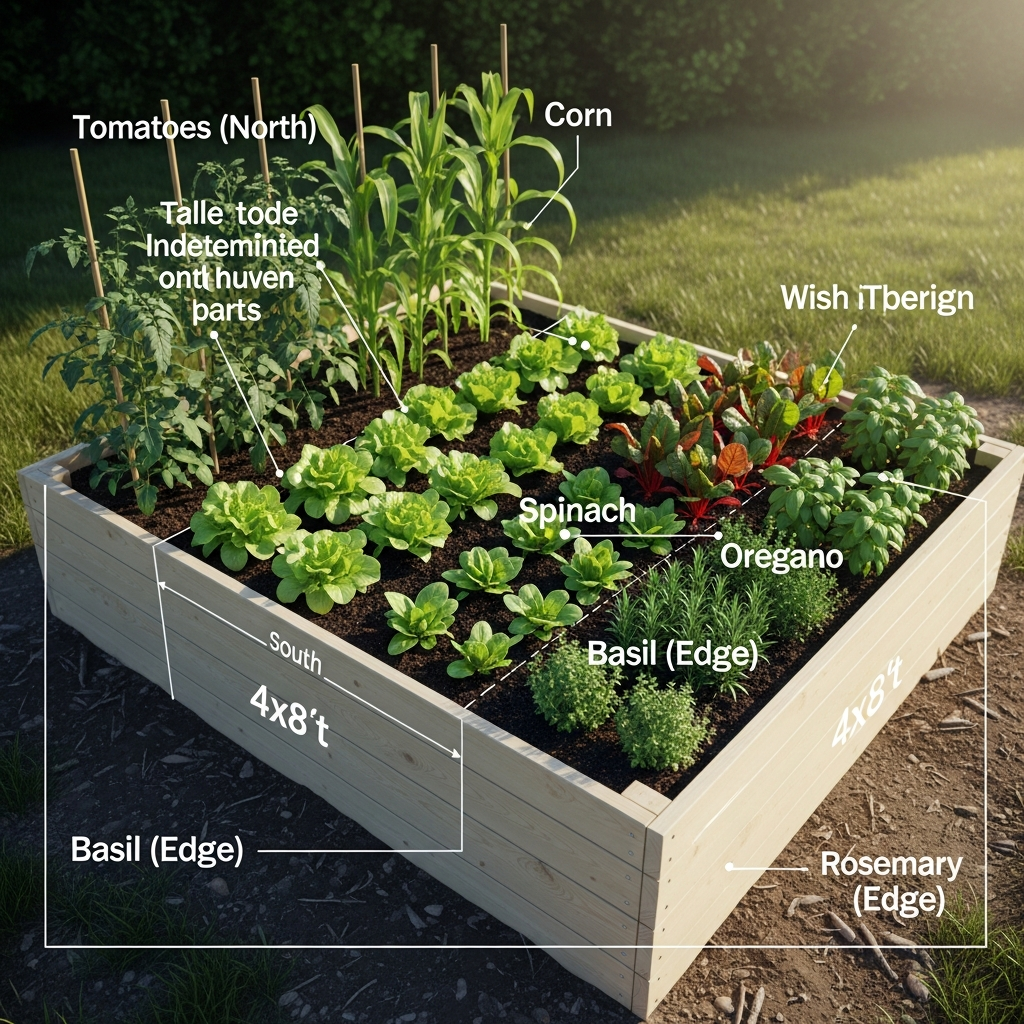
- North side: Tomatoes with basil and marigolds
- Middle section: Peppers and onions
- South side: Lettuce, spinach, and radishes
- Edges: Herbs such as chives and parsley
This layout ensures good sunlight exposure, airflow, and plant compatibility.
Soil, Watering, and Maintenance Tips
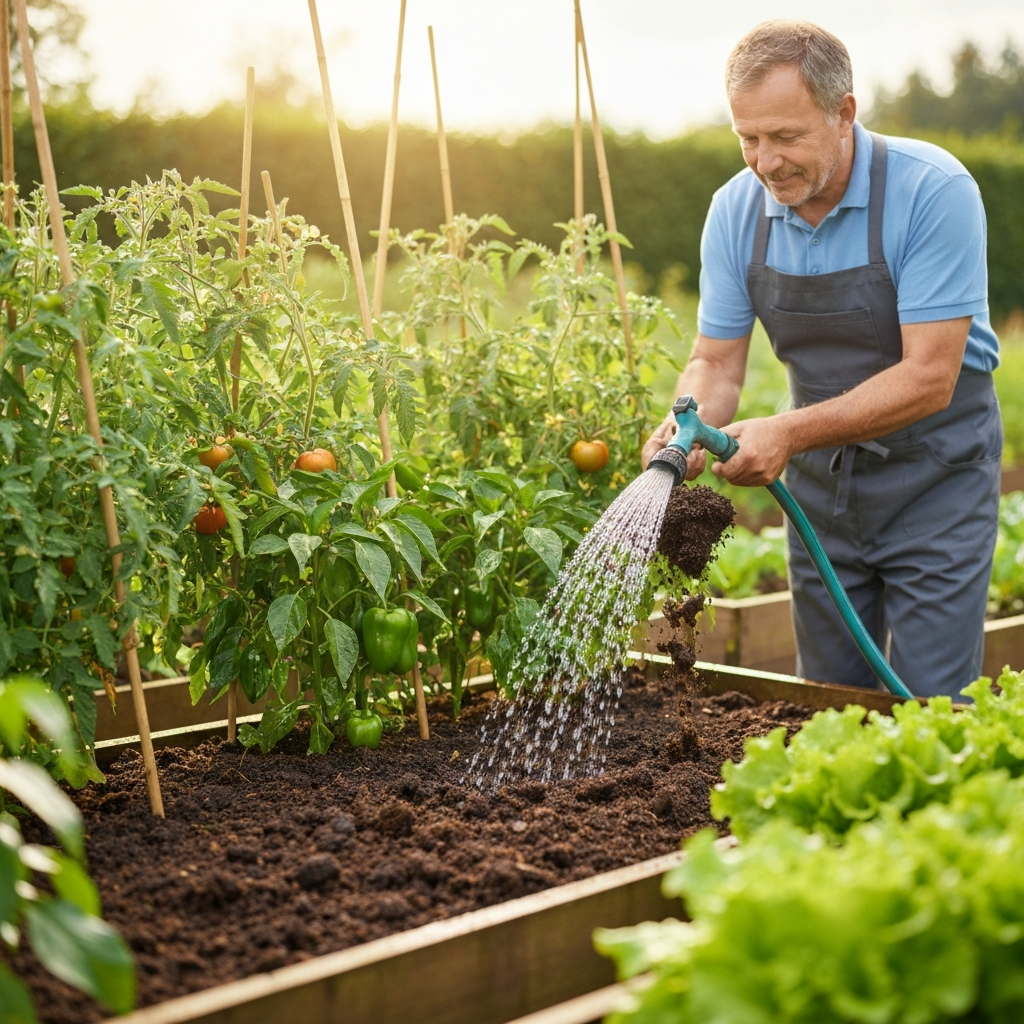
- Use nutrient-rich soil mixed with compost
- Mulch to retain moisture and suppress weeds
- Water consistently, especially during hot weather
- Monitor plants regularly for pests
- Rotate crops each season
Healthy soil and consistent care support successful companion planting.
Common Mistakes to Avoid
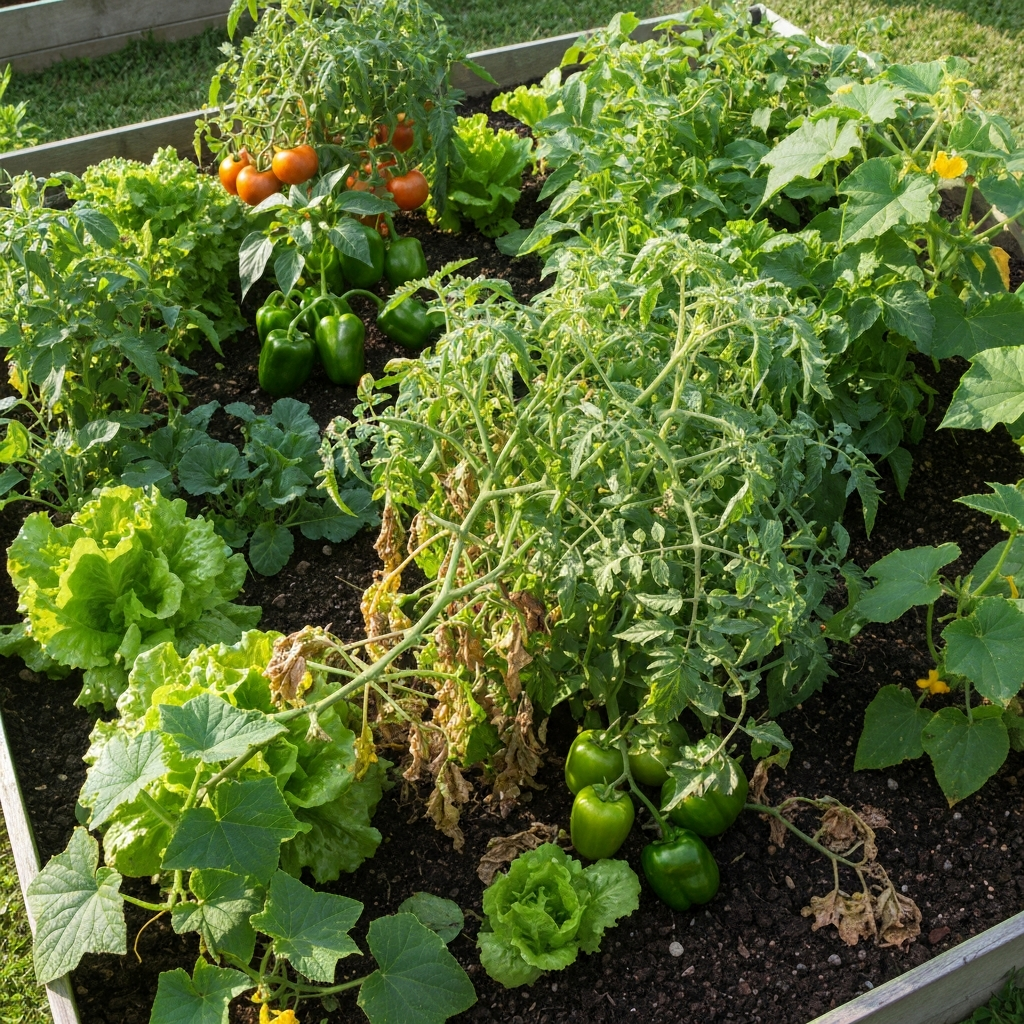
- Overcrowding raised beds
- Ignoring mature plant size
- Skipping crop rotation
- Mixing incompatible plants
Avoiding these mistakes will help your raised bed garden thrive.
Final Thoughts: Smarter Raised Beds with Companion Planting
A well-designed raised bed vegetable garden layout with companion planting can transform your gardening experience. By grouping compatible plants, maximizing space, and encouraging natural pest control, you’ll enjoy healthier plants and bigger harvests season after season. With a little planning, your raised beds can become a highly productive and sustainable garden.
Happy gardening!