If you’ve struggled to grow grass in shady areas, you’re not alone. Between trees, buildings, fences, and narrow urban lots, many yards simply don’t get enough sun for traditional turf to survive. The good news? You don’t need grass at all.
There are many no-mow lawn alternatives that thrive in shade, require little maintenance, and often look better than patchy grass ever could.
Why Grass Fails in Shady Areas

Grass typically needs 4–6 hours of direct sunlight per day. In shade, it becomes thin, weak, and vulnerable to disease.
Common shade challenges include:
- Dense tree canopies
- North-facing yards
- Tall buildings blocking sunlight
- Compaction and root competition
Switching to shade-loving plants solves these problems naturally.
1. Moss Lawns

Moss is one of the best no-mow solutions for deep shade.
Why it works:
- Thrives in low light
- No mowing, fertilizing, or watering once established
- Lush, green appearance year-round
Best for: Consistently shaded, moist areas with minimal foot traffic
Tip: Moss prefers acidic soil—avoid lime and fertilizer.
2. Shade-Tolerant Sedges

Native sedges, like Pennsylvania sedge (Carex pensylvanica), resemble grass but don’t need mowing.
Benefits:
- Handles partial to full shade
- Soft, fine texture
- Minimal trimming (once per year or less)
Best for: Natural-looking lawns under trees
3. Wild Ginger

Wild ginger is a dense, spreading ground cover perfect for shady areas.
Benefits:
- Large, attractive leaves
- Suppresses weeds
- Native to many regions
Best for: Deep shade and woodland-style yards
4. Creeping Jenny (Use Carefully)

Creeping Jenny brightens shady areas with chartreuse or golden foliage.
Benefits:
- Fast-growing
- Tolerates shade and moisture
- Great for filling bare spots
Caution: Can be aggressive—best used in contained spaces.
5. Pachysandra

A classic shade ground cover commonly used in urban landscapes.
Benefits:
- Dense evergreen foliage
- Low maintenance
- Excellent weed suppression
Best for: Formal yards and foundation plantings
6. Ferns as Lawn Replacements

Low-growing ferns create a soft, natural look in shady spaces.
Popular options:
- Japanese painted fern
- Lady fern
- Christmas fern
Best for: Moist, shaded yards with minimal foot traffic
7. Mulch, Stone, and Plant Combinations

In very dark shade, combining hardscape with plants can be the best solution.
Benefits:
- No mowing or watering
- Clean, organized appearance
- Prevents mud and erosion
Best for: Narrow side yards and under dense trees
How to Choose the Right Option
Consider these factors:
- Shade level: Partial vs. full shade
- Moisture: Dry shade under trees vs. damp shade
- Foot traffic: Occasional vs. none
- Maintenance level: Natural vs. polished look
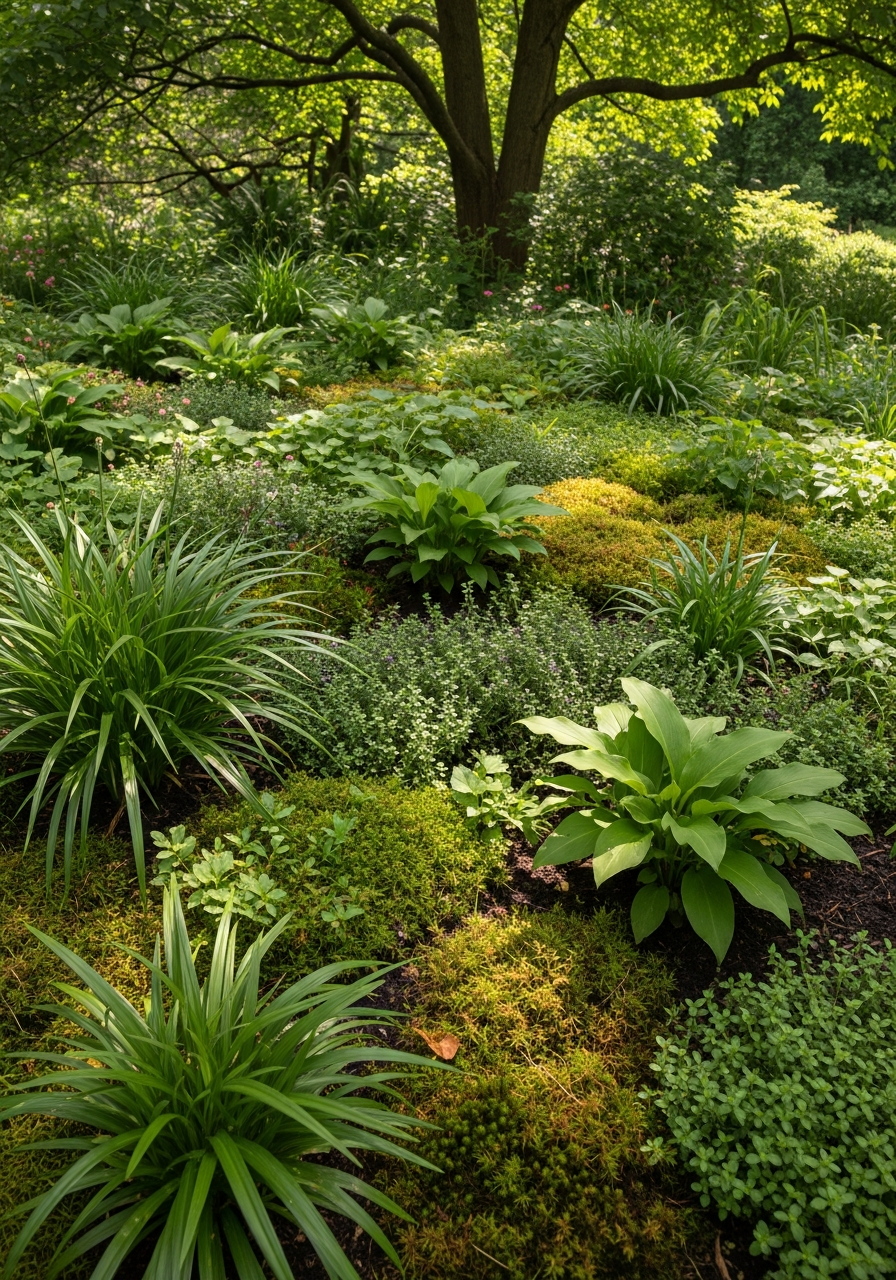
Often, a mix of moss, sedge, and ground covers creates the most resilient and attractive result.
Final Thoughts
Shady areas don’t have to be bare, muddy, or frustrating. With the right no-mow lawn alternative, you can turn problem spots into beautiful, low-maintenance spaces that thrive without grass.
Instead of fighting nature, work with it—and enjoy a yard that finally grows where grass won’t.