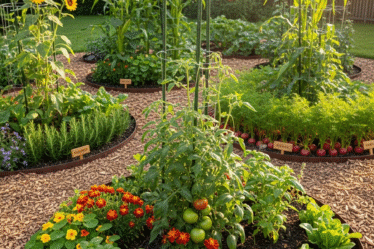
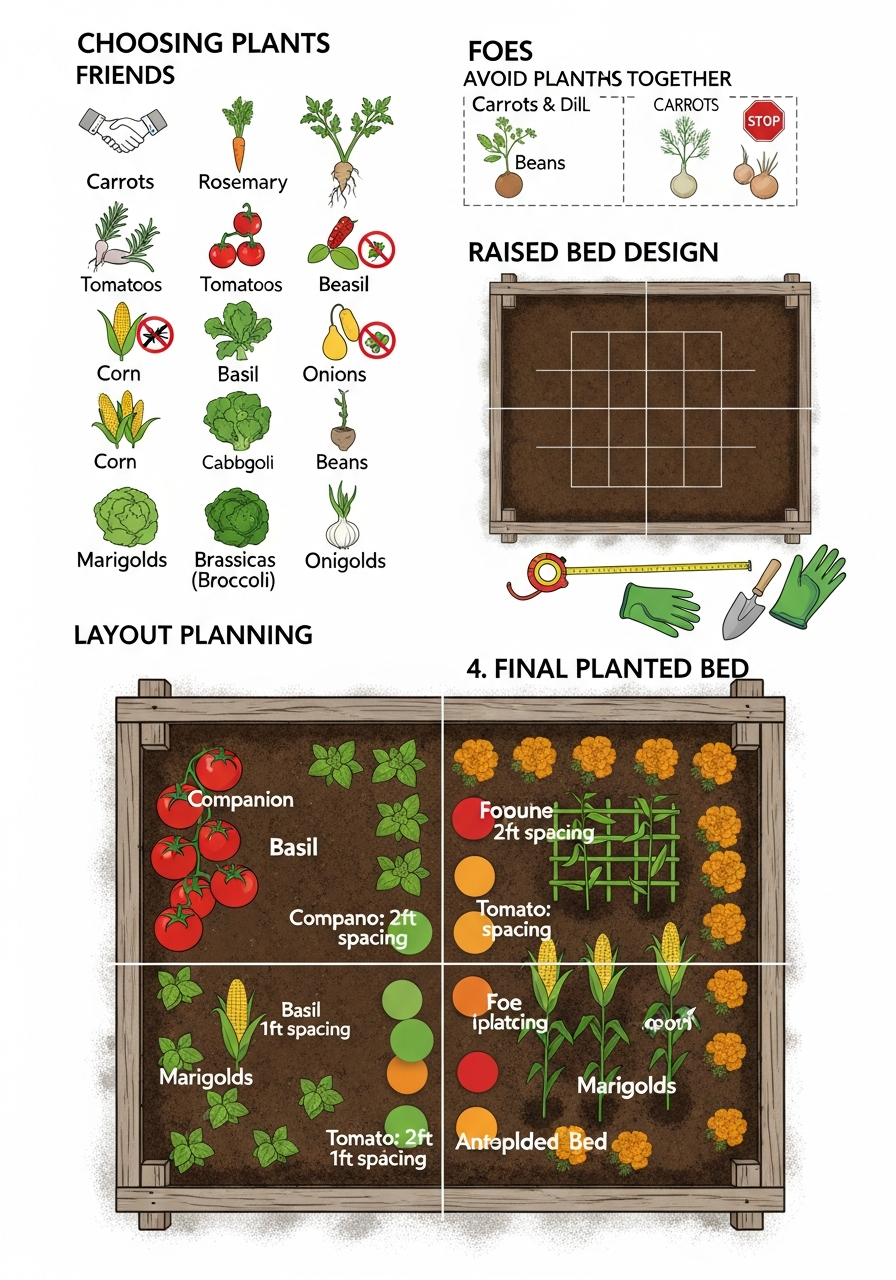
Planning a raised bed garden is one of the smartest ways to grow healthy, productive vegetables—especially when you use companion planting. Instead of planting crops randomly, companion planting helps you arrange plants so they support each other’s growth, reduce pests naturally, and make better use of space. In this guide, you’ll learn how to plan a raised bed companion planting garden layout step by step, from choosing plants to placing them correctly.
Why Raised Beds Are Perfect for Companion Planting
Raised beds give you more control over soil quality, drainage, spacing, and plant placement, which makes companion planting easier and more effective.
Benefits of Companion Planting in Raised Beds
- Healthier vegetables with stronger growth
- Natural pest control without chemicals
- Better airflow and sunlight exposure
- Improved soil balance
- Higher yields in small spaces
When plants are placed thoughtfully, raised beds become highly productive mini ecosystems.
Step 1: Understand Your Raised Bed Space
Before choosing plants, take time to assess your raised bed.
- Measure the bed size (common sizes include 4×4 ft and 4×8 ft)
- Observe sunlight exposure (most vegetables need 6–8 hours daily)
- Check soil depth and drainage
- Note nearby structures that may cast shade
Understanding your space helps you plan a layout that works with your garden—not against it.
Step 2: Choose Your Main Crops
Start by selecting the vegetables you want to grow the most.
Popular Raised Bed Vegetables
- Tomatoes
- Peppers
- Cucumbers
- Lettuce and leafy greens
- Carrots and onions
These main crops will guide your companion planting choices.
Step 3: Select Companion Plants
Companion plants support your main crops in different ways.
Types of Companion Plants
- Herbs: Basil, chives, dill, oregano
- Flowers: Marigolds, nasturtiums, calendula
- Soil builders: Beans and peas
These plants help repel pests, attract pollinators, and improve overall plant health.
Step 4: Plan Plant Placement Strategically
Correct placement is the key to a successful raised bed layout.
Placement Rules to Follow
- Place tall plants on the north side of the bed
- Medium-height plants go in the center
- Low-growing plants and herbs belong along the edges
- Combine deep-rooted and shallow-rooted crops
This structure ensures proper sunlight, airflow, and root spacing.
Step 5: Choose a Companion Planting Layout Style
Different layout styles work well in raised beds.
Common Raised Bed Layout Styles
- Block planting: Crops planted in blocks instead of rows
- Square foot gardening: Dividing the bed into equal sections
- Mixed companion layout: Grouping compatible plants naturally
Choose a style that fits your garden size and experience level.
Step 6: Example Raised Bed Companion Planting Layout
Sample 4×8 Raised Bed Plan
- North side: Tomatoes with basil planted at the base and marigolds along the back
- Middle section: Peppers with green onions
- South side: Lettuce and spinach interplanted with radishes
- Edges: Chives, parsley, or dill
This layout balances height, root depth, pest control, and harvest timing.
Step 7: Avoid Incompatible Plant Pairings
Some plants do not grow well together and should be kept apart.
Avoid These Combinations
- Tomatoes and potatoes
- Onions and beans
- Cucumbers and sage
- Fennel with most vegetables
Keeping incompatible plants separate helps prevent disease and poor growth.
Step 8: Prepare the Soil and Plant
- Mix compost into the soil before planting
- Water the bed thoroughly
- Follow spacing guidelines on seed packets
- Mulch lightly to retain moisture
Healthy soil supports successful companion planting.
Step 9: Maintain Your Raised Bed Throughout the Season
- Water consistently
- Monitor plants for pests
- Harvest regularly to encourage growth
- Rotate crops each season
Ongoing care ensures your layout stays productive.
Common Mistakes to Avoid
- Overcrowding plants
- Ignoring mature plant size
- Skipping layout planning
- Forgetting crop rotation
Avoiding these mistakes makes companion planting far more effective.
Final Thoughts: Plan Smart for a Healthier Raised Bed Garden
Learning how to plan a raised bed companion planting garden layout allows you to grow healthier vegetables while working with nature instead of against it. By choosing compatible plants, placing them thoughtfully, and maintaining healthy soil, your raised bed can deliver consistent harvests season after season.
A little planning goes a long way in the garden.
Happy gardening!