Converting a traditional grass lawn into a low-water garden is one of the most effective ways to save water, reduce maintenance, and create a landscape that thrives in dry conditions. Whether you live in a drought-prone area or simply want a more sustainable yard, a low-water (or xeriscape) garden can be both beautiful and practical.
Why Replace a Traditional Lawn?
Traditional lawns are often water-hungry and time-consuming to maintain. They typically require frequent irrigation, mowing, fertilizing, and pest control. In contrast, low-water gardens:
- Use 50–70% less water than turf lawns
- Require less mowing and maintenance
- Support native plants and local wildlife
- Reduce runoff and soil erosion
- Lower long-term landscaping costs
Image suggestion: A split-image showing a lush green lawn on one side and a drought-tolerant garden on the other.
Step 1: Assess Your Space
Before removing your lawn, take time to understand your yard:
- Sun exposure: Full sun, partial shade, or full shade
- Soil type: Sandy, clay, or loam
- Drainage: Does water pool or drain quickly?
- Climate: Local rainfall patterns and temperature extremes
This assessment will help you choose the right plants and design a garden that thrives naturally.
Step 2: Plan Your Low-Water Garden Design
A successful low-water garden starts with thoughtful planning. Consider:
- Zones: Group plants with similar water needs together (hydrozoning)
- Pathways: Gravel, stone, or mulch paths reduce water use and add structure
- Focal points: Boulders, sculptures, or drought-tolerant trees
- Ground cover: Replace grass with mulch, gravel, or low-water plants
Sketch a simple layout or use online garden planning tools to visualize your design.
Image suggestion: A simple garden plan sketch showing plant zones and pathways.
Step 3: Remove or Kill the Existing Lawn
There are several effective ways to remove grass:
- Sheet mulching: Cover grass with cardboard or newspaper, then add compost and mulch
- Solarization: Cover the lawn with clear plastic during hot months to kill grass
- Manual removal: Dig out sod (labor-intensive but immediate)
Sheet mulching is one of the most eco-friendly methods and improves soil health over time.
Step 4: Improve the Soil
Healthy soil helps plants develop deep roots and reduces watering needs. Before planting:
- Add compost to improve soil structure
- Avoid over-fertilizing; native plants prefer lean soil
- Level and shape the ground for proper drainage
Good soil preparation sets the foundation for long-term success.
Step 5: Choose Low-Water and Native Plants
Native and drought-tolerant plants are the backbone of a low-water garden. Look for plants that are adapted to your region, such as:
- Ornamental grasses
- Succulents and cacti (in dry climates)
- Lavender, sage, rosemary, and thyme
- Native wildflowers and shrubs
Native plants typically need less water, resist pests, and support pollinators.
Image suggestion: A collage of drought-tolerant plants like lavender, succulents, and native grasses.
Step 6: Install Efficient Irrigation
Even low-water gardens need some irrigation, especially during establishment. Consider:
- Drip irrigation: Delivers water directly to roots with minimal waste
- Soaker hoses: Ideal for garden beds
- Smart controllers: Adjust watering based on weather conditions
Over time, many native plants will need little to no supplemental watering.
Step 7: Mulch and Maintain
Mulch is essential in a low-water garden. It:
- Reduces evaporation
- Suppresses weeds
- Regulates soil temperature
Use organic mulch (bark, wood chips) or inorganic mulch (gravel, stone) depending on your design. Maintenance is minimal—occasional pruning, seasonal checks, and infrequent watering.
The Long-Term Benefits
Once established, a low-water garden becomes easier to care for each year. You’ll enjoy:
- Lower water bills
- Less yard work
- A landscape that reflects your local environment
- Increased curb appeal with a natural, modern look
Final Thoughts
Converting a traditional lawn into a low-water garden is an investment in sustainability, beauty, and resilience. With thoughtful planning and the right plant choices, you can create a thriving landscape that saves water and enhances your outdoor space for years to come.
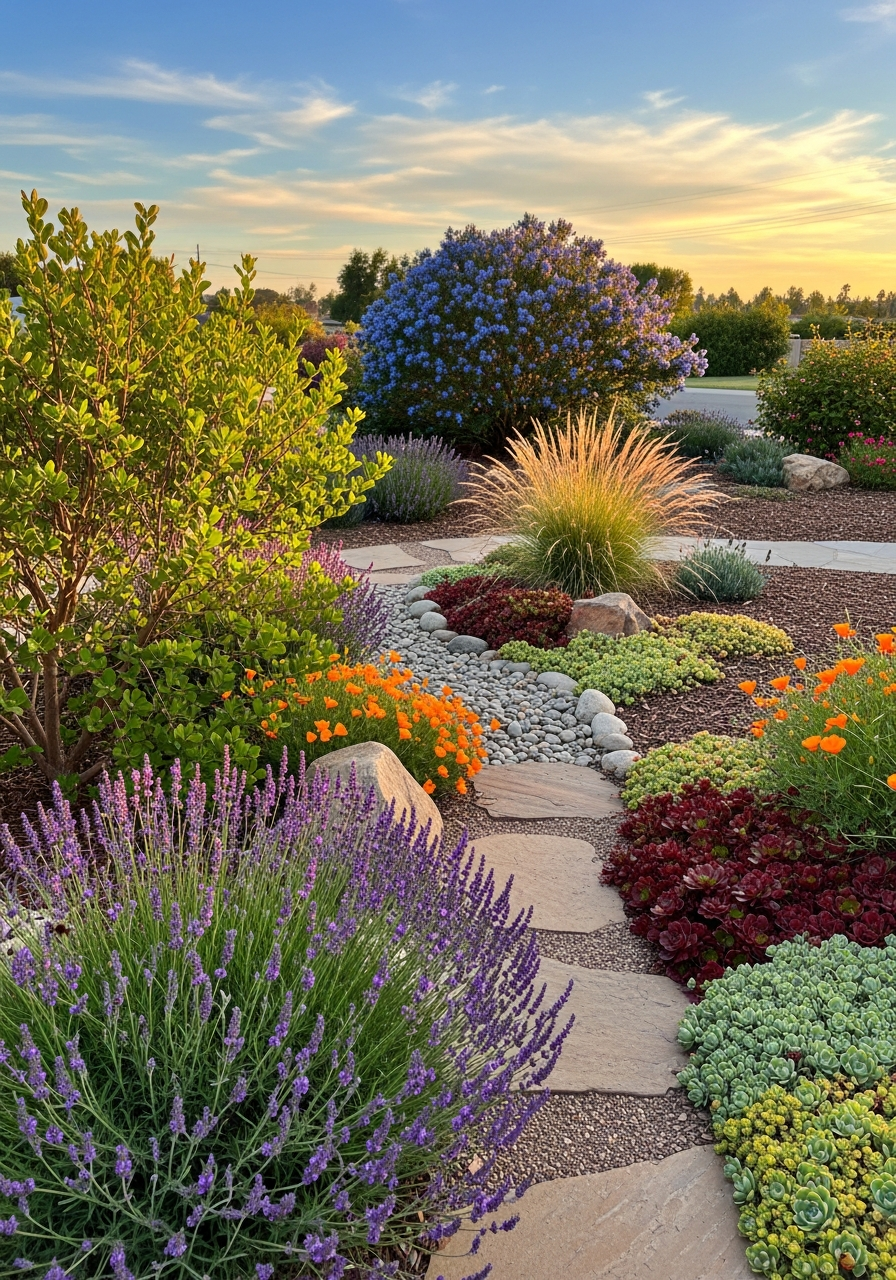
Image suggestion: A finished low-water garden with gravel paths, native plants, and decorative rocks.