A successful garden starts with a smart layout. When you combine a well-planned garden bed layout with companion planting, you can grow healthier plants, improve harvests, and reduce pests naturally. Whether you’re gardening in raised beds or in-ground beds, this guide will help you design an efficient garden bed using proven companion planting principles.
What Is Companion Planting?
Companion planting is the practice of growing certain plants together because they benefit one another. Some plants repel pests, others improve soil nutrients, and some help neighboring crops grow stronger and healthier.
Benefits of Companion Planting
- Natural pest control
- Improved plant growth and flavor
- Better use of garden space
- Attraction of beneficial insects
- Reduced need for chemicals
When used correctly, companion planting makes your garden bed more balanced and productive.
Why Garden Bed Layout Matters
A good garden bed layout ensures that every plant gets the sunlight, nutrients, and airflow it needs.
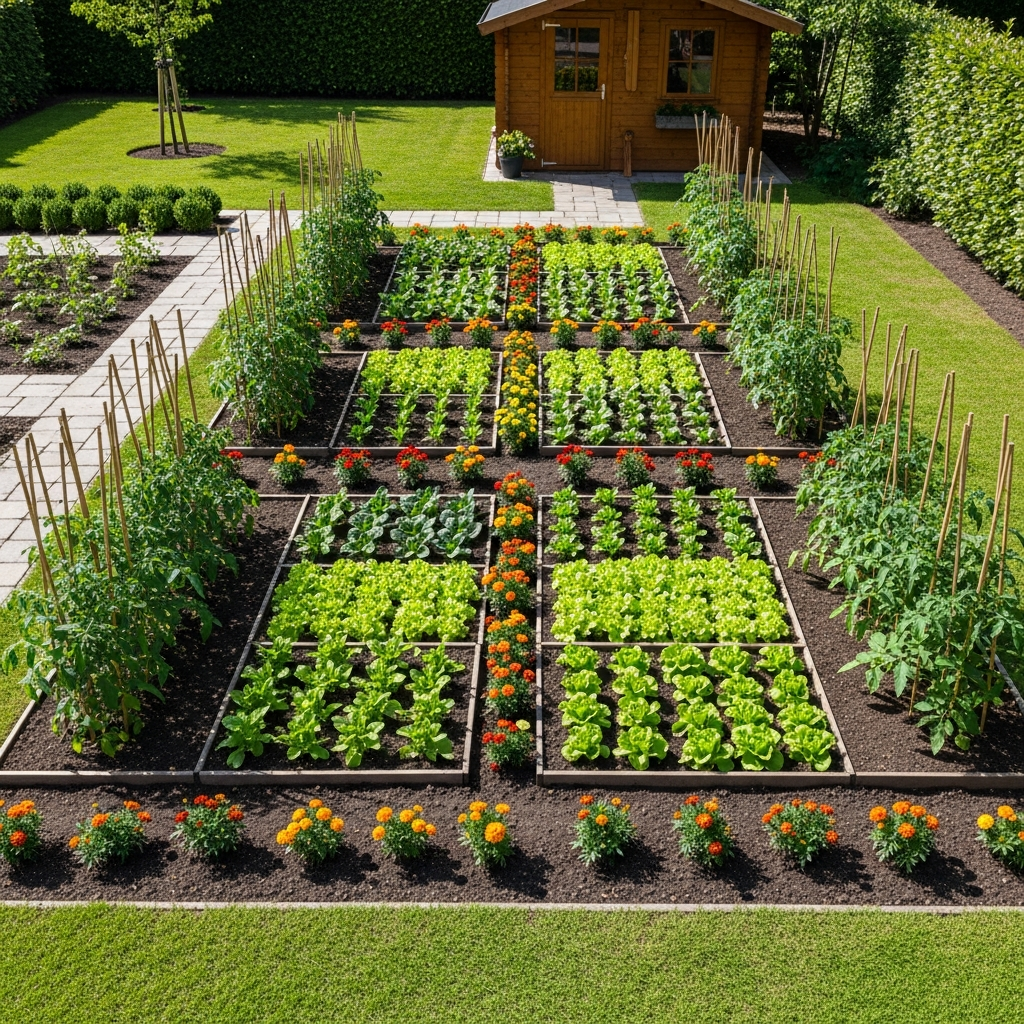
Advantages of a Planned Layout
- Prevents overcrowding
- Improves air circulation
- Makes watering and harvesting easier
- Helps with crop rotation
- Maximizes yields in small spaces
Planning before planting saves time and prevents common gardening problems.
Key Factors to Consider When Planning a Garden Bed
Before planting, consider these essentials:
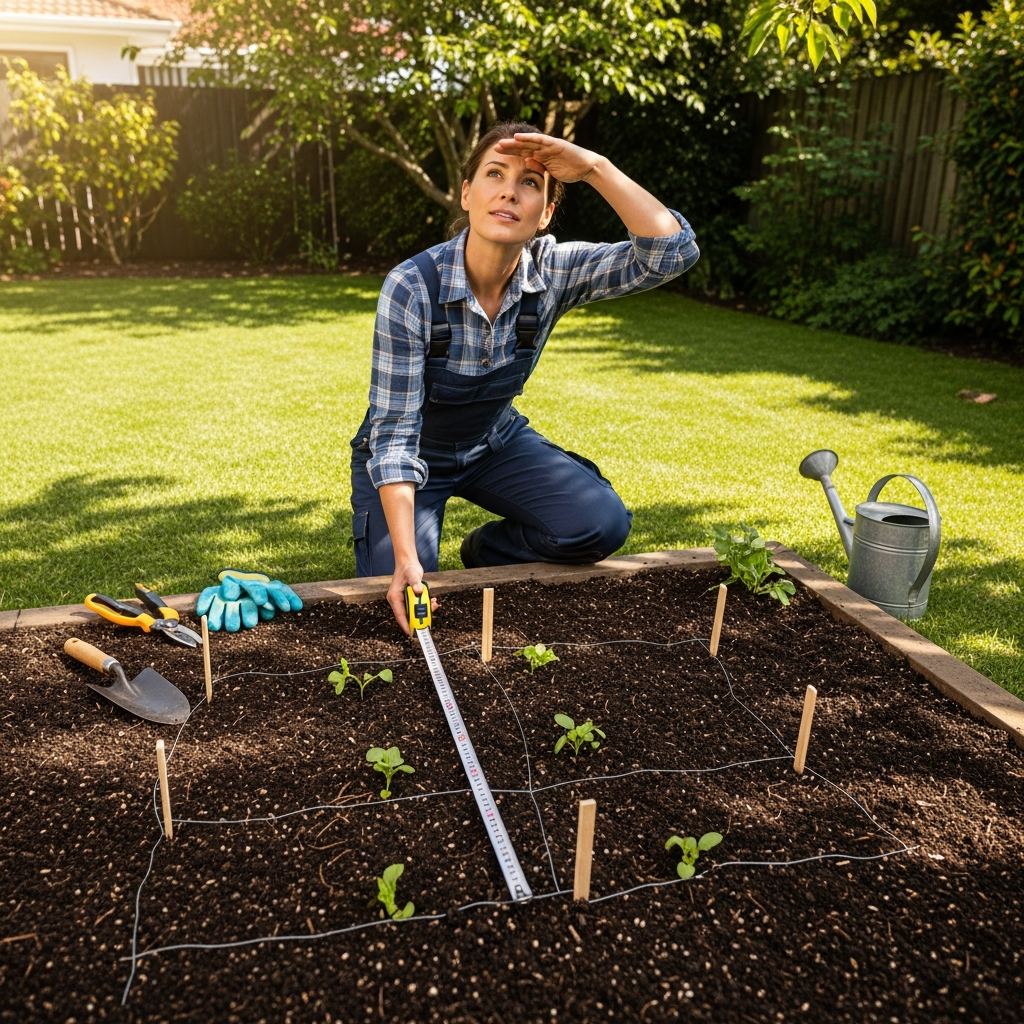
- Sunlight: Most vegetables need 6–8 hours of sun per day
- Plant height: Place taller plants where they won’t shade smaller ones
- Spacing: Allow room for mature plant size
- Soil quality: Use nutrient-rich, well-draining soil
- Season: Plan for cool-season and warm-season crops
A thoughtful layout creates the foundation for successful companion planting.
Popular Garden Bed Layout Styles
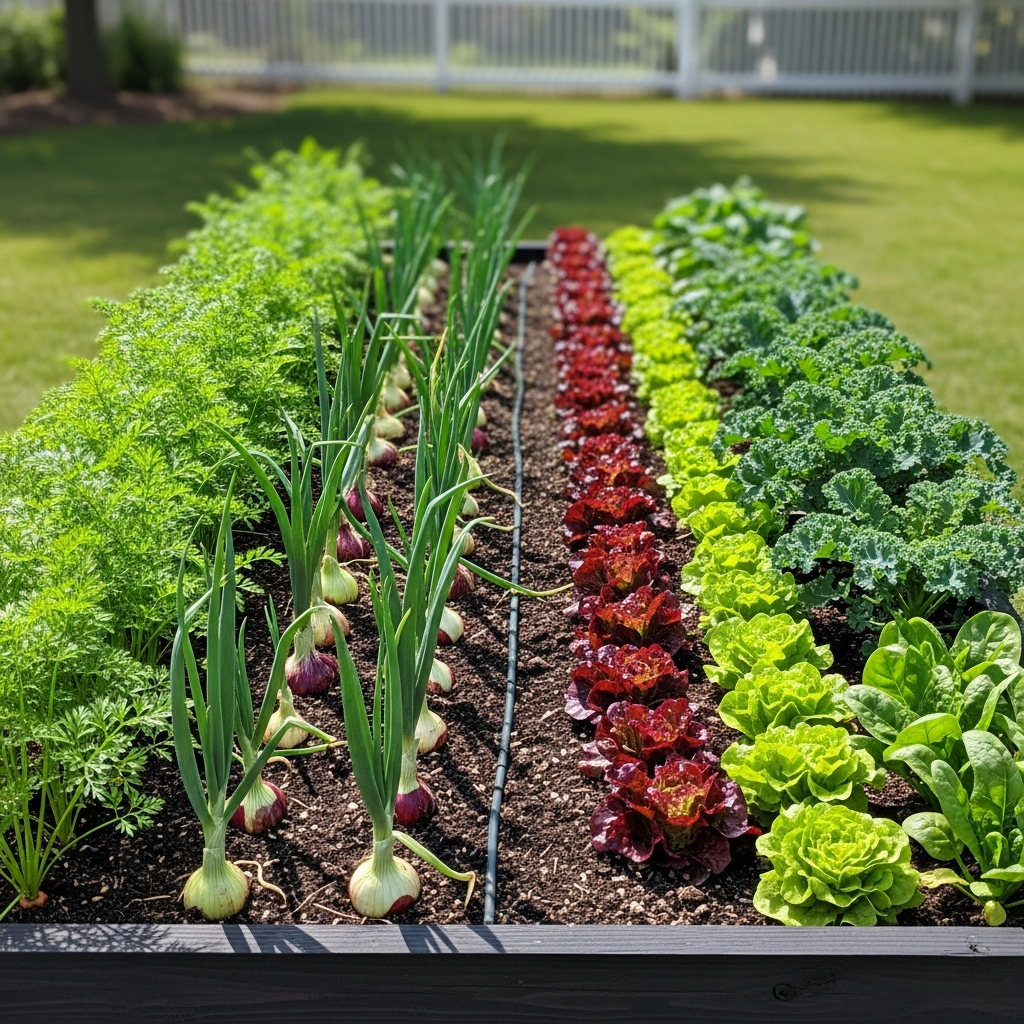
1. Row-Based Layout
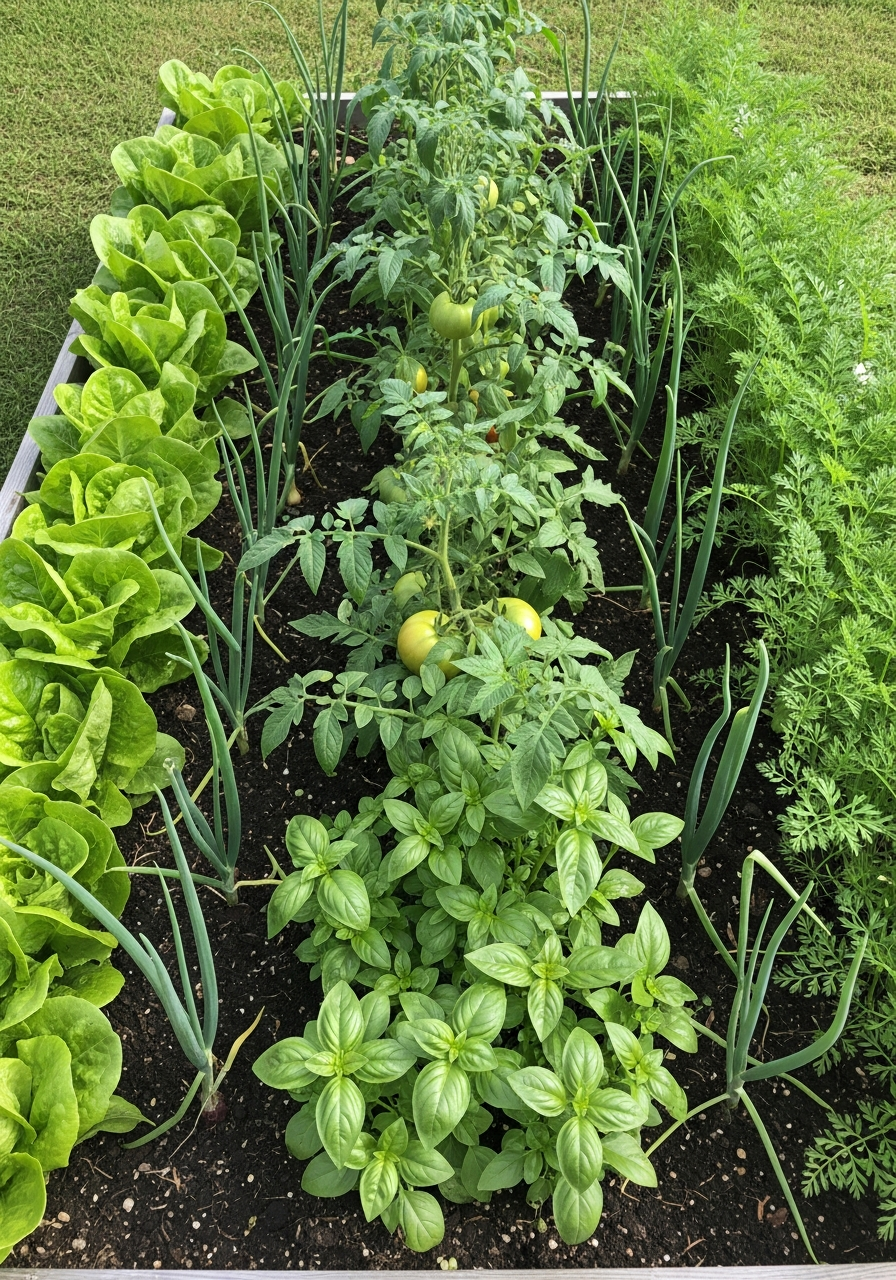
Plants are arranged in neat rows. This works well for carrots, onions, and leafy greens.
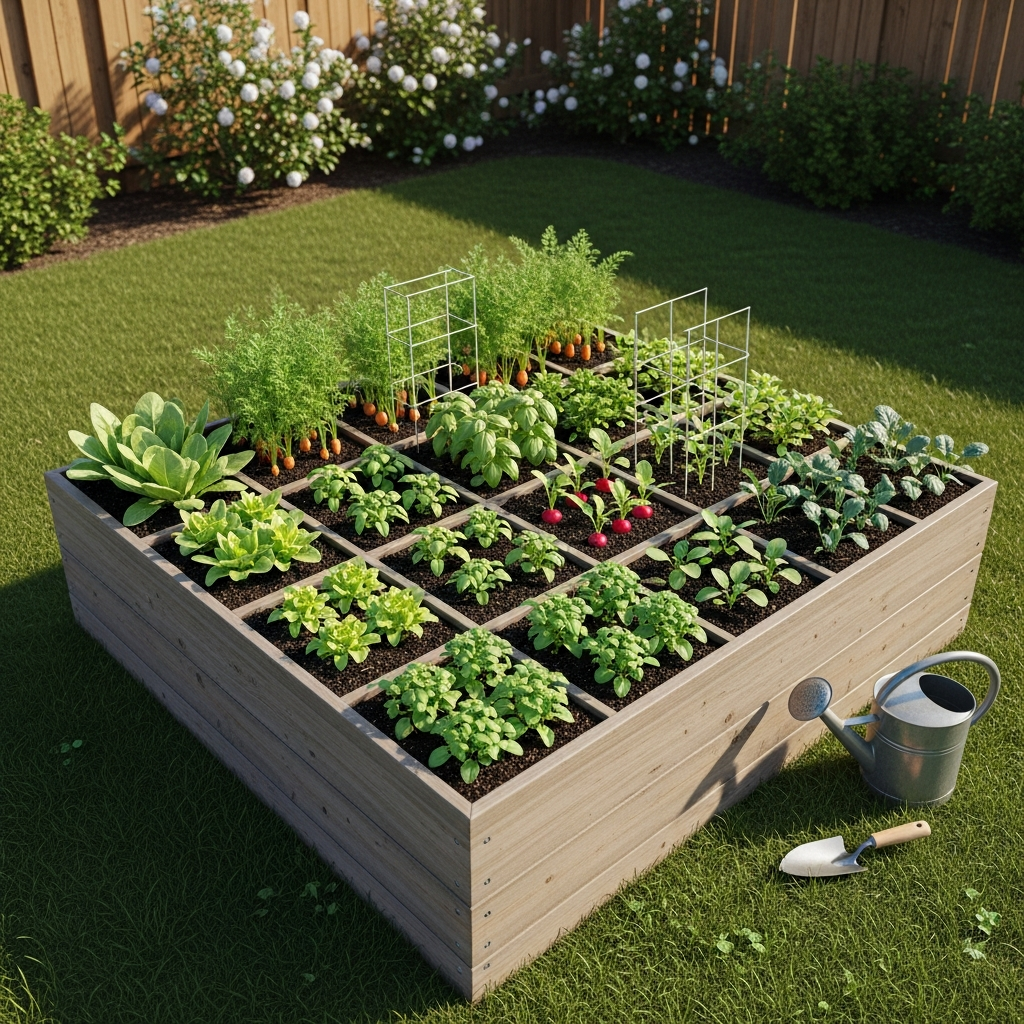
2. Square Foot Gardening
Divide the garden bed into small squares and plant one crop per square. This method is ideal for small gardens and beginners.
3. Mixed Companion Layout
Compatible plants are grouped together without strict rows, mimicking natural plant communities.
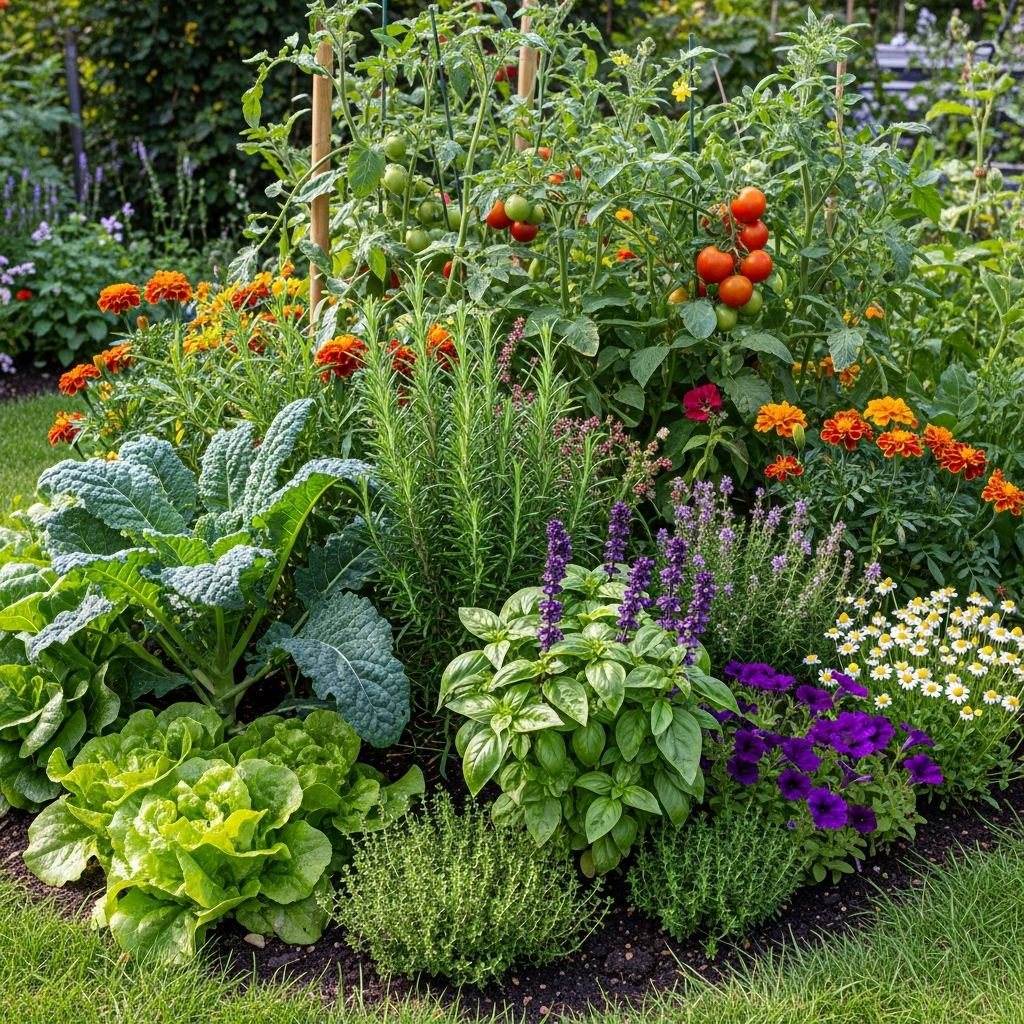
Best Companion Planting Combinations
Vegetables That Grow Well Together
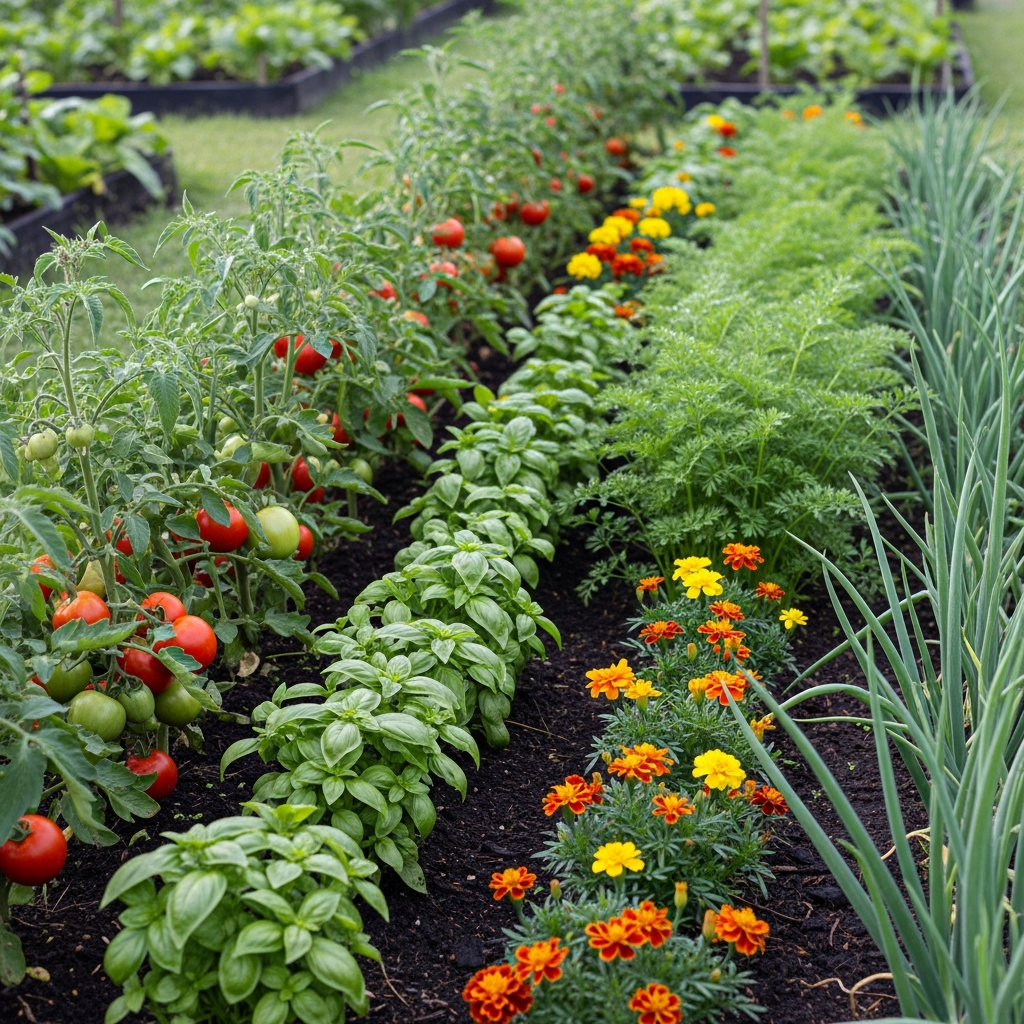
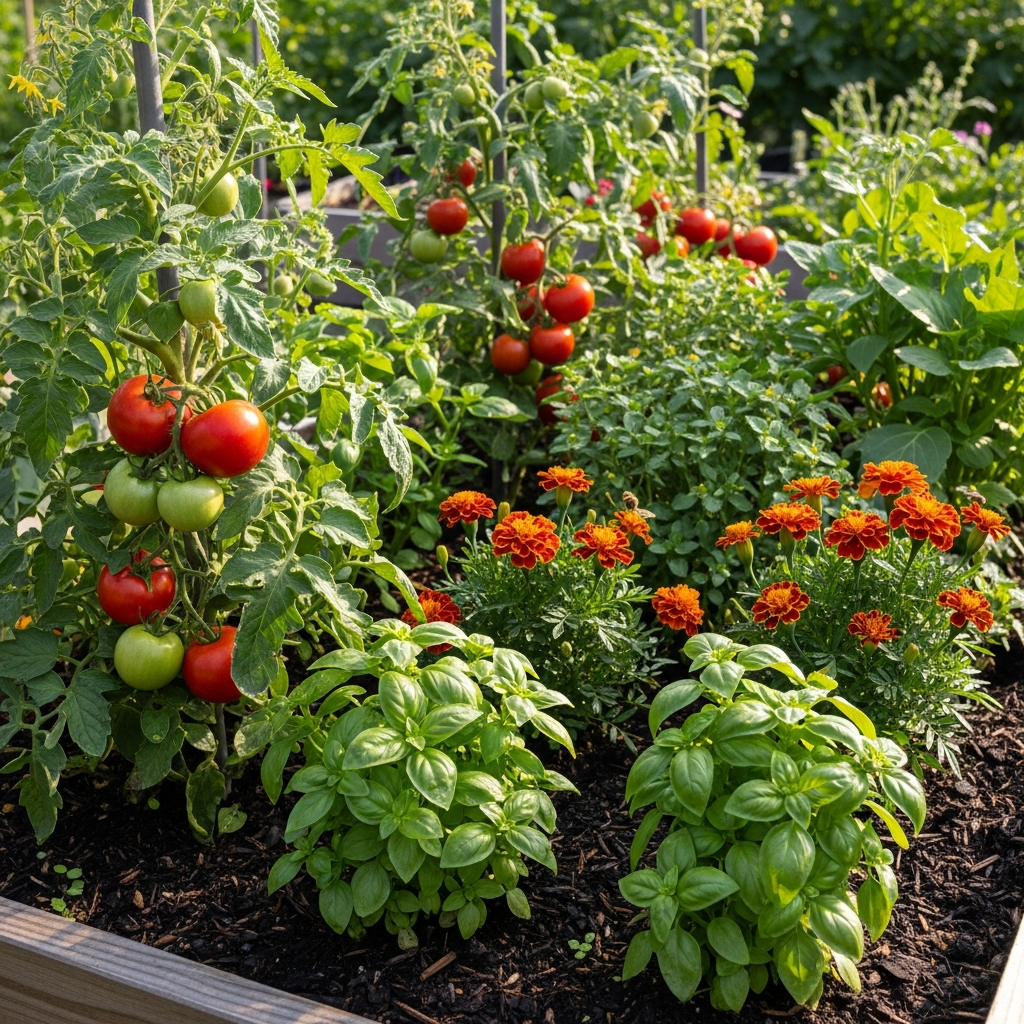
- Tomatoes + Basil + Marigolds – improves flavor and repels pests
- Carrots + Onions – deters carrot flies
- Cucumbers + Nasturtiums – protects against aphids and beetles
- Corn + Beans + Squash – the traditional “Three Sisters” method
- Lettuce + Radishes – radishes protect lettuce while growing quickly
Herbs as Companion Plants
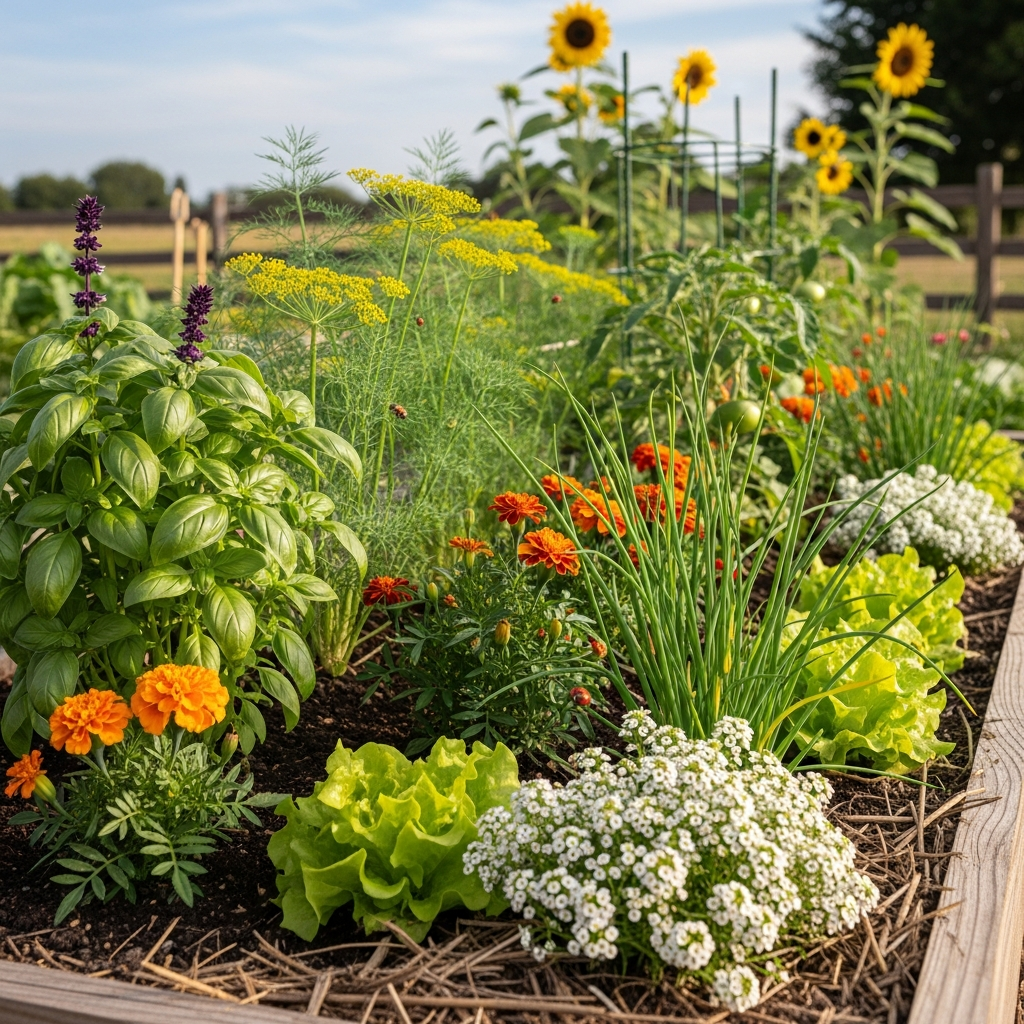
- Basil supports tomatoes
- Dill attracts beneficial insects
- Chives repel aphids
- Rosemary deters cabbage pests
Plants That Should Not Be Planted Together
Some plants compete for nutrients or attract the same pests.
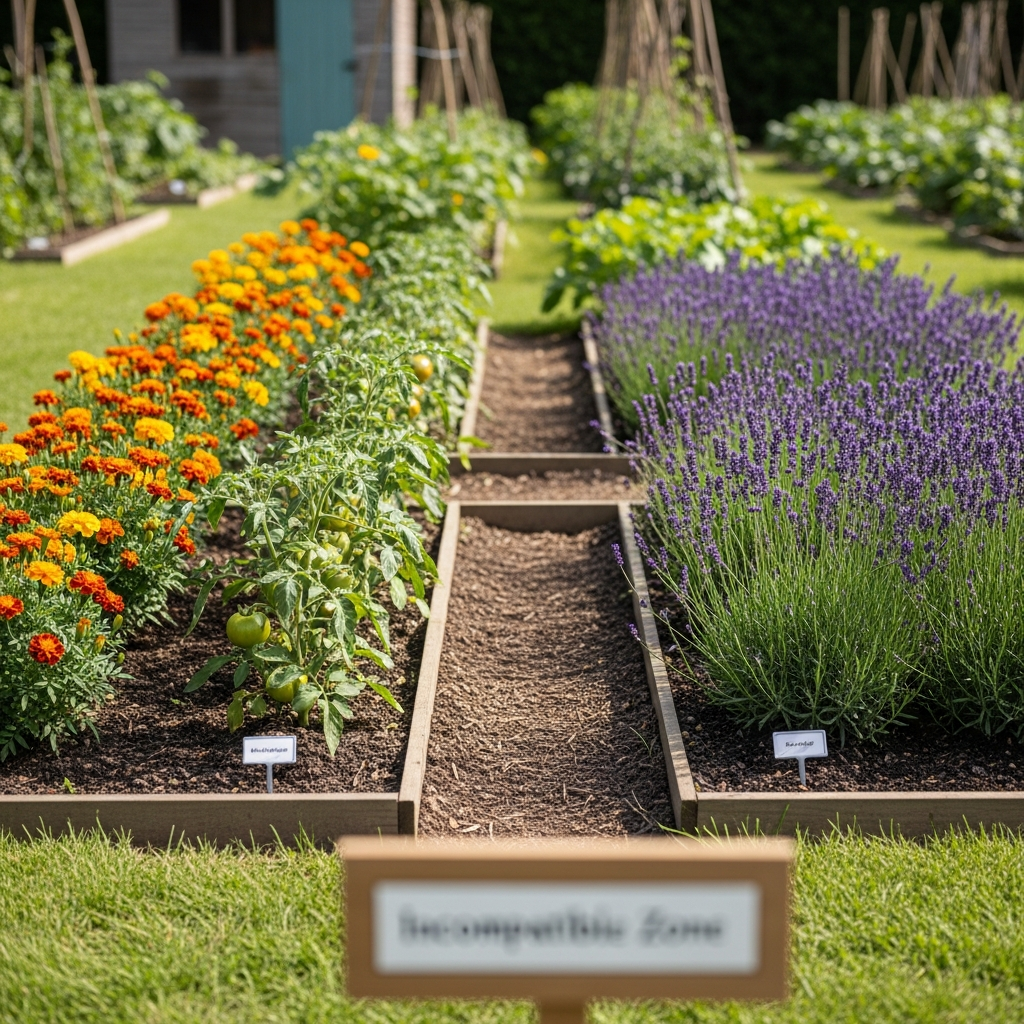
Avoid These Pairings
- Tomatoes and potatoes
- Onions and beans
- Cucumbers and sage
- Fennel with most vegetables
Separating incompatible plants helps prevent disease and poor growth.
Sample Garden Bed Companion Planting Layout
Example: 4×8 Garden Bed
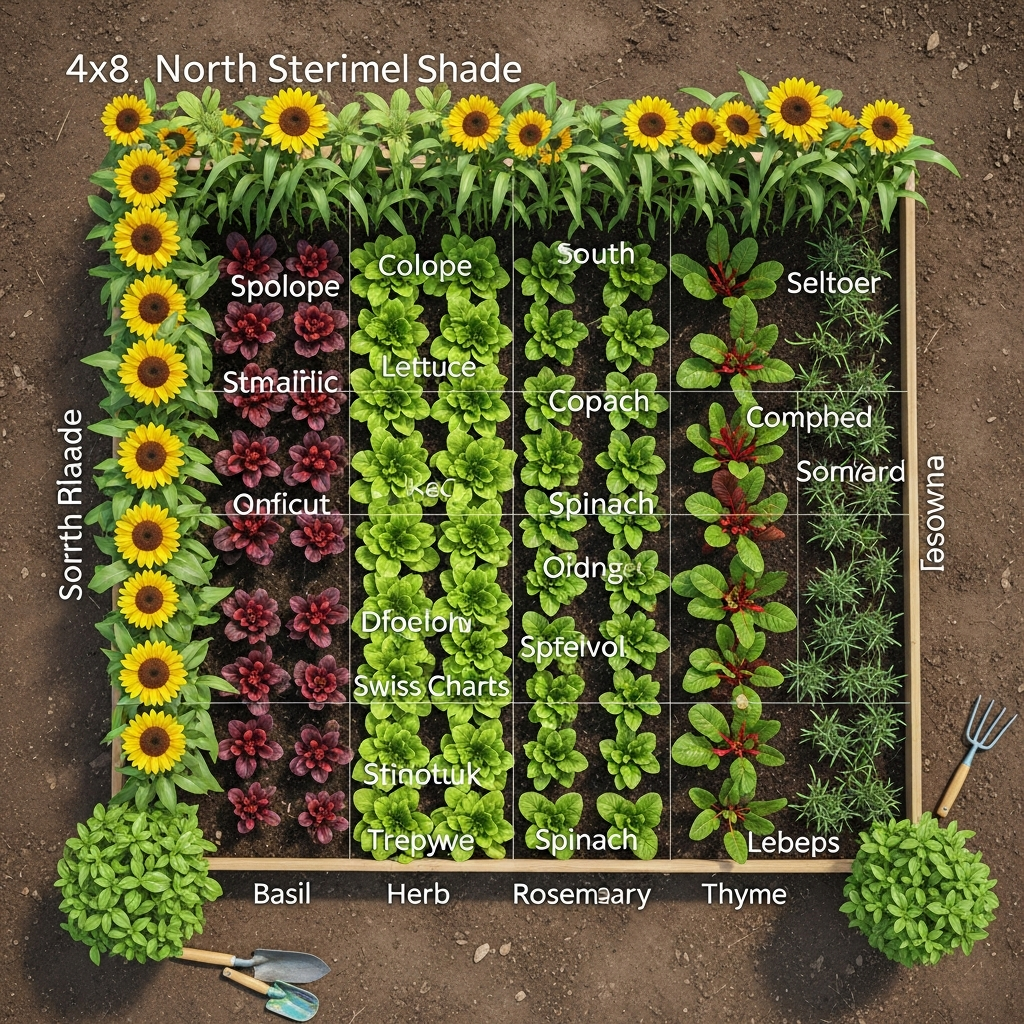
- North side: Tomatoes with basil and marigolds
- Middle: Peppers and onions
- South side: Lettuce, spinach, and radishes
- Edges: Herbs like chives and parsley
This layout ensures good sunlight distribution and plant compatibility.
Tips for Maintaining a Companion-Planted Garden Bed
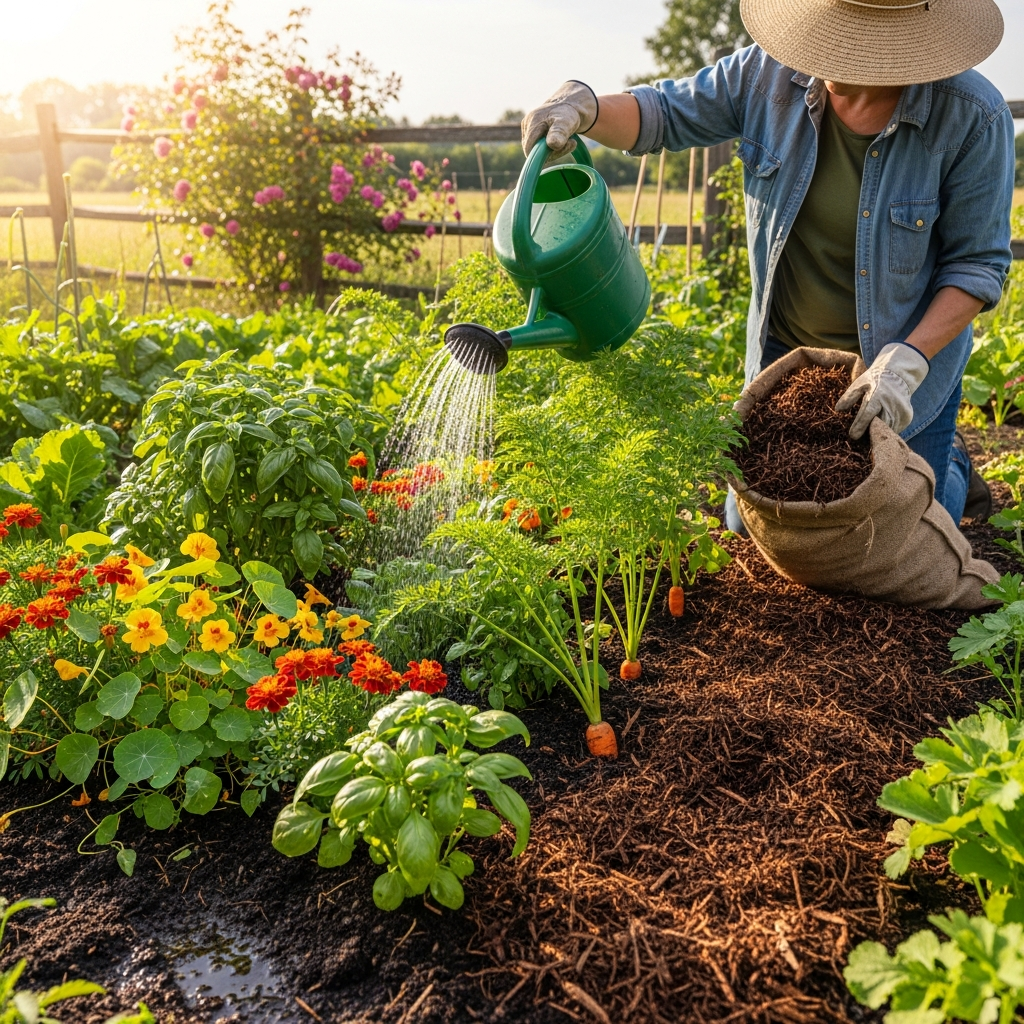
- Rotate crops each season
- Mulch to retain moisture
- Water consistently
- Monitor plants for pests
- Adjust spacing as plants grow
Healthy maintenance supports long-term garden success.
Common Companion Planting Mistakes
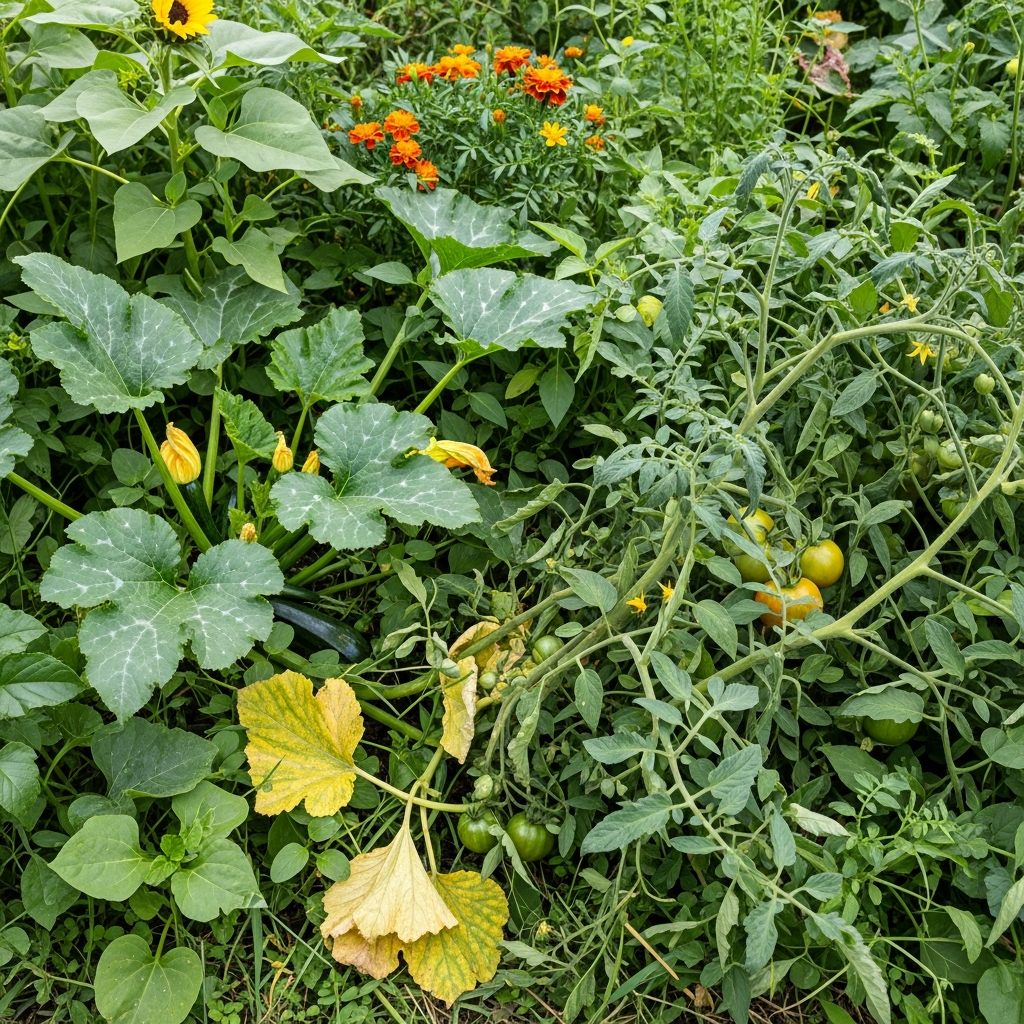
- Overcrowding plants
- Ignoring mature plant size
- Forgetting crop rotation
- Mixing incompatible plants
Avoiding these mistakes will keep your garden bed thriving.
Final Thoughts: Smarter Garden Beds with Companion Planting
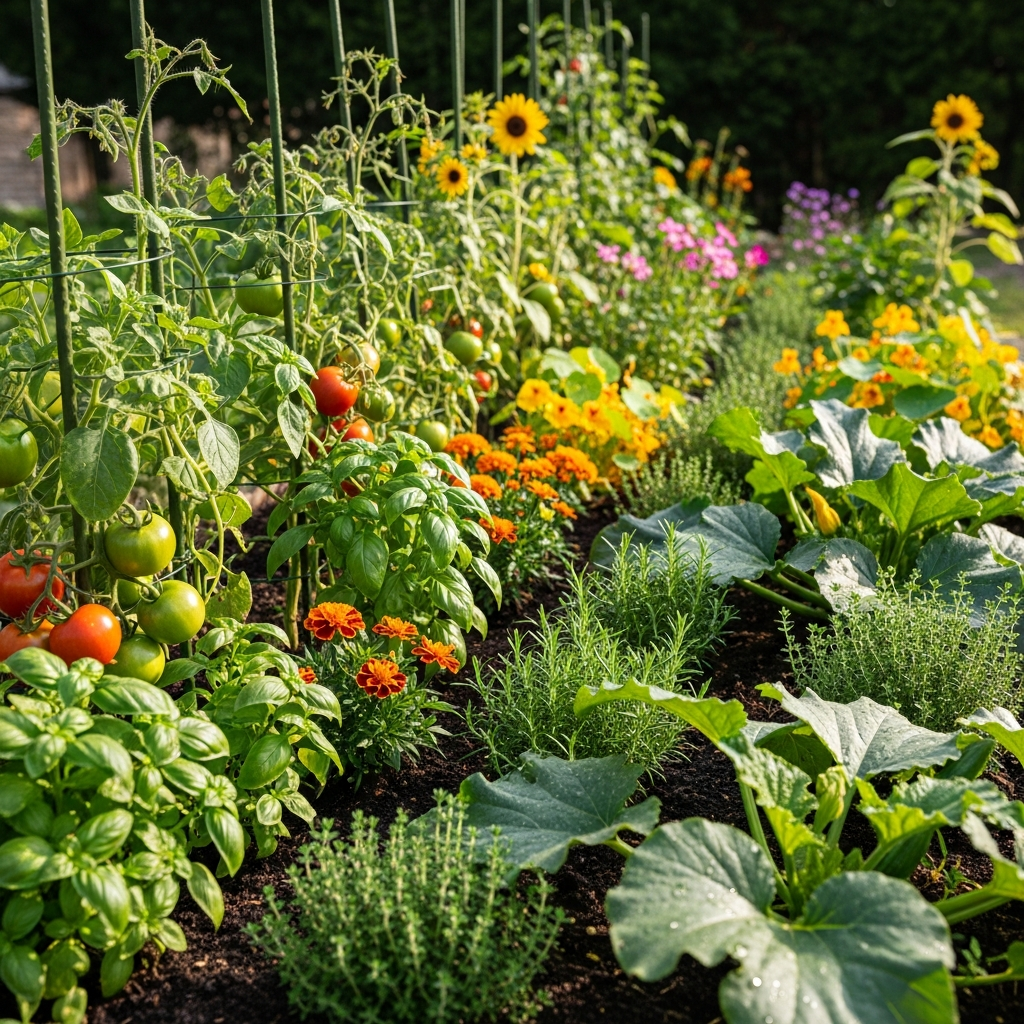
Designing a thoughtful garden bed layout with companion planting is one of the best ways to grow a healthy, productive garden naturally. By placing the right plants together and planning your layout in advance, you’ll enjoy stronger plants, fewer pests, and better harvests season after season.
Happy gardening!