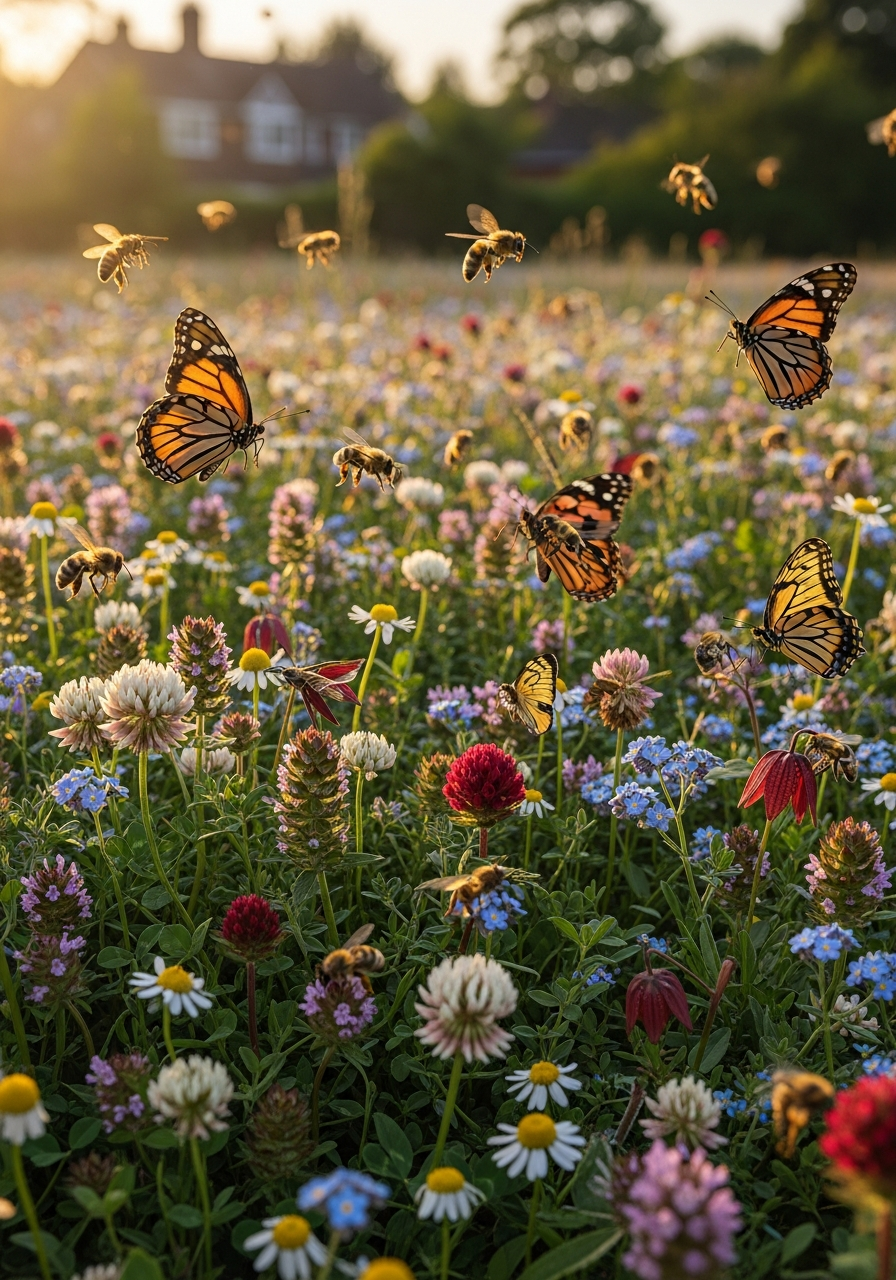
If you want a lawn that’s beautiful, low-maintenance, and buzzing with life, a flowering no-mow lawn is the perfect solution. Instead of traditional turf grass, these lawns use flowering ground covers and native plants that stay low, require little care, and provide essential nectar for bees, butterflies, and other pollinators.
The result? Less mowing, fewer chemicals, and a vibrant yard that supports nature.
Why Choose a Flowering No-Mow Lawn?
Flowering no-mow lawns offer benefits beyond easy maintenance:
- No weekly mowing
- Little to no fertilizer or chemicals
- Reduced water use
- Continuous blooms throughout the season
- Essential habitat for pollinators
- Natural, cottage-style beauty
They turn your yard into a living ecosystem instead of a maintenance chore.
Best Flowering Plants for No-Mow Lawns
Tip: Always choose plants native or well-adapted to your region for best results.
1. White Clover
Why it’s great:
- One of the most popular no-mow options
- Produces abundant nectar-rich flowers
- Naturally fertilizes soil
- Soft and walkable
Pollinators love it: Bees, butterflies
2. Creeping Thyme
Why it’s great:
- Low-growing and drought tolerant
- Produces purple or pink flowers
- Releases fragrance when walked on
- No mowing required
Pollinators love it: Bees, butterflies
3. Self-Heal (Prunella vulgaris)
Why it’s great:
- Native to many regions
- Purple flowers bloom repeatedly
- Handles light foot traffic
- Thrives without fertilizer
Pollinators love it: Native bees
4. Wild Violet
Why it’s great:
- Excellent for partial shade
- Early spring blooms
- Heart-shaped leaves create dense cover
- Native host plant for butterflies
Pollinators love it: Butterflies, early-season bees
5. Creeping Phlox
Why it’s great:
- Creates a colorful spring carpet
- Low-growing and spreading
- Minimal maintenance once established
Pollinators love it: Butterflies, bees
6. Native Strawberry (Wild Strawberry)
Why it’s great:
- Produces small white flowers
- Spreads naturally
- Edible berries
- Soft, walkable surface
Pollinators love it: Bees
7. Moss Rose (Portulaca)
Why it’s great:
- Thrives in hot, dry areas
- Bright, colorful blooms
- No mowing required
Pollinators love it: Bees
How to Create a Flowering No-Mow Lawn
Step 1: Remove Existing Grass
Smother grass with cardboard, newspaper, or solarization—avoid chemical herbicides.
Step 2: Prepare the Soil
Loosen soil lightly and remove debris. Avoid heavy amendments.
Step 3: Plant Seeds or Plugs
Use flowering ground cover seeds or starter plants designed for lawns.
Step 4: Water During Establishment
Water regularly for the first few weeks until plants take hold.
Maintenance: What These Lawns Actually Need
Once established, flowering no-mow lawns require very little care:
- Optional mowing 1–2 times per year
- Occasional hand-weeding early on
- Water only during extreme drought
- No fertilizer or pesticides
Let flowers bloom longer to maximize pollinator support.
Flowering No-Mow Lawn vs Traditional Grass
| Feature | Flowering No-Mow Lawn | Traditional Lawn |
|---|---|---|
| Mowing | Rare or none | Weekly |
| Flowers | Yes | No |
| Pollinator Friendly | Yes | No |
| Water Use | Low | High |
| Chemicals | None | Common |
Common Questions
Will it look messy?
Not at all—when planned intentionally, flowering lawns look natural and charming.
Can kids and pets use it?
Yes. Most flowering ground covers are soft, non-toxic, and safe.
Will bees be a problem?
Pollinators are focused on flowers and rarely aggressive.
Final Thoughts
Flowering no-mow lawns are one of the easiest ways to reduce yard work while giving back to nature. With colorful blooms, buzzing pollinators, and minimal upkeep, these lawns prove that beauty and sustainability can go hand in hand.
More flowers. More butterflies. Less mowing 🌸🦋🌱
Want More No-Mow & Pollinator-Friendly Yard Ideas?
Follow us for native plant guides, eco-friendly landscaping tips, and low-maintenance garden inspiration.