Planter boxes are a fantastic way to grow vegetables, herbs, and flowers—especially in small backyards, patios, or balconies. When you combine planter boxes with companion planting, you can grow healthier plants, reduce pests naturally, and maximize harvests without complicated planning. This guide shares easy companion planting garden bed layout plans for planter boxes that are beginner-friendly and proven to work.
Why Use Companion Planting in Planter Boxes?
Planter boxes have limited space, so every plant needs to earn its place. Companion planting helps you get the most out of each box.
Benefits of Companion Planting in Planter Boxes
- Better use of limited space
- Natural pest control
- Healthier, stronger plants
- Improved yields in small areas
- Less maintenance overall
Simple layouts are especially effective in compact planter boxes.
Key Rules for Planter Box Companion Planting
Before choosing a layout, keep these basic rules in mind:
- Choose compact or dwarf plant varieties
- Group plants with similar water and sunlight needs
- Avoid overcrowding
- Place taller plants toward the back or center
- Use herbs and flowers as natural pest deterrents
These rules apply whether your planter box is on the ground or elevated.
Best Size Planter Boxes for Companion Planting
Most companion planting layouts work best in these common sizes:
- 12–18 inches deep: Ideal for vegetables
- 2×4 ft planter boxes: Great for beginners
- 4×4 ft planter boxes: Allow more plant combinations
Adequate depth ensures healthy root development.
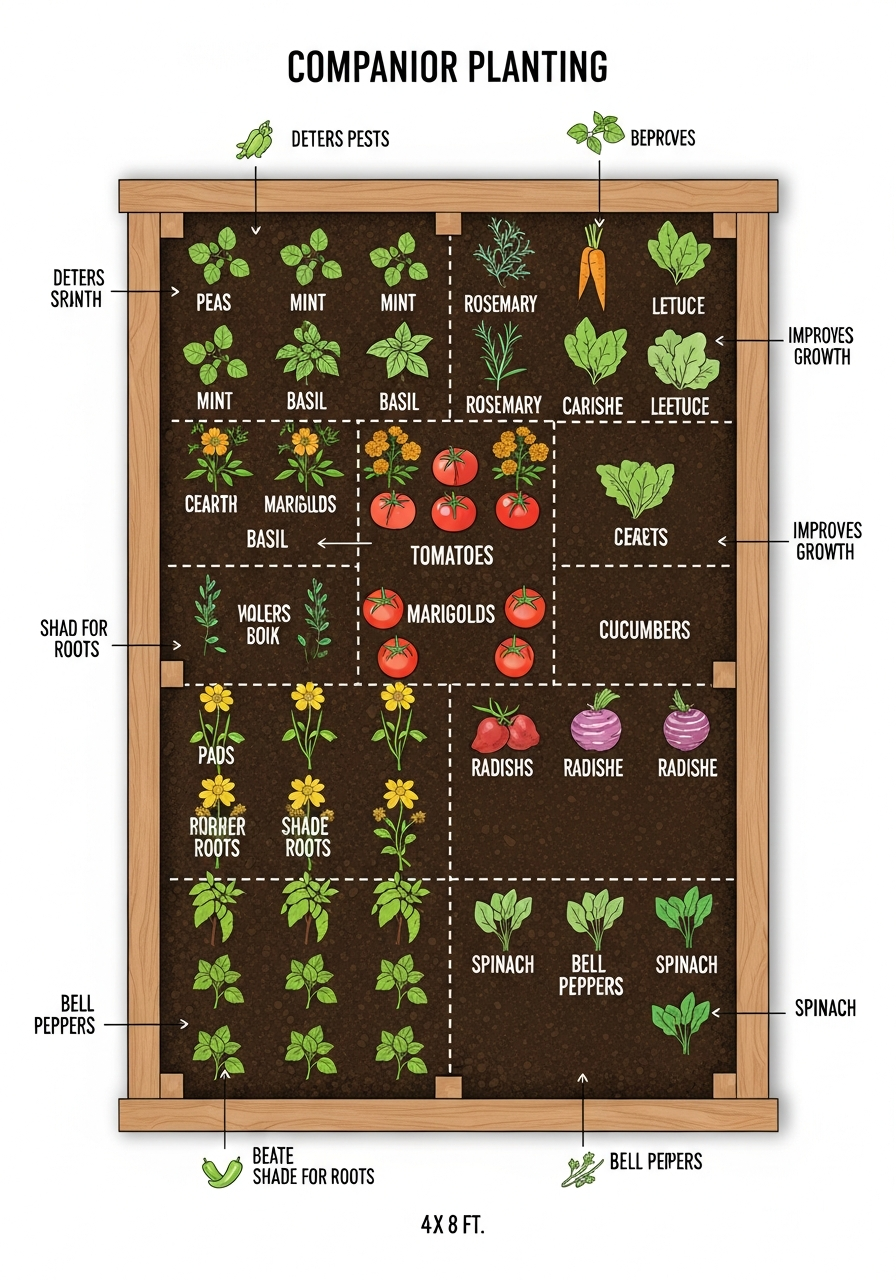
1. Tomato, Basil, and Marigold Planter Box Layout
This is one of the easiest and most effective companion planting plans.
Why it works: Basil and marigolds help repel pests and support tomato growth.
Easy layout plan:
- 1–2 tomato plants in the center or back
- Basil planted around the tomatoes
- Marigolds along the edges
2. Lettuce and Radish Planter Box Layout
Perfect for shallow planter boxes and quick harvests.
Why it works: Radishes grow fast and help deter pests.
Easy layout plan:
- Plant lettuce evenly throughout the box
- Sow radish seeds between lettuce plants
3. Pepper and Herb Companion Planter
Herbs are excellent companions in small spaces.
Why it works: Herbs repel pests and attract beneficial insects.
Easy layout plan:
- 2–3 pepper plants spaced evenly
- Surround with basil, oregano, or chives
4. Carrot and Onion Planter Box Layout
This combination works well in deeper planter boxes.
Why it works: Onions help repel carrot flies.
Easy layout plan:
- Alternate rows or sections of carrots and onions
5. Cucumber and Nasturtium Planter Box Layout
Great for planter boxes placed against walls or railings.
Why it works: Nasturtiums repel aphids and beetles.
Easy layout plan:
- Train cucumbers up a trellis
- Plant nasturtiums along the front edge
6. Mixed Herb and Vegetable Planter Box
This layout is ideal for beginners who want variety.
Easy layout plan:
- Lettuce or spinach as filler plants
- One main crop (pepper or tomato)
- Herbs like parsley, chives, or dill around the edges
Plants to Avoid Mixing in Planter Boxes
Because space is limited, avoid incompatible pairings:
- Tomatoes and potatoes
- Beans and onions
- Cucumbers and sage
- Fennel with most vegetables
Keeping these apart prevents poor growth.
Soil, Watering, and Care Tips for Planter Boxes
- Use high-quality potting mix
- Add compost before planting
- Water more frequently than in-ground beds
- Mulch lightly to retain moisture
- Feed plants with liquid fertilizer every 2–3 weeks
Healthy soil is essential for successful companion planting.
Common Planter Box Companion Planting Mistakes
- Overcrowding plants
- Ignoring mature plant size
- Mixing incompatible plants
- Forgetting to water consistently
Simple planning helps avoid these problems.
Final Thoughts: Simple Plans, Big Results
These easy companion planting garden bed layout plans for planter boxes prove that you don’t need a large garden to grow healthy, productive plants. By choosing the right plant combinations and keeping layouts simple, planter boxes can deliver impressive harvests with minimal effort.
Start small, experiment, and enjoy growing more in less space.
Happy gardening!