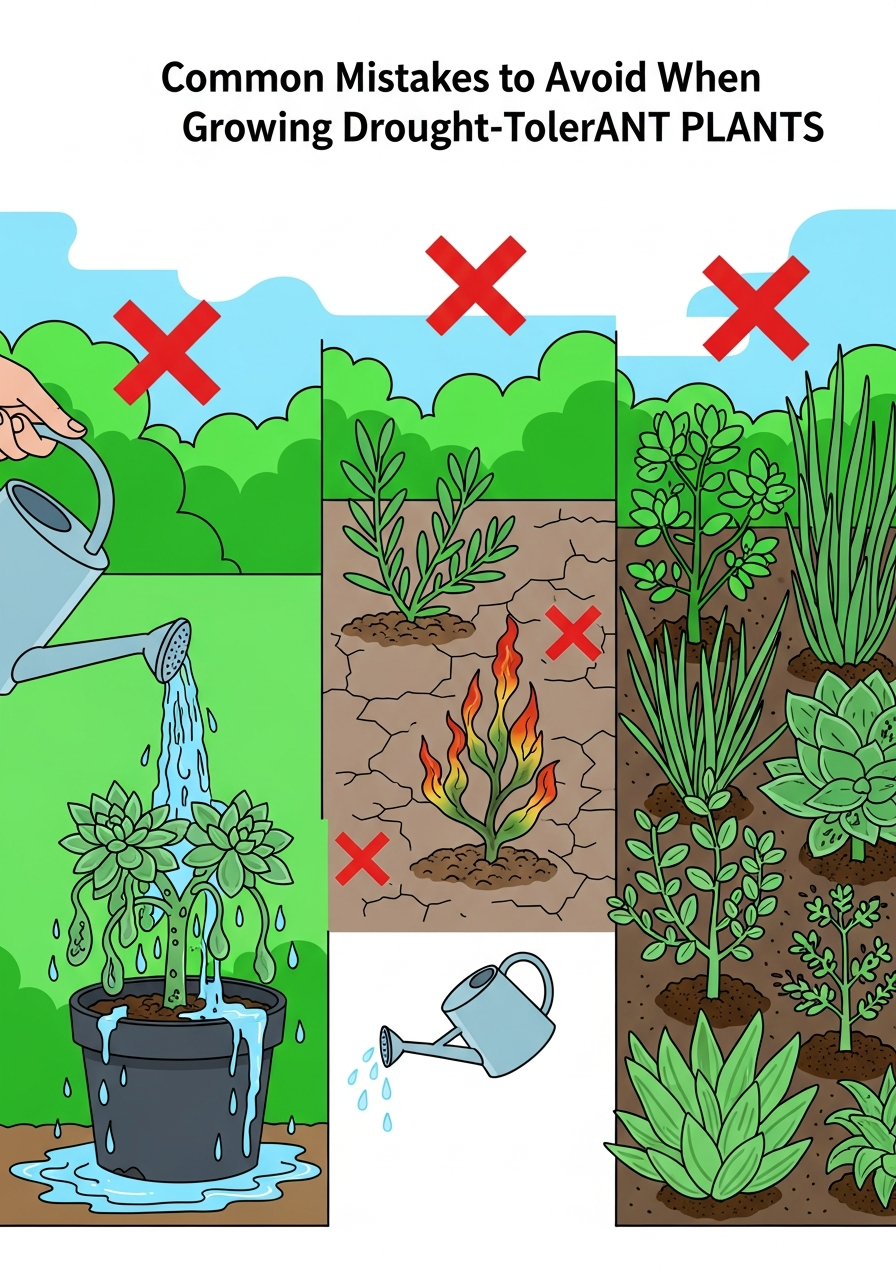
Drought-tolerant plants are often praised as “set it and forget it” solutions for water-wise gardens. While these plants are resilient, they’re not indestructible. Many gardeners struggle with drought-tolerant landscapes—not because of neglect, but because of well-intentioned mistakes.
If you want your low-water garden to thrive, avoid these common pitfalls when growing drought-tolerant plants.
1. Overwatering
This is the most common—and most damaging—mistake.
Many drought-tolerant plants, especially succulents and Mediterranean species, are adapted to dry conditions. Too much water can lead to:
- Root rot
- Fungal diseases
- Weak root systems
Tip: Water deeply but infrequently, allowing soil to dry out between watering sessions.
2. Choosing the Wrong Plant for Your Climate
Not all drought-tolerant plants thrive in every environment.
A plant that performs well in a desert climate may struggle in humid or cold regions. Ignoring your local conditions can result in poor growth or plant failure.
Tip: Prioritize native or regionally adapted plants that are proven to perform well in your climate.
3. Ignoring Soil Drainage
Drought-tolerant plants typically prefer well-draining soil. Heavy clay or compacted soil can trap moisture around roots, even if you water sparingly.
Tip:
- Amend soil with compost or sand if needed
- Use raised beds or berms in areas with poor drainage
Good drainage is just as important as reduced watering.
4. Grouping Plants Incorrectly
Mixing drought-tolerant plants with high-water plants leads to irrigation problems.
This often results in:
- Overwatering drought-tolerant plants
- Underwatering thirstier plants
Tip: Use hydrozoning—group plants with similar water needs together to simplify irrigation and maintenance.
5. Skipping the Establishment Period
Even drought-tolerant plants need regular watering when they’re first planted.
Failing to water during the establishment phase can prevent roots from developing properly.
Tip: Water new plants consistently for the first few weeks (or months), then gradually reduce watering as they establish.
6. Overusing Fertilizer
Many drought-tolerant plants evolved in nutrient-poor soils. Excess fertilizer can cause:
- Rapid, weak growth
- Fewer flowers
- Increased water needs
Tip: Use minimal fertilizer, and only when plants show signs of nutrient deficiency.
7. Forgetting Mulch
Bare soil loses moisture quickly and encourages weed growth.
Without mulch, even drought-tolerant plants may struggle during extreme heat.
Tip: Apply mulch around plants to:
- Reduce evaporation
- Regulate soil temperature
- Suppress weeds
Gravel mulch works especially well for xeriscape gardens.
8. Expecting a Traditional Garden Look
Drought-tolerant gardens don’t always look lush and manicured year-round.
Plants may:
- Go dormant during extreme heat
- Have seasonal changes in color or form
Tip: Embrace a natural, relaxed aesthetic that highlights texture, form, and seasonal variation.
Final Thoughts
Drought-tolerant gardening is about working with nature, not fighting it. By avoiding these common mistakes and understanding your plants’ true needs, you’ll create a garden that’s resilient, low-maintenance, and beautiful—even in the driest conditions.
With the right approach, drought-tolerant plants can thrive for years while saving water and effort.