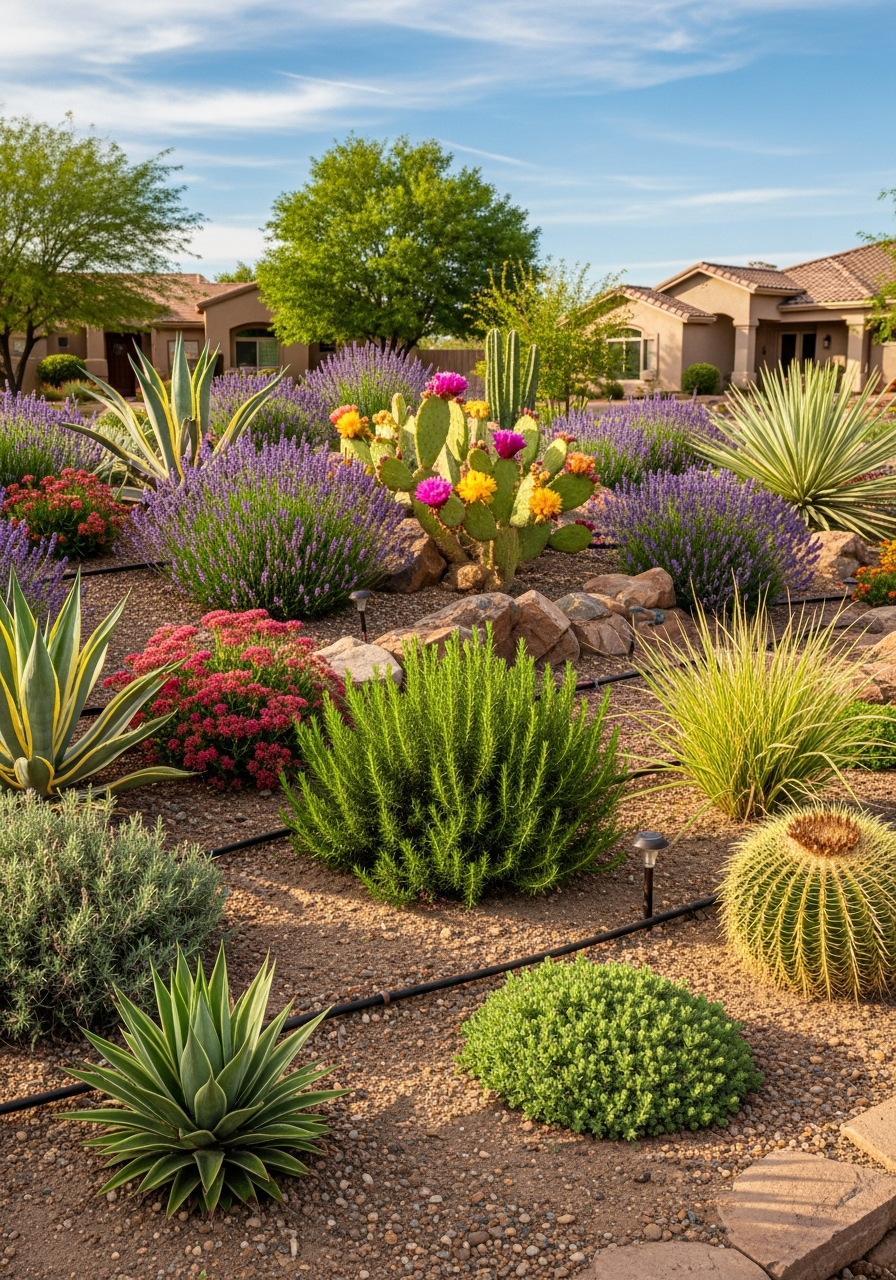
As water conservation becomes increasingly important, homeowners are rethinking traditional landscapes that demand frequent irrigation. A water-wise garden uses plants that thrive with minimal supplemental water—without sacrificing beauty or seasonal interest.
The best drought-tolerant plants are often native or climate-adapted species with deep roots, tough foliage, and efficient water use. Below is a curated list of top drought-tolerant plants, along with tips for designing a landscape that saves water and stays vibrant year-round.
🌎 What Makes a Plant Drought-Tolerant?
Drought-tolerant plants share common survival traits:
- 🌱 Deep or extensive root systems
- 🍃 Waxy, fuzzy, or narrow leaves that reduce water loss
- 🌞 Ability to thrive in full sun
- 💧 Minimal watering once established
🌼 Top Drought-Tolerant Perennials
Purple Coneflower (Echinacea purpurea)
A favorite for pollinators and gardeners alike, purple coneflower thrives in sunny, dry conditions once established.
Why it works:
- Deep taproot
- Long bloom period
- Excellent for pollinators
Yarrow (Achillea millefolium)
Yarrow’s feathery foliage and flat flower clusters make it a standout in hot, dry landscapes.
Why it works:
- Extremely drought tolerant
- Spreads gently
- Attracts beneficial insects
Blanket Flower (Gaillardia pulchella)
This heat-loving perennial blooms continuously with little water and thrives in poor soils.
Why it works:
- Long-lasting color
- Tolerates heat and drought
- Ideal for borders and containers
🌾 Drought-Tolerant Grasses
Little Bluestem (Schizachyrium scoparium)
This native grass adds texture and four-season interest while requiring minimal irrigation.
Why it works:
- Deep roots prevent erosion
- Excellent winter interest
- Thrives in poor soil
Blue Grama (Bouteloua gracilis)
A compact native grass ideal for xeriscaping and low-water lawns.
Why it works:
- Very low water needs
- Handles heat and wind
- Soft, fine texture
🌳 Drought-Tolerant Shrubs & Small Trees
Serviceberry (Amelanchier spp.)
Once established, serviceberry tolerates dry periods while offering flowers, fruit, and fall color.
Why it works:
- Multi-season interest
- Supports birds and pollinators
- Compact size
Desert Willow (Chilopsis linearis)
A standout choice for arid regions, desert willow thrives with little irrigation and produces showy blooms.
Why it works:
- Extremely drought tolerant
- Light, airy canopy
- Attracts hummingbirds
🌿 Succulents & Groundcovers for Dry Gardens
Prickly Pear Cactus (Opuntia spp.)
Ideal for hot, dry climates, prickly pear offers unique texture and flowers.
Why it works:
- Stores water in pads
- Minimal care required
- Wildlife friendly
Creeping Thyme (Thymus spp.)
A low-growing, drought-tolerant groundcover that thrives between stepping stones.
Why it works:
- Reduces evaporation
- Suppresses weeds
- Aromatic foliage
🌱 Design Tips for a Water-Wise Garden
- 💧 Water deeply but infrequently during establishment
- 🌞 Group plants with similar water needs
- 🌿 Use mulch to reduce evaporation
- 🪨 Replace turf with gravel, natives, or groundcovers
- ✂️ Avoid excessive pruning that increases water loss
🌻 Final Thoughts
A water-wise garden doesn’t have to look sparse or dull. By choosing drought-tolerant plants and designing with water efficiency in mind, you can create a landscape that thrives even during dry spells—while saving water, time, and money.
Drought-tolerant gardening is about working with nature, not against it.