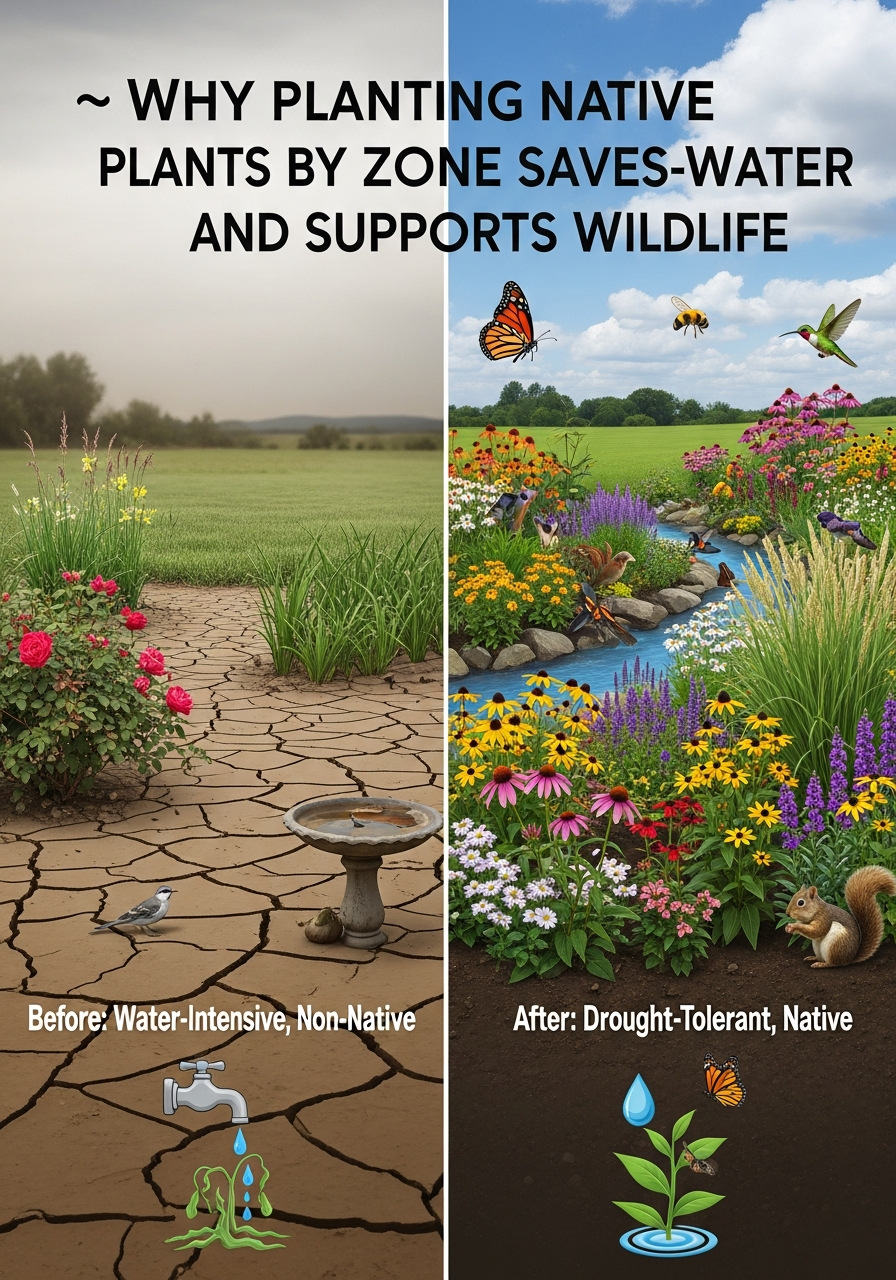
As water conservation and habitat loss become growing concerns, homeowners are looking for landscaping solutions that are both beautiful and responsible. One of the most effective choices you can make is planting native plants suited to your USDA hardiness zone.
Native plants are naturally adapted to local climates, rainfall patterns, and seasonal changes. When planted in the right zone, they require less water, fewer resources, and provide critical support for wildlife—making them a win for both your yard and the environment.
🌎 What Does “Planting by Zone” Mean?
USDA hardiness zones are based on average minimum winter temperatures. Choosing plants that are native to your zone ensures they can survive seasonal extremes without extra irrigation or protection.
Why this matters:
Plants adapted to your zone have evolved to thrive with the rainfall, soil conditions, and temperature patterns of your region.
💧 How Native Plants Save Water
1. Adapted to Local Rainfall
Native plants evolved alongside local weather patterns, meaning they typically survive on natural rainfall alone once established.
- Deep root systems access groundwater
- Less supplemental irrigation needed
- Reduced runoff and erosion
2. Deeper Roots = Better Water Retention
Many native grasses and perennials have root systems that extend far deeper than turf grass.
- Improve soil structure
- Increase water infiltration
- Reduce evaporation
This makes native landscapes far more resilient during drought conditions.
3. Lower Maintenance, Less Waste
Native plants don’t need constant watering, fertilizing, or soil amendments—saving water directly and indirectly.
- Fewer chemicals entering waterways
- Less frequent lawn watering
- Reduced need for reseeding or replacement
🦋 How Native Plants Support Wildlife
1. Essential Food for Pollinators
Native flowers provide nectar and pollen that bees, butterflies, and hummingbirds recognize and rely on.
Many insects can only feed on specific native plants, making them irreplaceable.
2. Host Plants for Butterflies & Moths
Unlike many non-native ornamentals, native plants support larval stages of insects.
- Milkweed supports monarch butterflies
- Oaks support hundreds of caterpillar species
- Goldenrod feeds late-season pollinators
Without native host plants, many species cannot complete their life cycles.
3. Shelter and Nesting Habitat
Native shrubs, grasses, and perennials provide:
- Cover from predators
- Nesting sites for birds
- Overwintering habitat for beneficial insects
Leaving seed heads and leaf litter through winter further enhances habitat value.
🌱 Native Plants vs. Traditional Lawns
| Feature | Native Plants | Traditional Lawn |
|---|---|---|
| Water Use | Low | High |
| Wildlife Value | High | Minimal |
| Maintenance | Minimal | Frequent mowing & fertilizing |
| Root Depth | Deep | Shallow |
| Drought Tolerance | High | Low |
Replacing even a portion of lawn with native plants can dramatically reduce water use while boosting biodiversity.
🌿 Why Planting by Zone Maximizes These Benefits
Planting native plants outside their natural zone often requires extra watering, winter protection, or replacement—negating environmental benefits.
By planting native plants that belong in your zone, you ensure:
- 🌎 Maximum water efficiency
- 🦋 Stronger wildlife support
- 💧 Long-term landscape resilience
- 🌱 Lower costs and maintenance
🌻 Final Thoughts
Planting native plants by USDA zone is one of the simplest ways to create a water-wise, wildlife-friendly landscape. These plants don’t just survive—they thrive—while restoring natural balance to your local ecosystem.
Every native plant you add helps conserve water, protect pollinators, and build a healthier environment—starting right in your own yard.