Limited space doesn’t mean limited impact. Even the smallest yard, courtyard, balcony, or urban garden can support biodiversity and look beautiful year-round—especially when planted with native plants suited to your USDA hardiness zone.
Native plants are naturally compact, resilient, and beneficial to pollinators, making them perfect for small-scale and city landscapes. Below is a zone-by-zone guide to native plants that thrive in tight spaces while delivering big benefits.
🌸 Why Native Plants Are Ideal for Small & Urban Gardens
Native plants are especially well-suited for compact landscapes because they:
- 🌱 Require less water and fertilizer
- ✂️ Need minimal pruning
- 🐝 Support pollinators even in small spaces
- 🏙️ Tolerate urban conditions like heat and poor soil
- 🌎 Maximize ecological impact per square foot
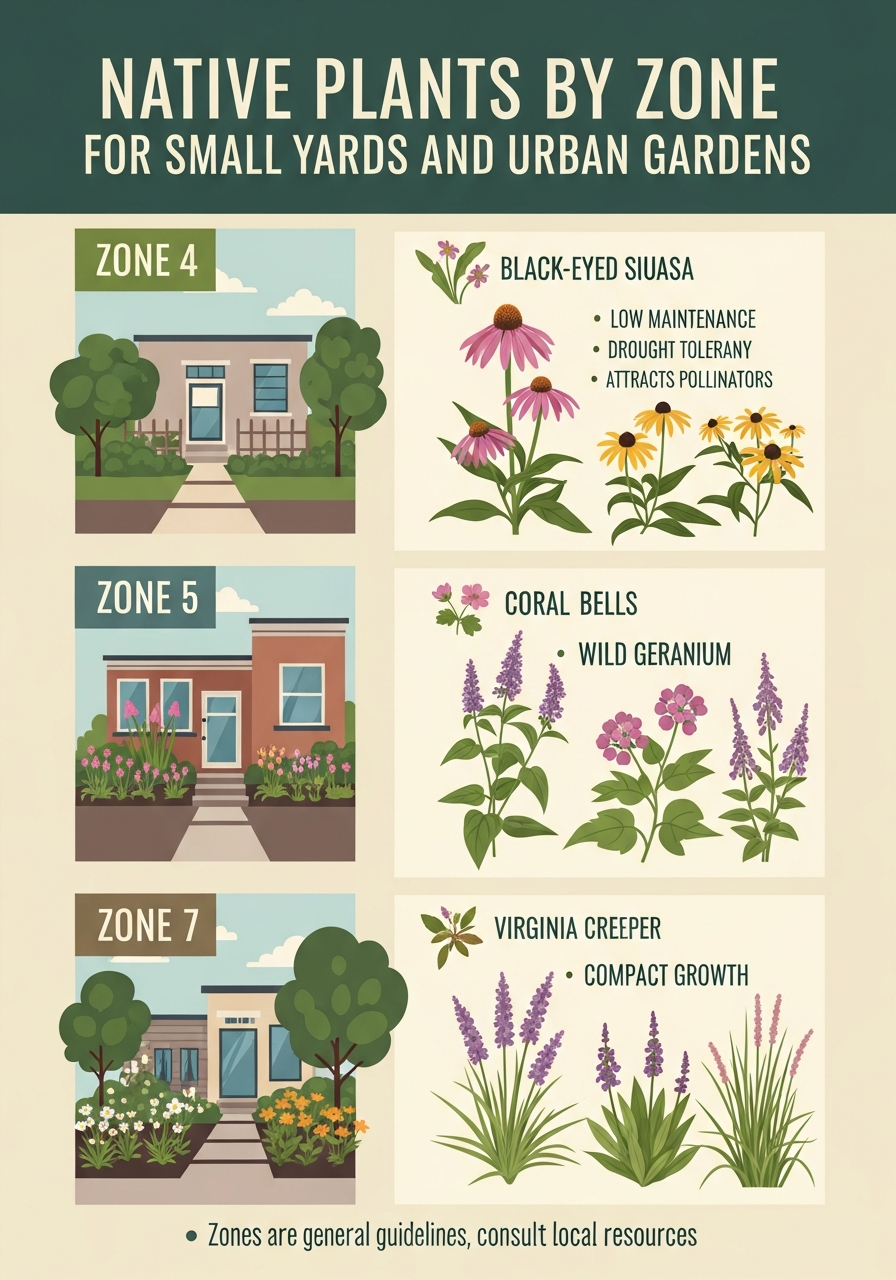
❄️ Zone 3–4: Cold-Climate Natives for Small Spaces
Short growing seasons call for plants that perform efficiently without spreading aggressively.
Top Native Choices:
- Wild Columbine (Aquilegia canadensis) – Compact, spring-blooming, great for partial shade
- Prairie Smoke (Geum triflorum) – Low-growing with unique seed heads
- Little Bluestem (Schizachyrium scoparium) – Clump-forming grass with four-season interest
- Serviceberry (Amelanchier spp.) – Dwarf cultivars work well as small trees or large shrubs
Small-Space Tip:
Choose clump-forming plants over spreading varieties to keep growth controlled.
🌼 Zone 5–6: Versatile Urban Garden Favorites
Zones 5–6 offer many native plants that stay compact while providing long-lasting color.
Top Native Choices:
- Purple Coneflower (Echinacea purpurea) – Upright growth, perfect for borders
- Black-Eyed Susan (Rudbeckia hirta) – Bright, low-care summer blooms
- Wild Bergamot (Monarda fistulosa) – Choose compact varieties for containers
- Switchgrass (Panicum virgatum) – Narrow cultivars add height without crowding
Small-Space Tip:
Vertical plants and ornamental grasses create height without taking up valuable ground space.
🌺 Zone 7–8: Native Plants for Tight Urban Landscapes
Longer growing seasons allow for continuous blooms in compact designs.
Top Native Choices:
- Coreopsis (Coreopsis spp.) – Compact, long-blooming perennials
- Blazing Star (Liatris spicata) – Vertical flower spikes attract butterflies
- Eastern Redbud (Cercis canadensis) – Ideal small tree for courtyards
- Virginia Sweetspire (Itea virginica) – Dwarf forms work well in narrow beds
Small-Space Tip:
Layer plants vertically—groundcover, perennials, shrubs—to maximize visual interest.
☀️ Zone 9–10: Heat-Tolerant Natives for Urban Spaces
Urban heat islands make native, drought-tolerant plants essential in warm climates.
Top Native Choices:
- California Poppy (Eschscholzia californica) – Compact and colorful
- Blanket Flower (Gaillardia pulchella) – Thrives in containers
- Salvia (Salvia spp.) – Excellent for pollinators and small gardens
- Desert Willow (Chilopsis linearis) – Use dwarf varieties for patios and courtyards
Small-Space Tip:
Containers allow flexibility and help control plant size in tight urban settings.
🌿 Design Tips for Small Native Gardens
- 🪴 Use containers and raised beds for flexibility
- 🌞 Match plants carefully to sunlight exposure
- 🌱 Plant densely to reduce weeds
- 🐝 Focus on multi-purpose plants (beauty + pollinators)
- ✂️ Let plants grow naturally—avoid excessive pruning
🌻 Final Thoughts
Small yards and urban gardens can make a big ecological difference. By choosing native plants suited to your zone and space, you’ll create a low-maintenance, pollinator-friendly landscape that thrives even in the heart of the city.
Native gardening isn’t about size—it’s about smart plant choices and thoughtful design.