Creating a beautiful landscape doesn’t have to mean endless watering, fertilizing, or pruning. By choosing native plants suited to your USDA hardiness zone, you can design a low-maintenance landscape that thrives naturally, supports local wildlife, and looks great year-round.
Native plants are adapted to local climates, soils, and rainfall patterns—making them the foundation of sustainable, stress-free gardening. Below is a zone-by-zone guide to some of the best native plants for low-maintenance landscaping across the United States.
🌎 Why Native Plants Are Ideal for Low Maintenance
Before diving into plant lists, here’s why native plants make landscaping easier:
- 🌱 Require less watering once established
- 🦋 Naturally resist local pests and diseases
- ❄️ Tolerate regional weather extremes
- ✂️ Minimal pruning and fertilizing needed
- 🌎 Support pollinators and local ecosystems
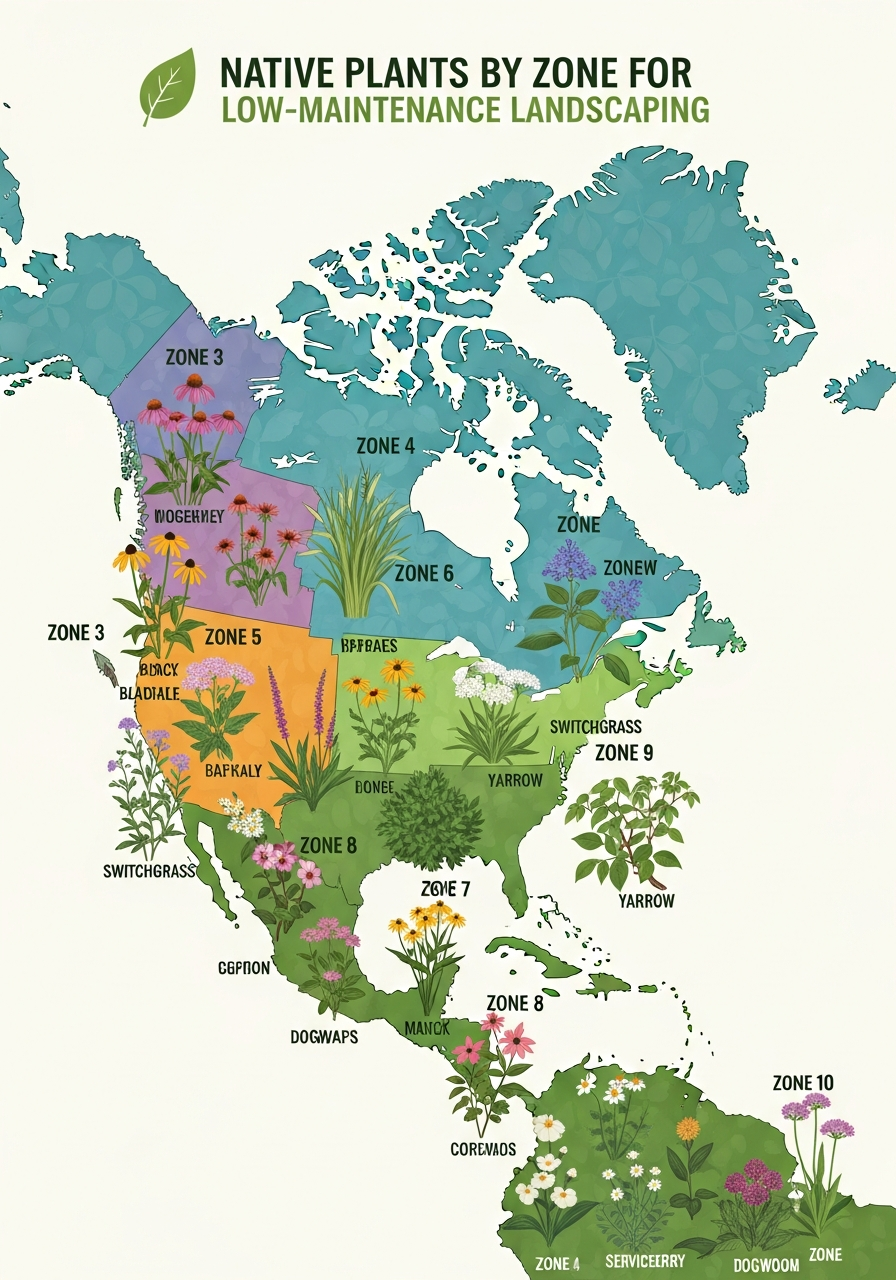
🌸 Zone 3–4: Cold-Hardy Native Plants
Landscapes in colder regions need plants that can withstand harsh winters and short growing seasons.
Top Native Choices:
- Purple Coneflower (Echinacea purpurea) – Drought-tolerant and pollinator-friendly
- Wild Columbine (Aquilegia canadensis) – Spring blooms for shady areas
- Little Bluestem (Schizachyrium scoparium) – Tough ornamental grass with winter interest
- Serviceberry (Amelanchier spp.) – Multi-season shrub or small tree
Low-Maintenance Tip:
Mulch heavily in fall and allow plants to overwinter naturally—no cutting back required.
🌼 Zone 5–6: Balanced Climate Favorites
Zones 5–6 offer a wide range of native plants that thrive with minimal care.
Top Native Choices:
- Black-Eyed Susan (Rudbeckia hirta) – Long-blooming and extremely resilient
- Wild Bergamot (Monarda fistulosa) – Excellent for pollinators
- Switchgrass (Panicum virgatum) – Handles drought and wet soil
- Red-Osier Dogwood (Cornus sericea) – Stunning winter color
Low-Maintenance Tip:
Group plants with similar water needs to reduce irrigation demands.
🌺 Zone 7–8: Warm-Season Natives
Milder winters and longer growing seasons allow for bold textures and extended blooms.
Top Native Choices:
- Coreopsis (Coreopsis spp.) – Bright, long-lasting blooms
- Eastern Redbud (Cercis canadensis) – Early spring flowers with minimal upkeep
- Virginia Sweetspire (Itea virginica) – Thrives in sun or shade
- Muhly Grass (Muhlenbergia capillaris) – Soft pink fall color
Low-Maintenance Tip:
Avoid overwatering—many natives prefer drier conditions once established.
🌴 Zone 9–10: Heat- and Drought-Tolerant Natives
In hot, dry climates, native plants reduce water use while maintaining beauty.
Top Native Choices:
- Blanket Flower (Gaillardia pulchella) – Heat-loving and colorful
- Yarrow (Achillea millefolium) – Extremely drought tolerant
- Desert Willow (Chilopsis linearis) – Low-water flowering tree
- California Lilac (Ceanothus spp.) – Evergreen beauty for mild winters
Low-Maintenance Tip:
Use gravel or natural mulch to reduce evaporation and suppress weeds.
🌿 Design Tips for a Truly Low-Maintenance Native Landscape
- 🌞 Match plants to sun, soil, and moisture conditions
- 🌱 Plant densely to reduce weeds
- ✂️ Leave seed heads and grasses standing through winter
- 🐝 Skip pesticides to let nature balance itself
- 💧 Water deeply but infrequently during establishment
🌻 Final Thoughts
Choosing native plants by USDA zone is one of the easiest ways to create a landscape that’s both beautiful and effortless. With the right plant selections, your garden will thrive naturally—saving time, water, and money while supporting pollinators and local wildlife.
Low-maintenance landscaping doesn’t mean low impact—it means working with nature, not against it.