USDA Zones 5–6 offer ideal conditions for a wide variety of native plants. With moderate winters, warm summers, and diverse rainfall patterns, these zones support many perennials, grasses, shrubs, and trees that are both beautiful and resilient. Choosing native plants adapted to Zones 5–6 helps reduce water use, improve soil health, and support local wildlife.
Understanding USDA Zones 5–6
USDA Zones 5–6 experience:
- Zone 5: -20°F to -10°F (-29°C to -23°C)
- Zone 6: -10°F to 0°F (-23°C to -18°C)
These zones typically have moderate growing seasons and fewer temperature extremes than colder northern regions.
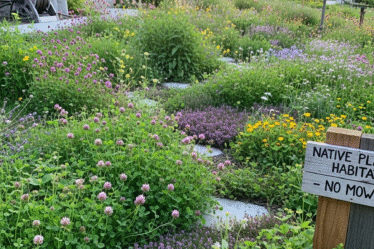
Image suggestion: A thriving mixed native landscape in a temperate climate.
Why Native Plants Thrive in Zones 5–6
Native plants in these zones are well adapted to seasonal changes, occasional drought, and local soil conditions. Benefits include:
- Reduced irrigation needs
- Improved resistance to pests and disease
- Support for pollinators and birds
- Lower long-term maintenance
Zones 5–6 are especially well suited for diverse, layered garden designs.
Top Native Perennials for Zones 5–6
Native perennials provide long-lasting color and habitat value.
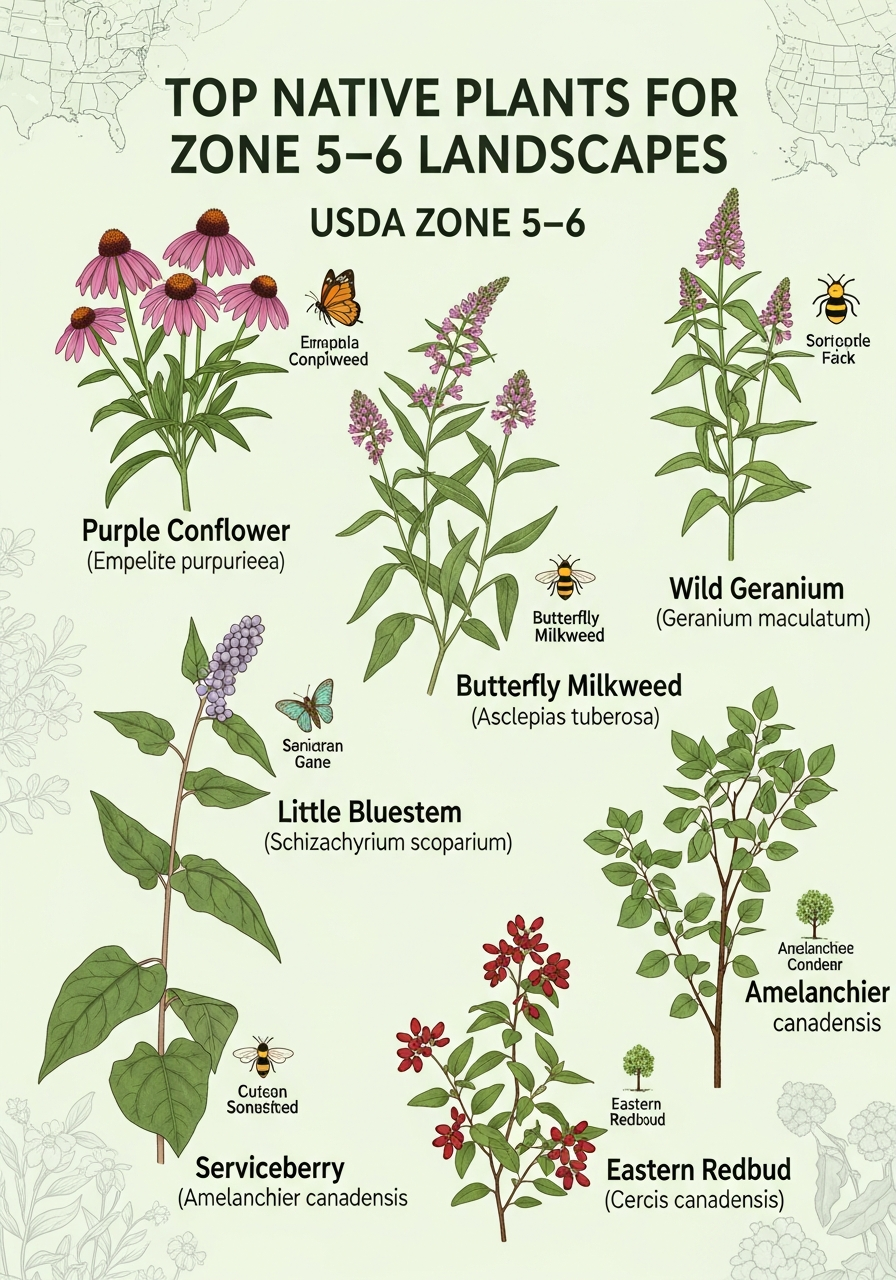
Purple Coneflower (Echinacea purpurea)
- Long-blooming and drought-tolerant
- Attracts bees and butterflies
- Thrives in full sun
Black-Eyed Susan (Rudbeckia hirta)
- Bright yellow blooms
- Very hardy and adaptable
- Excellent for mass plantings
Bee Balm (Monarda)
- Tubular flowers ideal for hummingbirds
- Aromatic foliage
- Performs well in sun or partial shade
Wild Columbine (Aquilegia canadensis)
- Early spring blooms
- Shade-tolerant
- Loved by native pollinators
Image suggestion: Native perennials in full bloom with pollinators.
Top Native Grasses for Zones 5–6
Grasses add texture, movement, and year-round interest.
Little Bluestem
- Blue-green summer color with fall orange tones
- Extremely hardy
- Low water requirements
Switchgrass (Panicum virgatum)
- Upright form and winter structure
- Tolerates wet or dry soils
- Provides wildlife habitat
Prairie Dropseed
- Fine texture and graceful shape
- Very low maintenance
- Excellent for borders and pathways
Top Native Shrubs for Zones 5–6
Shrubs anchor the landscape and provide seasonal interest.
Serviceberry (Amelanchier)
- Spring flowers and edible berries
- Brilliant fall color
- Attracts birds and pollinators
Ninebark (Physocarpus)
- Peeling bark and hardy structure
- Tolerates poor soils
- Minimal pruning required
Buttonbush (Cephalanthus occidentalis)
- Unique spherical flowers
- Thrives in moist areas
- Highly attractive to pollinators
Image suggestion: Native shrubs integrated into a landscape design.
Native Ground Covers for Zones 5–6
Ground covers help suppress weeds and conserve moisture.
- Wild strawberry
- Foamflower
- Creeping phlox
These plants spread naturally and reduce the need for mulch.
Planting and Care Tips for Zones 5–6
To get the best results:
- Plant in spring or early fall
- Water deeply during the first growing season
- Use mulch to retain moisture
- Avoid excessive fertilization
Once established, native plants require minimal care.
Final Thoughts
Top native plants for USDA Zones 5–6 landscapes provide beauty, resilience, and sustainability. By incorporating native perennials, grasses, shrubs, and ground covers, you can create a low-water, wildlife-friendly garden that thrives year after year while reflecting the natural character of your region.
Image suggestion: A mature Zone 5–6 native landscape with layered planting.