Choosing the right plants for your garden starts with understanding your climate zone. Native plants, which have evolved to thrive in specific regions, are naturally adapted to local temperatures, rainfall patterns, and soil conditions. By selecting native plants suited to your zone, you can create a healthier, more resilient, and low-maintenance landscape.
What Are Plant Hardiness Zones?
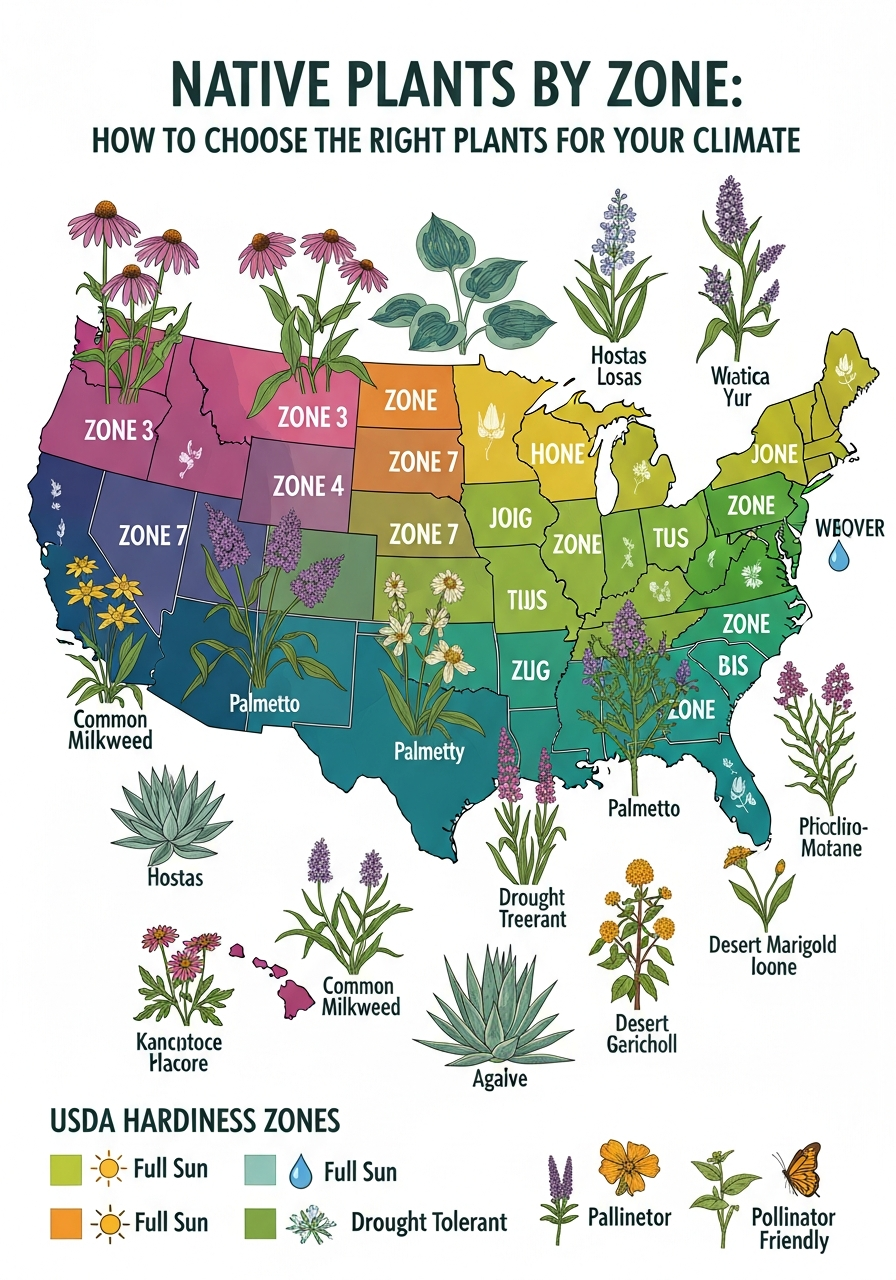
Plant hardiness zones are geographic areas defined by average minimum winter temperatures. In the United States, the USDA Plant Hardiness Zone Map is commonly used to help gardeners determine which plants are most likely to survive and thrive in their area.
Knowing your zone helps you:
- Avoid plant loss due to cold or heat stress
- Reduce water and maintenance needs
- Choose plants with higher long-term success rates
Image suggestion: A simple map showing plant hardiness zones.
Why Native Plants Matter
Native plants are uniquely suited to their local environments. Because they evolved under regional conditions, they typically:
- Require less supplemental watering
- Resist local pests and diseases
- Support native pollinators and wildlife
- Thrive without heavy fertilization
Using native plants by zone ensures your garden works with nature rather than against it.
Step 1: Identify Your Climate Zone
To choose the right native plants, first determine your climate zone:
- Check official plant hardiness zone maps
- Consider microclimates around your home (sun, shade, wind)
- Note seasonal extremes such as heat waves or frost periods
Once you know your zone, you can confidently narrow your plant choices.
Step 2: Match Plants to Temperature and Rainfall
Even within the same zone, rainfall and humidity can vary.
When selecting native plants, consider:
- Drought tolerance vs. moisture preference
- Heat tolerance and sun exposure
- Cold hardiness and frost resistance
Choosing plants adapted to both temperature and rainfall reduces stress and water use.
Native Plant Examples by Zone (General Guide)
Note: Always confirm local recommendations, as species vary by region.
Cooler Zones (Zones 3–5)
- Coneflower (Echinacea)
- Black-eyed Susan (Rudbeckia)
- Serviceberry
- Switchgrass
Image suggestion: Native perennials thriving in cooler climates.
Moderate Zones (Zones 6–8)
- Milkweed varieties
- Native asters
- Little bluestem grass
- Redbud trees
These zones support a wide range of flowering plants and shrubs.
Image suggestion: Mixed native garden in a temperate climate.
Warm and Dry Zones (Zones 9–11)
- Native sages and salvias
- Penstemon
- Manzanita
- Desert marigold
These plants are adapted to heat, sun, and limited rainfall.
Image suggestion: Drought-tolerant native plants in an arid landscape.
Step 3: Consider Soil and Microclimates
Climate zones provide a starting point, but local conditions matter.
Refine your plant choices by observing:
- Soil type (sandy, clay, loam)
- Drainage patterns
- Shaded vs. sunny areas
- Wind exposure
Matching plants to microclimates improves survival and growth.
Step 4: Buy from Local Sources
Local nurseries and native plant sales often carry species best suited to your region.
Benefits include:
- Plants acclimated to local conditions
- Expert advice from regional growers
- Reduced risk of invasive species
Avoid plants labeled only as “drought-tolerant” without regional context.
Step 5: Plan for Long-Term Growth
Native plants may start small but often grow larger and stronger over time.
Plan spacing and layout with maturity in mind:
- Allow room for root systems
- Avoid overcrowding
- Group plants with similar needs
This reduces future maintenance and plant replacement costs.
Final Thoughts
Choosing native plants by zone is one of the most effective ways to create a sustainable, low-water, and resilient garden. By understanding your climate, soil, and local conditions, you can select plants that thrive naturally—saving water, time, and money while supporting local ecosystems.
Image suggestion: A thriving native plant garden adapted to its climate zone.