A low-water garden can do more than conserve water—it can also become a thriving habitat for pollinators like bees, butterflies, hummingbirds, and beneficial insects. With thoughtful plant selection and smart design, you can create a beautiful, drought-tolerant landscape that supports biodiversity while keeping maintenance and water use low.
Why Pollinators Matter
Pollinators play a critical role in ecosystems and food production. Many species are declining due to habitat loss, pesticide use, and climate change. A low-water pollinator garden helps by:
- Providing food and shelter
- Supporting native ecosystems
- Increasing garden productivity
- Enhancing natural beauty and movement
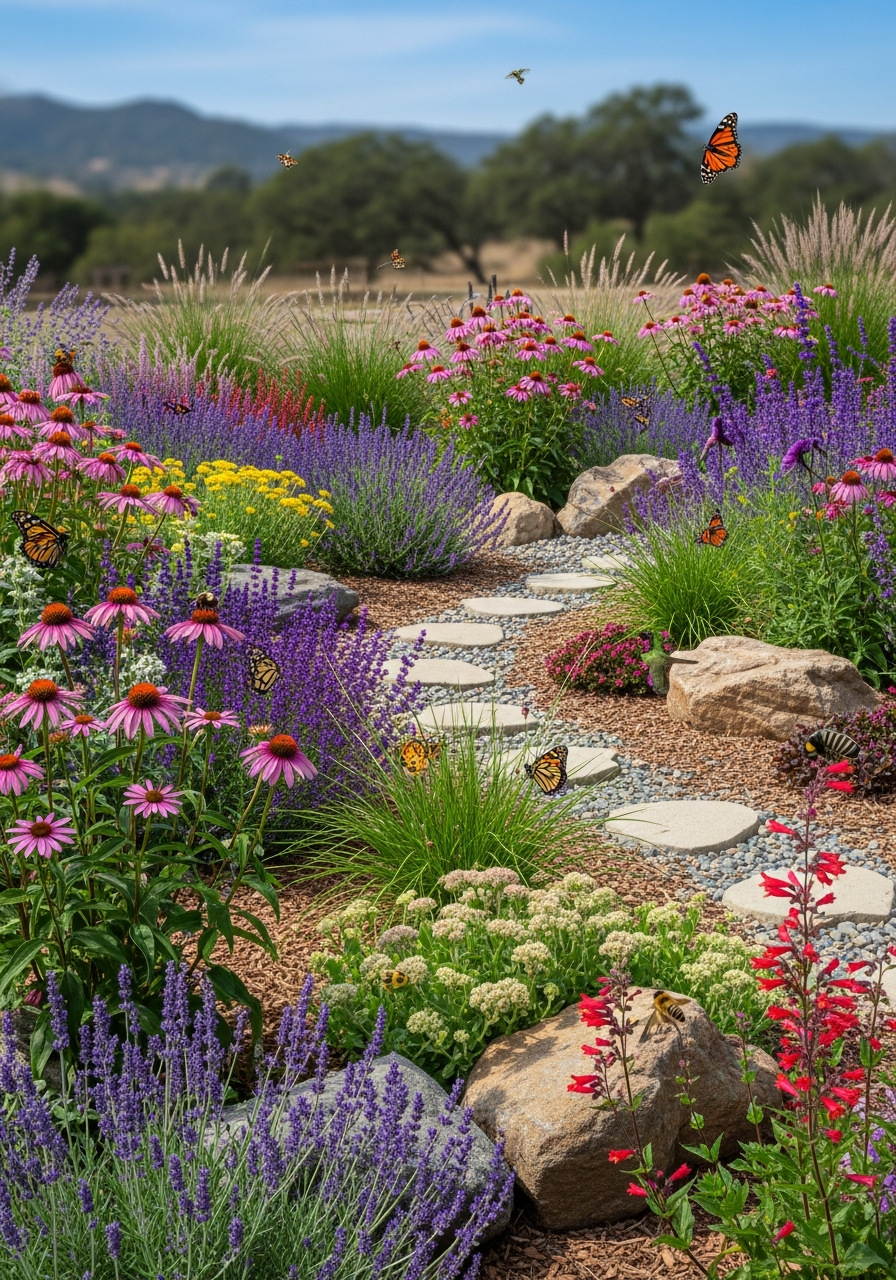
Image suggestion: Bees and butterflies visiting flowering native plants.
Step 1: Choose Pollinator-Friendly, Low-Water Plants
The foundation of a pollinator garden is plant choice. Native, drought-tolerant plants are ideal because pollinators have evolved alongside them.
Look for plants that offer:
- Nectar-rich flowers
- Pollen sources
- Long or staggered bloom times
Examples (vary by region):
- Coneflower, blanket flower, and yarrow
- Native milkweed for butterflies
- Lavender, salvia, and penstemon
- Native sunflowers and asters
Image suggestion: Close-up of native flowers with visible pollinators.
Step 2: Design for Continuous Bloom
Pollinators need food throughout the growing season. Plan your garden so something is always blooming:
- Early-season flowers for emerging pollinators
- Mid-season blooms for peak activity
- Late-season plants for migration and overwintering
This approach ensures a steady food supply without increasing water use.
Step 3: Group Plants for Impact and Efficiency
Planting in clusters rather than single specimens helps pollinators locate flowers more easily and improves water efficiency.
Design tips include:
- Group 3–5 of the same plant together
- Combine plants with similar water needs (hydrozoning)
- Layer plants by height for shelter and visual interest
Image suggestion: A layered garden bed with grouped flowering plants.
Step 4: Reduce Lawn and Add Habitat Features
Replacing turf grass with pollinator-friendly planting beds saves water and increases habitat.
Simple habitat additions include:
- Flat rocks for basking butterflies
- Hollow stems or bee houses
- Leaf litter or mulch for overwintering insects
- Small shrubs for shelter
These features require little to no water but greatly increase garden value for wildlife.
Step 5: Use Mulch and Natural Ground Covers
Mulch helps conserve moisture while creating a healthier environment for pollinators.
Best options include:
- Organic mulch (wood chips, shredded bark)
- Native ground covers instead of gravel where possible
- Leaving seed heads and stems through winter
Avoid synthetic weed barriers that can block beneficial insects.
Step 6: Water Wisely During Establishment
Even drought-tolerant plants need consistent water during their first growing season.
Water-saving strategies:
- Drip irrigation or soaker hoses
- Deep, infrequent watering
- Early-morning irrigation to reduce evaporation
Once established, many pollinator-friendly natives thrive on rainfall alone.
Step 7: Avoid Chemicals and Pesticides
Pollinators are highly sensitive to chemicals. To keep your garden safe:
- Avoid synthetic pesticides and herbicides
- Use manual weed removal when possible
- Encourage beneficial insects to control pests naturally
A healthy ecosystem often regulates itself over time.
Maintenance Tips for a Pollinator-Friendly Garden
Low-water pollinator gardens are designed to be low-maintenance:
- Prune lightly and seasonally
- Leave some spent flowers and seed heads
- Observe pollinator activity and plant performance
- Allow natural reseeding
Less intervention often leads to a stronger, more resilient garden.
Final Thoughts
Low-water garden design that attracts pollinators is a powerful way to conserve resources while giving back to nature. By using native, drought-tolerant plants and wildlife-friendly practices, you can create a vibrant, living landscape that supports pollinators and thrives with minimal water.
Image suggestion: A mature pollinator garden filled with flowers, bees, and butterflies.