Creating a beautiful low-water garden doesn’t have to be expensive. With smart planning, thoughtful plant choices, and a few creative design strategies, you can transform your outdoor space into a water-wise landscape that saves money both upfront and long-term.
Why Choose a Budget-Friendly Low-Water Garden?
Low-water gardens naturally reduce costs by lowering water bills and minimizing maintenance. When designed with a budget in mind, they also:
- Reduce lawn replacement expenses
- Require fewer fertilizers and chemicals
- Lower long-term maintenance and labor costs
- Increase property value without major investment
Image suggestion: A simple, attractive low-water garden in a residential front yard.
Start Small and Design in Phases
You don’t need to redo your entire yard at once. One of the most effective budget strategies is to work in stages:
- Convert one section of lawn at a time
- Focus first on high-water-use areas
- Expand the design as your budget allows
This phased approach spreads out costs and lets you learn what works best in your space.
Choose Native and Drought-Tolerant Plants
Native plants are usually less expensive and easier to maintain because they are adapted to local conditions.
Budget-friendly plant ideas include:
- Native grasses
- Perennials that return each year
- Hardy shrubs instead of annual flowers
- Plants that can be divided and propagated
Buying smaller plants costs less upfront and allows them to establish naturally.
Image suggestion: Young native plants growing in a mulched garden bed.
Replace Grass with Low-Cost Alternatives
Instead of expensive hardscaping, consider affordable lawn replacements:
- Mulch or wood chips
- Decomposed granite
- Gravel pathways
- Low-water ground covers
These options require little maintenance and dramatically reduce irrigation needs.
Improve Soil the Affordable Way
Healthy soil reduces the need for frequent watering and fertilizers.
Cost-saving soil tips:
- Make your own compost from kitchen scraps
- Use grass clippings and leaves as mulch
- Avoid over-amending soil, especially for native plants
Good soil preparation upfront prevents costly plant replacements later.
Use Simple, Efficient Irrigation
High-end irrigation systems aren’t necessary for a low-water garden.
Affordable irrigation options include:
- Soaker hoses
- Basic drip irrigation kits
- Hand watering during plant establishment
Water early in the morning to reduce evaporation and maximize efficiency.
Reuse and Repurpose Materials
Creative reuse is both eco-friendly and budget-conscious:
- Repurpose stones or bricks for borders
- Use fallen branches or logs as natural edging
- Reuse containers for drought-tolerant plants
- Salvage materials from other landscape projects
These elements add character without adding cost.
Image suggestion: Repurposed stone and gravel used in a garden border.
Reduce Maintenance Costs Over Time
A well-designed low-water garden becomes more affordable each year:
- Fewer replacements than traditional lawns
- Less mowing and trimming
- Minimal fertilizer use
- Reduced pest issues
Allow plants to grow naturally rather than constantly reshaping them.
Long-Term Savings Add Up
While budget-friendly low-water gardens save money upfront, the biggest benefit is long-term savings. Reduced water use, fewer materials, and less maintenance make this approach one of the most cost-effective landscaping choices available.
Final Thoughts
Budget-friendly low-water garden design proves that sustainability doesn’t have to be expensive. With native plants, simple materials, and smart planning, you can create an attractive, resilient garden that conserves water and fits comfortably within your budget.
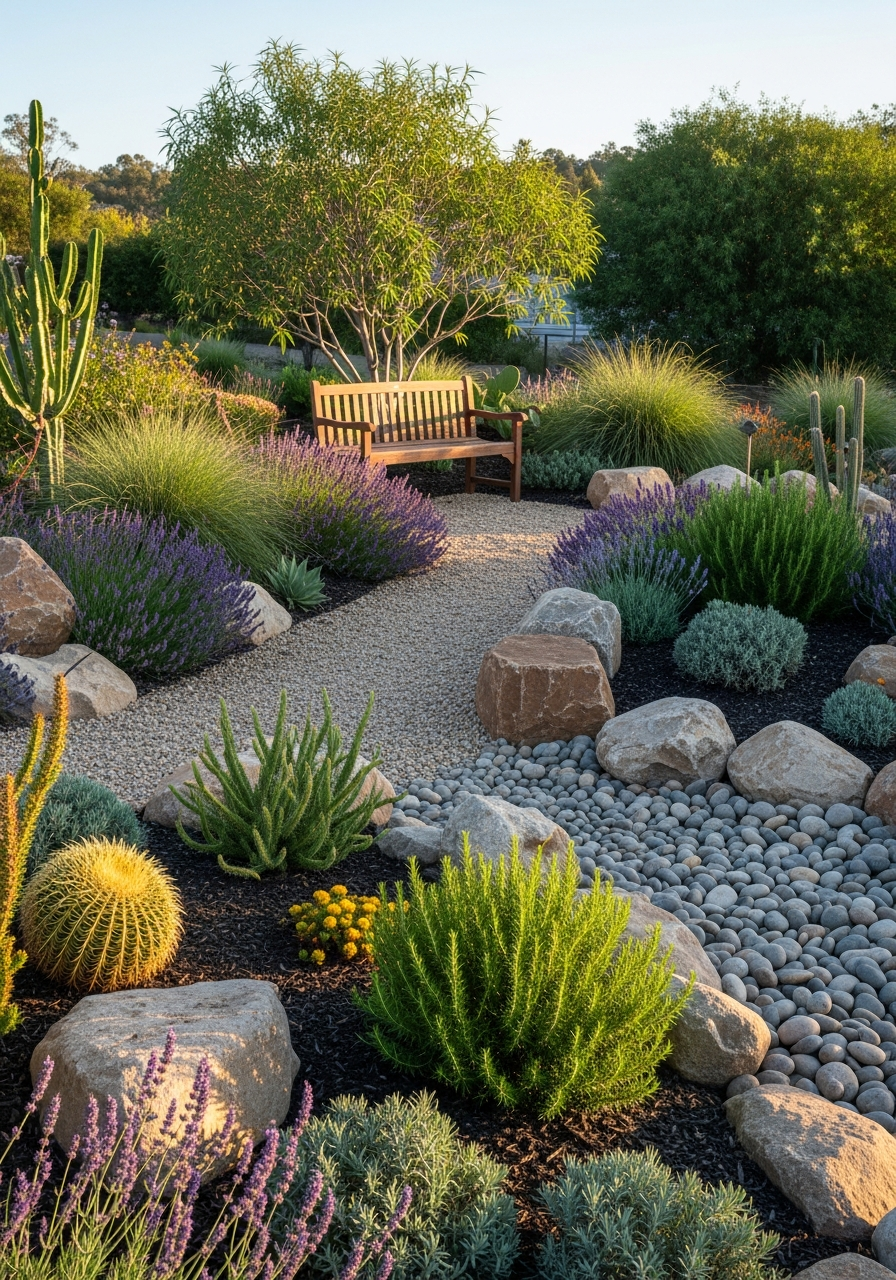
Image suggestion: A finished low-water garden with gravel paths, native plants, and minimal irrigation.