
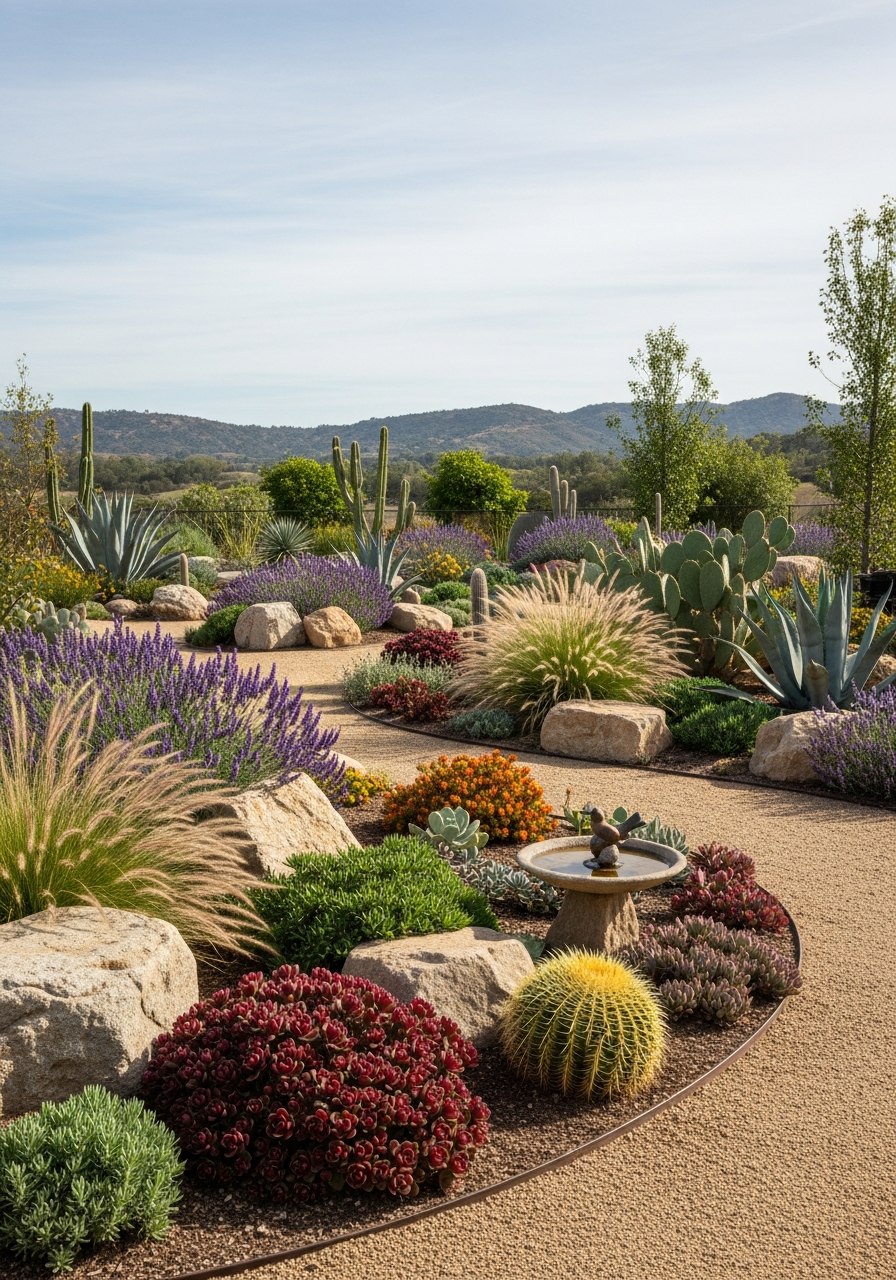
Gardening in hot, dry climates doesn’t have to mean bare gravel and struggling plants. With smart planning and climate-appropriate choices, you can create a low-water garden that thrives in extreme heat while still looking full, inviting, and intentional.
Low-water garden design is about efficiency, resilience, and smart aesthetics—not sacrificing beauty. This guide walks through proven design principles that work in deserts, semi-arid regions, and areas with long, dry summers.
Why Hot, Dry Climates Need a Different Garden Approach

In hot, dry regions, traditional garden styles struggle because:
- Intense sun accelerates evaporation
- Shallow-rooted plants dry out quickly
- Poor soil fails to retain moisture
- Overwatering leads to plant failure, not success
A low-water garden works with these conditions instead of fighting them.
Core Principles of Low-Water Garden Design

Successful low-water gardens in hot climates share a few core principles:
- Right plant, right place
- Minimal exposed soil
- Deep, infrequent watering
- Soil that holds moisture
- Shade where it matters most
These principles guide every design decision.
1. Design Around Sun Exposure and Heat

Sun is the biggest challenge in hot climates.
Smart design strategies:
- Place the toughest plants in full sun
- Use walls, fences, or pergolas to create afternoon shade
- Cluster plants to shade soil and roots
- Avoid isolated “specimen” plants in open sun
Even light shade can reduce water needs by 20–30%.
2. Shrink or Eliminate Traditional Lawn Areas

Grass lawns are one of the highest water users in hot climates.
Low-water alternatives include:
- Native ground covers
- Drought-tolerant ornamental grasses
- Gravel or decomposed granite
- Mulched planting beds with dense perennials
If lawn is necessary, keep it small and shaded.
3. Choose Plants Built for Heat and Drought

Plants for hot, dry climates should:
- Have deep or fibrous root systems
- Feature silvery, waxy, or narrow leaves
- Thrive in intense sun
- Require little water once established
Reliable choices include:
- Lavender
- Salvia
- Russian sage
- Yarrow
- Coneflower (Echinacea)
- Sedum (Stonecrop)
- Native ornamental grasses
Native plants are often the most resilient option.
4. Improve Soil to Maximize Water Retention

Healthy soil is essential in hot climates.
Improve soil by:
- Adding compost or organic matter
- Breaking up compacted ground
- Avoiding frequent tilling
Good soil absorbs water deeply and releases it slowly—reducing how often you need to irrigate.
5. Mulch Is Non-Negotiable

Mulch is one of the most effective water-saving tools available.
Mulch benefits include:
- Reduced evaporation
- Cooler soil temperatures
- Weed suppression
- Root protection during heat waves
Use 2–4 inches of organic mulch or gravel suited to your climate.
6. Use Hardscape to Reduce Water Demand

Hardscape helps define space without using water.
Effective options include:
- Stone paths and patios
- Gravel seating areas
- Raised beds
- Retaining walls
Choose light-colored materials to reduce heat absorption.
7. Water Smarter, Not More

In hot climates, how you water matters more than how often.
Best practices:
- Use drip irrigation or soaker hoses
- Water early morning or evening
- Water deeply but infrequently
- Reduce watering once plants are established
This encourages deep roots and long-term drought tolerance.
8. Design for Long-Term Beauty

A successful low-water garden:
- Relies on foliage and structure, not constant blooms
- Looks intentional even during dry seasons
- Improves over time
- Requires minimal pruning and fertilizing
Texture, repetition, and contrast matter more than flowers alone.
Common Mistakes in Hot, Dry Gardens
- Overwatering drought-tolerant plants
- Leaving soil exposed
- Using too many high-water plants
- Ignoring sun patterns
- Skipping soil preparation
Avoiding these mistakes dramatically improves success.
Final Thoughts
Low-water garden design is essential in hot, dry climates—but it doesn’t mean settling for a harsh or barren landscape. With thoughtful planning, climate-adapted plants, and efficient watering, you can create a garden that’s resilient, attractive, and sustainable.
Less water. Less maintenance. A garden that thrives in the heat.