
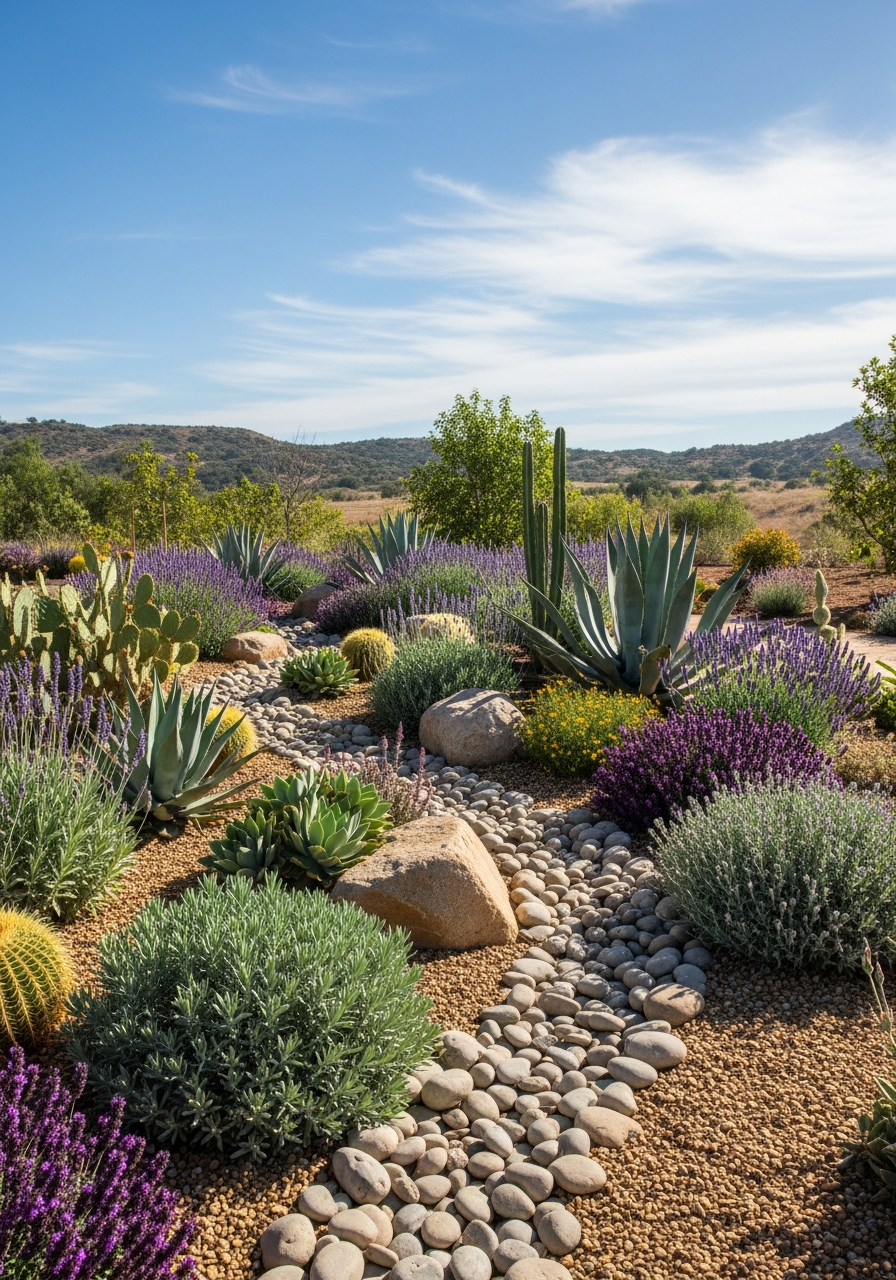
Gardening in hot, dry climates can feel like an uphill battle—but with the right design approach, it’s possible to create a landscape that thrives with minimal water while still looking vibrant and welcoming.
Low-water garden design isn’t about giving up beauty. It’s about working with heat and dryness instead of fighting them. This guide covers practical strategies and plant choices that succeed in harsh, arid conditions.
Why Traditional Gardens Struggle in Hot, Dry Climates

High temperatures, intense sun, and low humidity cause:
- Rapid soil moisture loss
- Shallow-rooted plants to fail
- Increased water bills
- Plant stress and heat damage
Low-water design addresses these challenges by improving efficiency at every level—from soil to plant choice.
Core Principles of Low-Water Design in Hot Climates

Successful low-water gardens in dry regions focus on:
- Reducing evaporation
- Choosing heat-adapted plants
- Improving soil structure
- Limiting high-water zones
- Using efficient irrigation
Step 1: Design Around Sun and Heat Exposure

In hot climates, sun exposure matters more than aesthetics.
Smart strategies include:
- Placing the most drought-tolerant plants in full sun
- Using walls, fences, and trees to create shade
- Grouping plants to protect soil from direct sun
- Avoiding large areas of exposed soil
Even partial shade can significantly reduce water needs.
Step 2: Reduce Lawn and High-Water Areas

Traditional lawns are one of the biggest water drains in hot regions.
Better alternatives include:
- Native ground covers
- Drought-tolerant grasses
- Gravel or decomposed granite
- Mulched planting beds
If lawn is desired, keep it small and shaded.
Step 3: Choose Plants Built for Heat and Drought

Plants for hot, dry climates should:
- Have deep root systems
- Feature small, silvery, or waxy leaves
- Thrive in full sun
- Require little supplemental water
Reliable low-water plants include:
- Lavender
- Salvia
- Yarrow
- Coneflower (Echinacea)
- Russian sage
- Ornamental grasses
- Sedum (Stonecrop)
Step 4: Improve Soil to Hold Moisture Longer

Healthy soil is one of the most overlooked water-saving tools.
Improve soil by:
- Adding compost or organic matter
- Breaking up compacted soil
- Avoiding frequent tilling
Good soil absorbs water deeply and releases it slowly to plant roots.
Step 5: Mulch Generously

Mulch is essential in hot climates.
Benefits of mulch:
- Reduces evaporation
- Keeps soil cooler
- Suppresses weeds
- Protects roots from heat
Apply 2–4 inches of organic mulch or use gravel in arid designs.
Step 6: Use Hardscape Strategically

Hardscape reduces water demand and adds structure.
Effective options include:
- Stone pathways
- Gravel patios
- Retaining walls
- Raised beds
Avoid dark surfaces that absorb excessive heat near plants.
Step 7: Install Efficient Irrigation

When watering is needed, efficiency is critical.
Best practices:
- Use drip irrigation or soaker hoses
- Water early morning or evening
- Water deeply but infrequently
- Adjust watering seasonally
This encourages deep root growth and reduces waste.
Step 8: Design for Long-Term Success

A successful hot-climate garden:
- Looks good even without frequent blooms
- Relies on foliage texture and structure
- Requires minimal pruning and fertilizing
- Improves with age, not constant input
Common Mistakes to Avoid in Hot, Dry Gardens
- Overwatering drought-tolerant plants
- Planting without improving soil
- Leaving soil exposed
- Using too many high-water plants
- Ignoring sun patterns
Final Thoughts
Low-water garden design is not just practical in hot, dry climates—it’s essential. By choosing heat-adapted plants, improving soil, reducing lawn, and using smart irrigation, you can create a resilient landscape that stays attractive even in extreme conditions.
Less water. Less stress. A garden that works with the climate—not against it.