
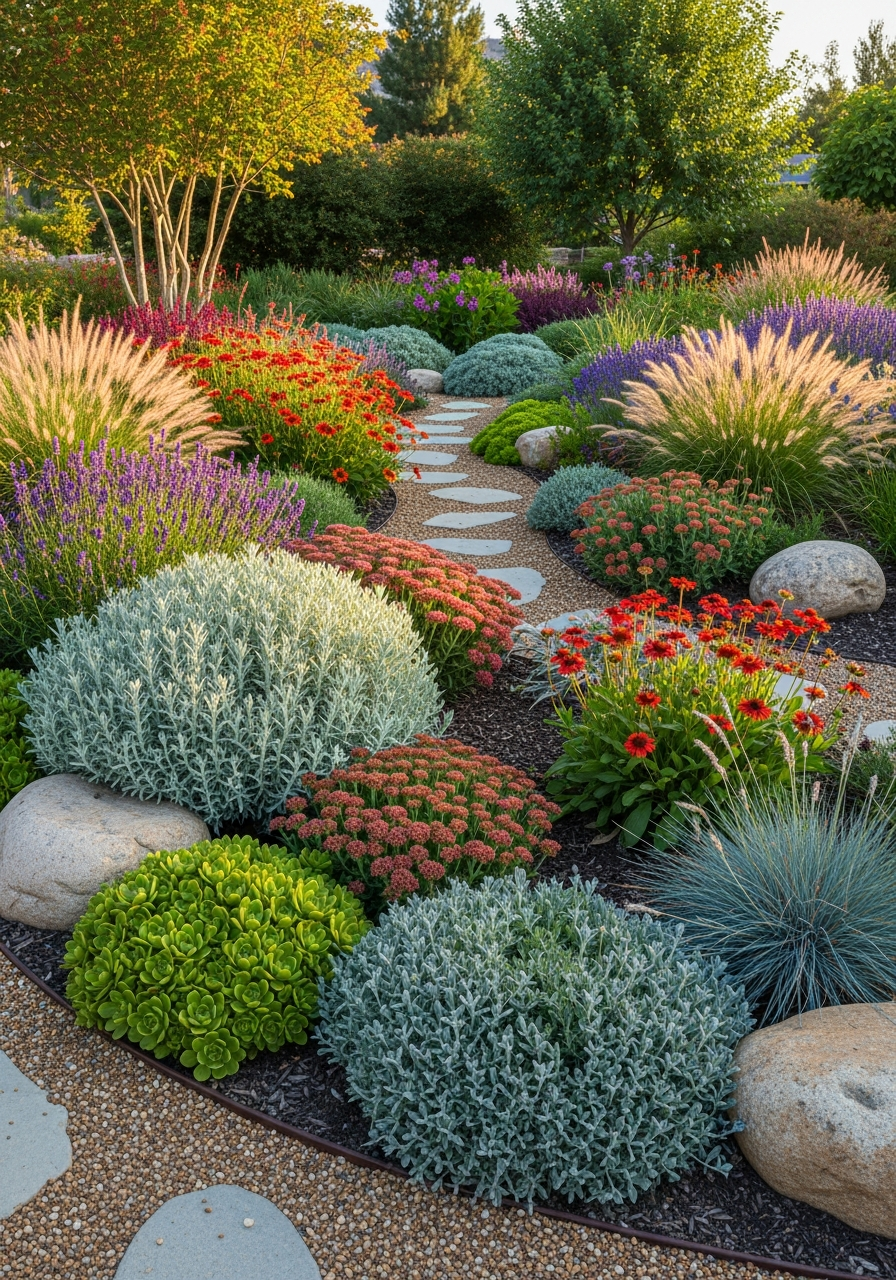
A low-water garden doesn’t have to look dry, sparse, or desert-like. With the right plant choices, you can create a landscape that feels full, vibrant, and lush—while still conserving water.
The secret is selecting plants with rich foliage, long bloom periods, and dense growth habits that thrive on minimal irrigation once established.
How a Low-Water Garden Can Look Lush

Lushness comes from:
- Layering plants of different heights
- Using foliage texture and color
- Choosing plants with long seasons of interest
- Grouping plants closely to shade the soil
Many drought-tolerant plants look their best when planted in thoughtful combinations rather than isolated.
1. Lavender

Lavender adds fullness, fragrance, and color.
Why it looks lush with little water:
- Silvery foliage reflects heat
- Dense growth habit
- Long blooming season
Best for: Sunny, well-drained areas
2. Coneflower (Echinacea)

Bold blooms create instant visual impact.
Why it works:
- Upright growth fills space
- Blooms attract pollinators
- Drought-tolerant once established
Best for: Sunny borders and mixed beds
3. Salvia (Perennial Types)

Salvia creates a full, layered look.
Why it stays lush:
- Long bloom period
- Compact, bushy form
- Minimal watering needs
Best for: Sunny borders
4. Ornamental Grasses

Grasses add movement and fullness.
Why they shine in low-water gardens:
- Dense clumping growth
- Texture year-round
- Extremely drought-tolerant
Best for: Borders, backdrops, and modern gardens
5. Sedum (Stonecrop)

Succulent leaves add thickness and color.
Why it works:
- Stores water in leaves
- Stays attractive through fall and winter
- Requires almost no care
Best for: Front borders and rock gardens
6. Yarrow (Achillea)

Delicate flowers with a dense footprint.
Why it looks lush:
- Fern-like foliage fills space
- Long-lasting blooms
- Very low water needs
Best for: Sunny, low-water beds
7. Heuchera (Coral Bells)

Colorful foliage keeps beds full even without flowers.
Why it works:
- Dense, mounding habit
- Shade-tolerant
- Low water once established
Best for: Partial shade and mixed borders
8. Rosemary (Upright or Creeping)

Evergreen structure with culinary bonus.
Why it stays lush:
- Dense evergreen foliage
- Handles heat and drought
- Minimal maintenance
Best for: Warm, sunny climates
Design Tips for a Lush Low-Water Look
- Plant in groups rather than single specimens
- Layer tall, medium, and low-growing plants
- Use mulch to reduce evaporation
- Mix foliage colors and textures
Best Lush Low-Water Plant Combinations
- Lavender + salvia + ornamental grasses
- Coneflower + yarrow + sedum
- Heuchera + grasses + rosemary (in warm climates)
These combinations deliver fullness with minimal irrigation.
Final Thoughts
A low-water garden doesn’t have to sacrifice beauty. With smart plant choices and thoughtful design, you can create a landscape that feels rich and vibrant—while using far less water.
Lush isn’t about excess—it’s about choosing the right plants.