A beautiful garden doesn’t have to rely on constant watering. With smart design and the right plant choices, you can create a drought-tolerant, low-water garden that saves time, money, and resources—without sacrificing color or curb appeal.
Whether you live in a dry climate or simply want a more sustainable yard, these low-water garden design basics will help you build a landscape that thrives with less water.
What Is a Low-Water (Drought-Tolerant) Garden?

A low-water garden (often called xeriscaping) is designed to:
- Minimize irrigation needs
- Use drought-tolerant plants
- Improve soil moisture retention
- Reduce lawn and high-water areas
The goal isn’t to eliminate water entirely—but to use water wisely and efficiently.
Step 1: Understand Your Site Conditions
Before planting, take time to observe your space.

Consider:
- Sun exposure (full sun vs. partial shade)
- Soil type (sandy, clay, compacted)
- Natural slopes and drainage
- Wind and heat exposure
Designing around existing conditions reduces plant stress and water demand.
Step 2: Reduce or Replace Traditional Lawn

Traditional turf grass is one of the biggest water users in home landscapes.
Low-water alternatives include:
- Native ground covers
- Ornamental grasses
- Gravel or stone with plants
- Mulched planting beds
Reducing lawn size dramatically cuts water use while adding visual interest.
Step 3: Choose Drought-Tolerant Plants

The backbone of any low-water garden is plant selection.
Look for plants that:
- Are native or adapted to your region
- Have deep root systems
- Thrive in full sun
- Need little supplemental water once established
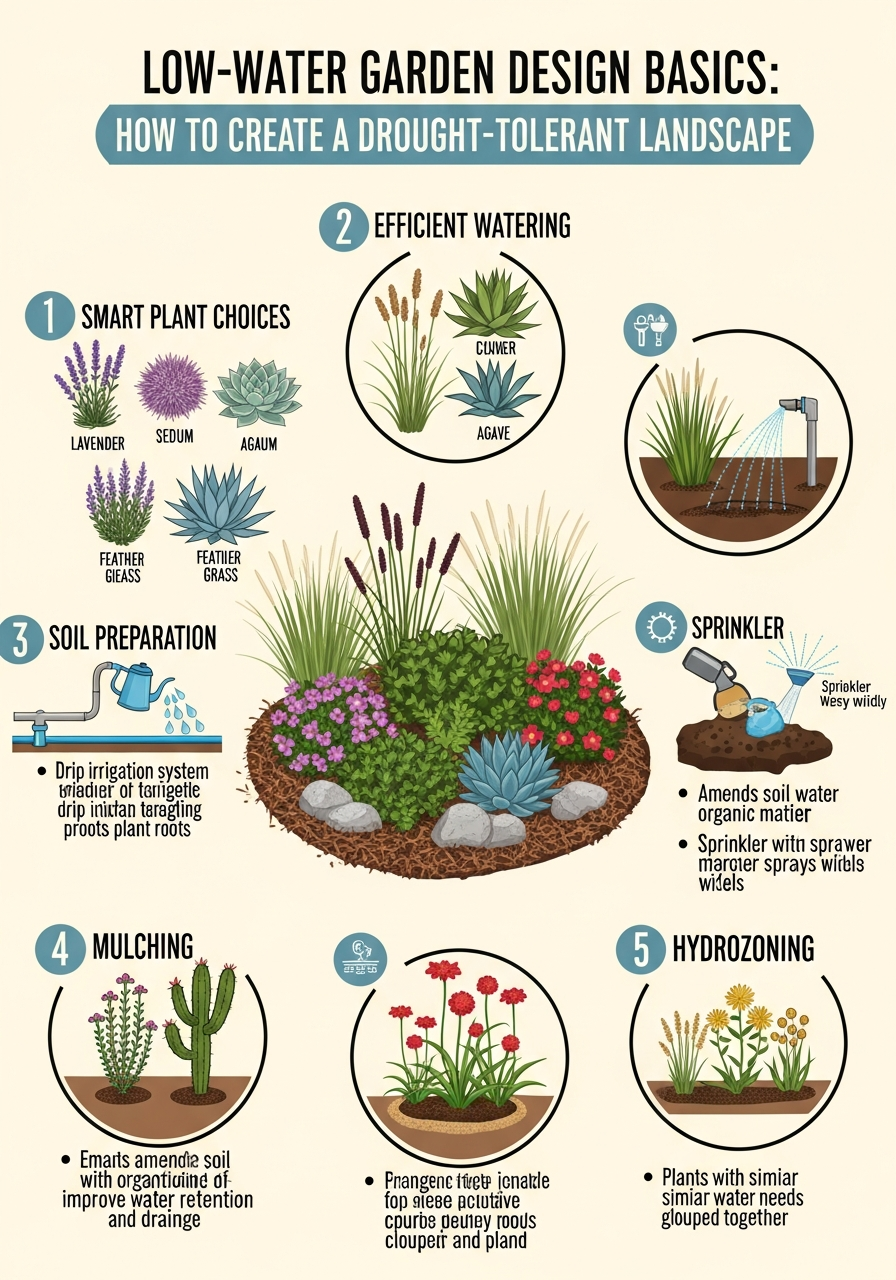
Popular drought-tolerant perennials include:
- Lavender
- Coneflower (Echinacea)
- Yarrow
- Sedum (Stonecrop)
- Russian sage
- Ornamental grasses
Step 4: Group Plants by Water Needs (Hydrozoning)

Place plants with similar water requirements together.
Why it matters:
- Prevents overwatering drought-tolerant plants
- Makes irrigation more efficient
- Simplifies maintenance
High-water plants (if any) should be limited to small, targeted zones.
Step 5: Improve Soil for Water Efficiency

Healthy soil holds moisture longer.
Improve soil by:
- Adding compost or organic matter
- Loosening compacted areas
- Avoiding excessive tilling
Better soil means less runoff, deeper roots, and reduced watering needs.
Step 6: Use Mulch Strategically

Mulch is one of the most effective water-saving tools.
Benefits of mulch:
- Reduces evaporation
- Suppresses weeds
- Regulates soil temperature
Use organic mulch (bark, wood chips, straw) or gravel in arid designs.
Step 7: Install Efficient Irrigation

When watering is needed, do it efficiently.
Best options:
- Drip irrigation
- Soaker hoses
- Smart irrigation timers
Water deeply and infrequently to encourage deep root growth.
Step 8: Design for Long-Term Success

A successful drought-tolerant garden:
- Prioritizes structure and foliage
- Looks good even when not blooming
- Requires minimal pruning and fertilizing
Hardscape elements like stone paths, boulders, and raised beds add beauty without water use.
Common Low-Water Design Mistakes to Avoid
- Choosing plants unsuited to your climate
- Overwatering “drought-tolerant” plants
- Skipping soil preparation
- Using too much lawn
- Forgetting mulch
Final Thoughts
Creating a drought-tolerant landscape isn’t about sacrifice—it’s about smart design. By working with your climate instead of against it, you can enjoy a resilient, attractive garden that saves water, time, and money.
Low-water gardens are easier to maintain, better for the environment, and perfectly suited for modern living.