
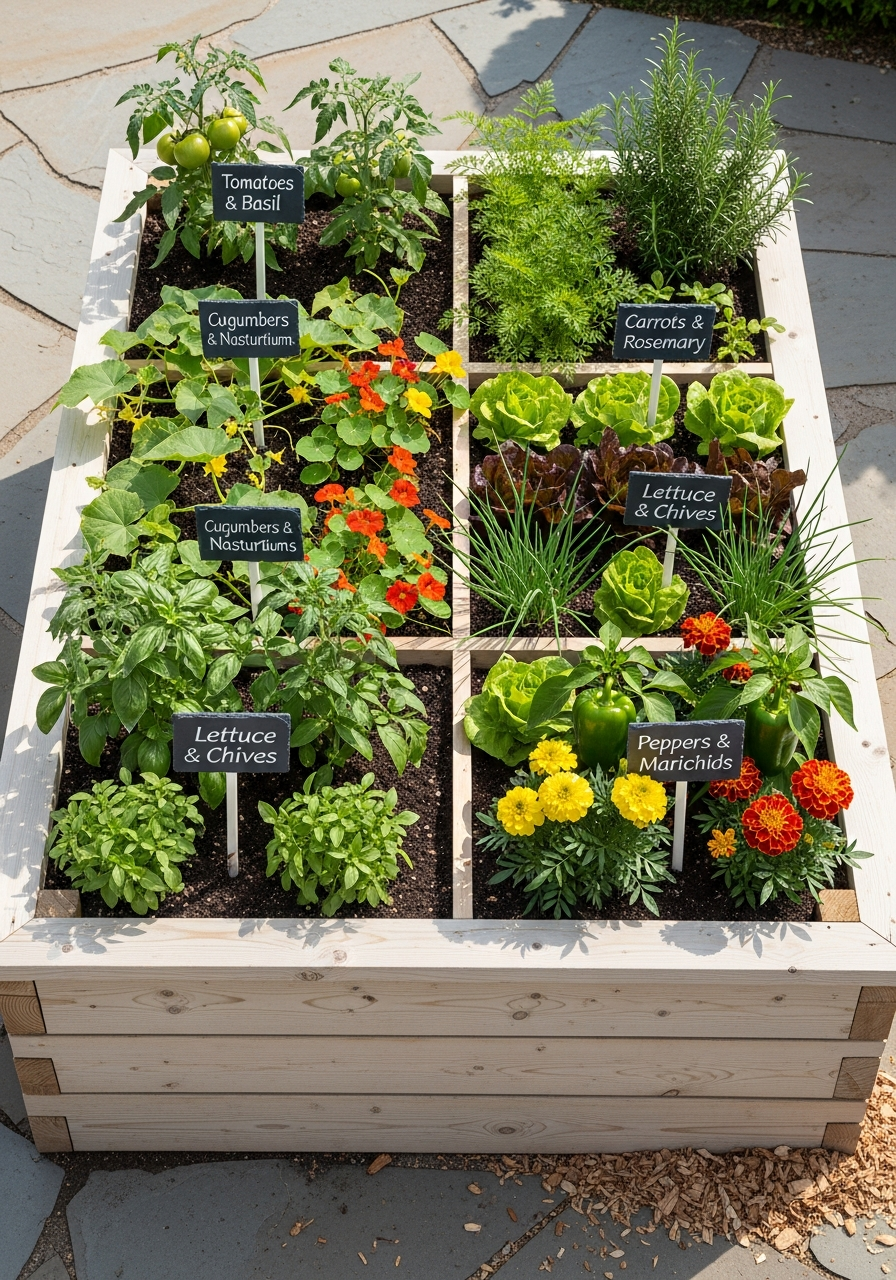
Creating the perfect raised garden bed isn’t just about good soil and sunlight—it’s also about how you arrange your plants. Companion planting helps vegetables grow healthier, reduces pest problems naturally, and makes better use of limited space. With the right layout, a raised bed can become a balanced, productive garden that practically takes care of itself. In this guide, you’ll discover perfect raised garden bed companion planting layout ideas that are practical, proven, and easy to follow.
Why Companion Planting Is Ideal for Raised Garden Beds
Raised garden beds give you full control over soil quality, spacing, and plant placement, which makes them perfect for companion planting.
Benefits of Companion Planting in Raised Beds
- Healthier vegetables with stronger growth
- Natural pest and disease control
- Improved soil balance and nutrient use
- Better airflow and sunlight exposure
- Higher yields in smaller spaces
When plants work together instead of competing, your raised bed thrives.
Core Principles of the Perfect Companion Planting Layout
Before choosing specific plant combinations, follow these essential layout principles:
- Place tall plants on the north side to avoid shading smaller crops
- Mix deep-rooted and shallow-rooted plants
- Group plants with similar water and sunlight needs
- Avoid overcrowding
- Use herbs and flowers as natural pest deterrents
These principles form the foundation of a successful raised bed layout.
Perfect Companion Planting Combinations for Raised Beds
1. Tomatoes, Basil, and Marigolds
A classic and reliable companion planting trio.
Why it works: Basil supports tomato growth and flavor, while marigolds deter pests and nematodes.
2. Peppers and Aromatic Herbs
Peppers grow exceptionally well with herbs like basil, oregano, and chives.
Why it works: Herbs repel pests and attract beneficial insects.
3. Lettuce and Radishes
An excellent pairing for filling space quickly.
Why it works: Radishes mature fast and help protect lettuce from pests.
4. Carrots and Onions
This root crop combination is simple and effective.
Why it works: Onions help deter carrot flies and other insects.
5. Cucumbers and Nasturtiums
Perfect for raised beds with trellises.
Why it works: Nasturtiums repel aphids and beetles while attracting pollinators.
Example of a Perfect Raised Garden Bed Layout
Sample 4×8 Raised Bed Plan
- North side: Tomatoes with basil planted at the base and marigolds along the back edge
- Middle section: Peppers with green onions
- South side: Lettuce and spinach interplanted with radishes
- Edges: Chives, parsley, or dill
This layout balances height, root depth, sunlight, and pest protection.
Plants to Avoid Planting Together
Some plants compete for nutrients or attract the same pests.
Avoid These Pairings
- Tomatoes and potatoes
- Onions and beans
- Cucumbers and sage
- Fennel with most vegetables
Separating incompatible plants helps maintain a healthy garden bed.
Soil and Spacing Tips for the Perfect Raised Bed
- Use nutrient-rich soil mixed with compost
- Follow spacing guidelines to prevent overcrowding
- Mulch lightly to retain moisture
- Water consistently
Healthy soil and proper spacing are essential for companion planting success.
Maintaining a Healthy Companion-Planted Raised Bed
- Harvest regularly to encourage growth
- Monitor plants for pests and disease
- Prune overcrowded growth
- Rotate crops each season
Routine care keeps your raised bed productive year after year.
Common Companion Planting Mistakes to Avoid
- Planting too closely
- Ignoring mature plant size
- Overcomplicating the layout
- Skipping crop rotation
Keeping things simple often produces the best results.
Final Thoughts: Designing the Perfect Raised Garden Bed
The perfect raised garden bed companion planting layout is one that balances plant needs, maximizes space, and supports natural growth patterns. By pairing compatible plants, following basic layout principles, and maintaining healthy soil, you can grow stronger vegetables, reduce pest issues, and enjoy consistent harvests—all from a single raised bed.
Smart planting leads to better gardening.
Happy growing!