Raised planter boxes are one of the best ways to grow vegetables, herbs, and flowers in an organized and productive way. When you combine raised planter boxes with companion planting, you can naturally boost plant health, reduce pests, and increase yields—all while making the most of limited space. This guide shares the best companion planting layout plans for raised planter boxes, designed to be practical, efficient, and easy to maintain.
Why Companion Planting Works So Well in Raised Planter Boxes
Raised planter boxes provide controlled soil conditions, making them ideal for companion planting.
Key Benefits
- Better soil quality and drainage
- Improved plant spacing and organization
- Easier pest and weed control
- Higher yields in small spaces
- Easier maintenance and harvesting
Because space is limited in planter boxes, smart plant pairings make a noticeable difference.
Basic Rules for Companion Planting in Raised Planter Boxes
Before choosing a layout, follow these simple guidelines:
- Select compact or dwarf plant varieties
- Group plants with similar sunlight and water needs
- Avoid overcrowding
- Place taller plants toward the back or center
- Use herbs and flowers as natural pest deterrents
These rules apply to most raised planter box sizes.
Ideal Sizes for Raised Planter Box Layouts
Most companion planting plans work best in these common planter box sizes:
- 2×4 ft raised planter box – ideal for beginners
- 4×4 ft raised planter box – allows more plant combinations
- 12–18 inches deep – best for vegetables and root crops
Deeper boxes support healthier root growth and better yields.
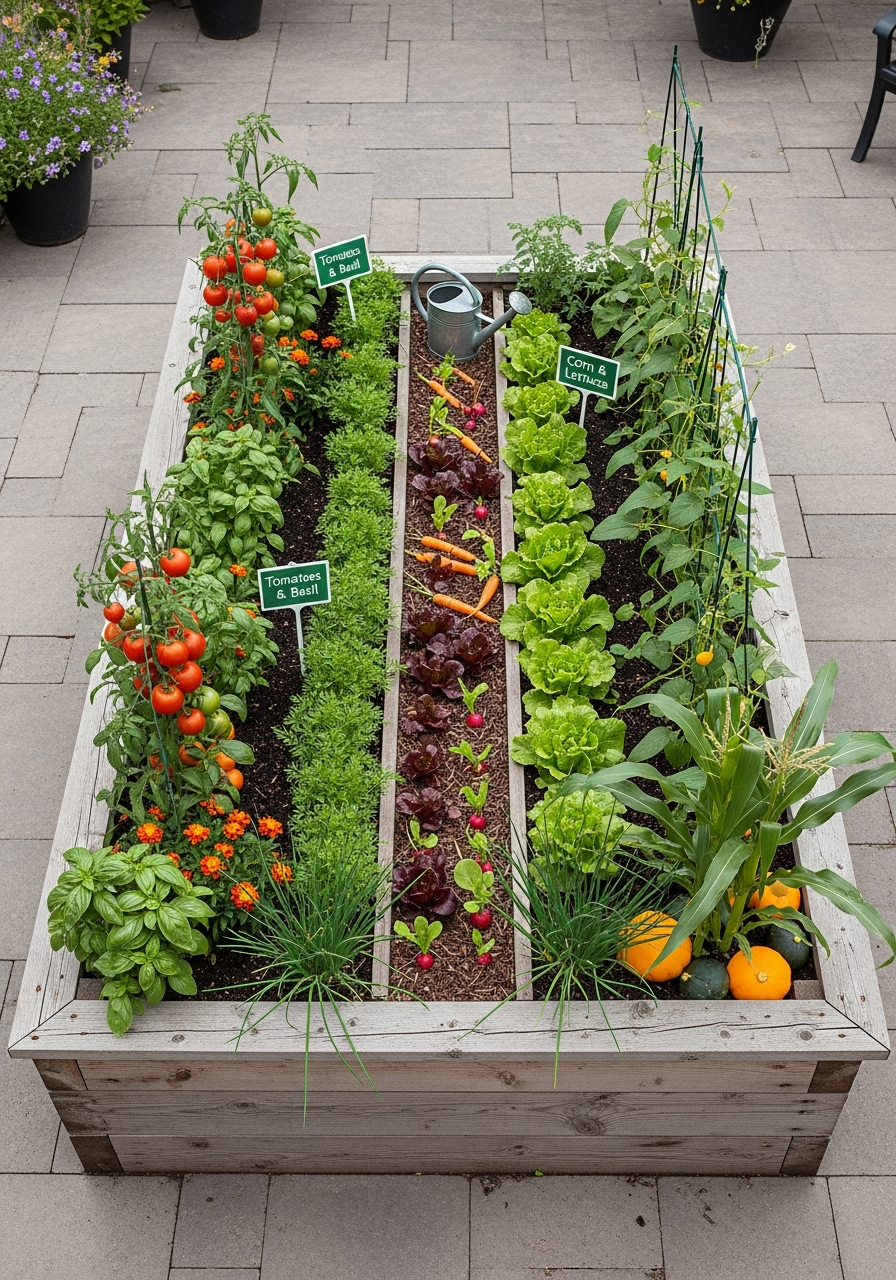
1. Tomato, Basil, and Marigold Layout
This is one of the most effective and popular companion planting layouts.
Why it works: Basil improves tomato growth and flavor, while marigolds deter pests.
Layout plan:
- 1–2 tomato plants placed in the center or back
- Basil planted around the tomatoes
- Marigolds along the edges
2. Lettuce and Radish Raised Planter Layout
Perfect for shallow or narrow planter boxes.
Why it works: Radishes grow quickly and help protect lettuce from pests.
Layout plan:
- Plant lettuce evenly throughout the box
- Sow radish seeds between lettuce plants
3. Pepper and Herb Companion Layout
Herbs are excellent companions for peppers in raised boxes.
Why it works: Herbs repel pests and attract beneficial insects.
Layout plan:
- 2–3 pepper plants spaced evenly
- Surround with basil, oregano, or chives
4. Carrot and Onion Planter Box Layout
This layout works best in deeper raised planter boxes.
Why it works: Onions repel carrot flies.
Layout plan:
- Alternate rows or sections of carrots and onions
5. Cucumber and Nasturtium Raised Box Layout
Ideal for planter boxes placed near walls or fences.
Why it works: Nasturtiums repel aphids and beetles.
Layout plan:
- Grow cucumbers vertically on a trellis
- Plant nasturtiums along the front edge
6. Mixed Herb and Vegetable Raised Planter Box
This layout is great for gardeners who want variety in one box.
Layout plan:
- One main crop (tomato or pepper)
- Leafy greens like lettuce or spinach as fillers
- Herbs such as parsley, chives, or dill around the edges
Plants to Avoid Mixing in Raised Planter Boxes
Because space is limited, avoid these combinations:
- Tomatoes and potatoes
- Beans and onions
- Cucumbers and sage
- Fennel with most vegetables
Separating incompatible plants helps prevent poor growth.
Soil, Watering, and Maintenance Tips
- Use high-quality potting mix with compost
- Water regularly, as raised boxes dry out faster
- Mulch lightly to retain moisture
- Feed plants every 2–3 weeks with organic fertilizer
Healthy soil supports successful companion planting.
Common Companion Planting Mistakes in Raised Boxes
- Overcrowding plants
- Ignoring mature plant size
- Mixing incompatible crops
- Inconsistent watering
Simple planning prevents these issues.
Final Thoughts: Smart Layouts for Better Harvests
The best companion planting layout plans for raised planter boxes focus on simplicity, smart plant pairings, and proper spacing. With the right combinations and a well-planned layout, raised planter boxes can produce impressive harvests while staying easy to maintain. Whether you’re a beginner or an experienced gardener, companion planting helps you grow more in less space.
Happy gardening!