Designing the perfect backyard companion planting layout goes far beyond simply placing “good neighbors” together. An advanced approach combines plant science, spatial planning, soil management, and seasonal strategy to maximize yields, reduce pests, and maintain long-term soil health. This in-depth guide will walk you through how to design a high-performing backyard companion planting layout that works year after year.
Understanding Companion Planting at an Advanced Level
At its core, companion planting leverages biological relationships between plants. These relationships influence:
- Root depth and nutrient uptake
- Pest attraction and repellence
- Beneficial insect populations
- Soil structure and fertility
Advanced companion planting focuses on ecosystem balance, not just plant pairings.
Step 1: Analyze Your Backyard Growing Environment
Before designing any layout, evaluate your site conditions in detail.
Key Factors to Assess
- Sun patterns: Track sunlight throughout the day and season
- Prevailing winds: Use taller crops or hedges as windbreaks
- Soil texture: Clay, loam, or sandy soil affects plant choice
- Drainage: Raised beds may be necessary for poorly draining soil
- Microclimates: Walls, fences, and trees can create warmer or cooler zones
Advanced layouts are customized to these microconditions rather than relying on generic plans.
Step 2: Group Plants by Function, Not Just Type
Instead of organizing beds by vegetable type, advanced gardeners group plants by function.
Functional Plant Categories
- Heavy feeders: Tomatoes, corn, squash
- Soil builders: Beans, peas, clover
- Pest deterrents: Basil, marigolds, chives
- Pollinator attractors: Dill, calendula, borage
- Ground covers: Lettuce, spinach, squash
Designing beds with these roles in mind increases efficiency and resilience.
Step 3: Design the Garden Bed Layout Strategically
Height and Canopy Planning
- Place tall crops (corn, tomatoes) on the north side
- Medium-height plants (peppers, beans) in the center
- Low-growing or ground-cover plants toward the south
This layering maximizes sunlight capture and airflow.
Root Zone Compatibility
- Pair deep-rooted plants (tomatoes, carrots) with shallow-rooted crops (lettuce, herbs)
- Avoid competition by staggering root depths
This technique improves nutrient access and soil stability.
Step 4: Advanced Companion Planting Combinations
High-Performance Plant Guilds
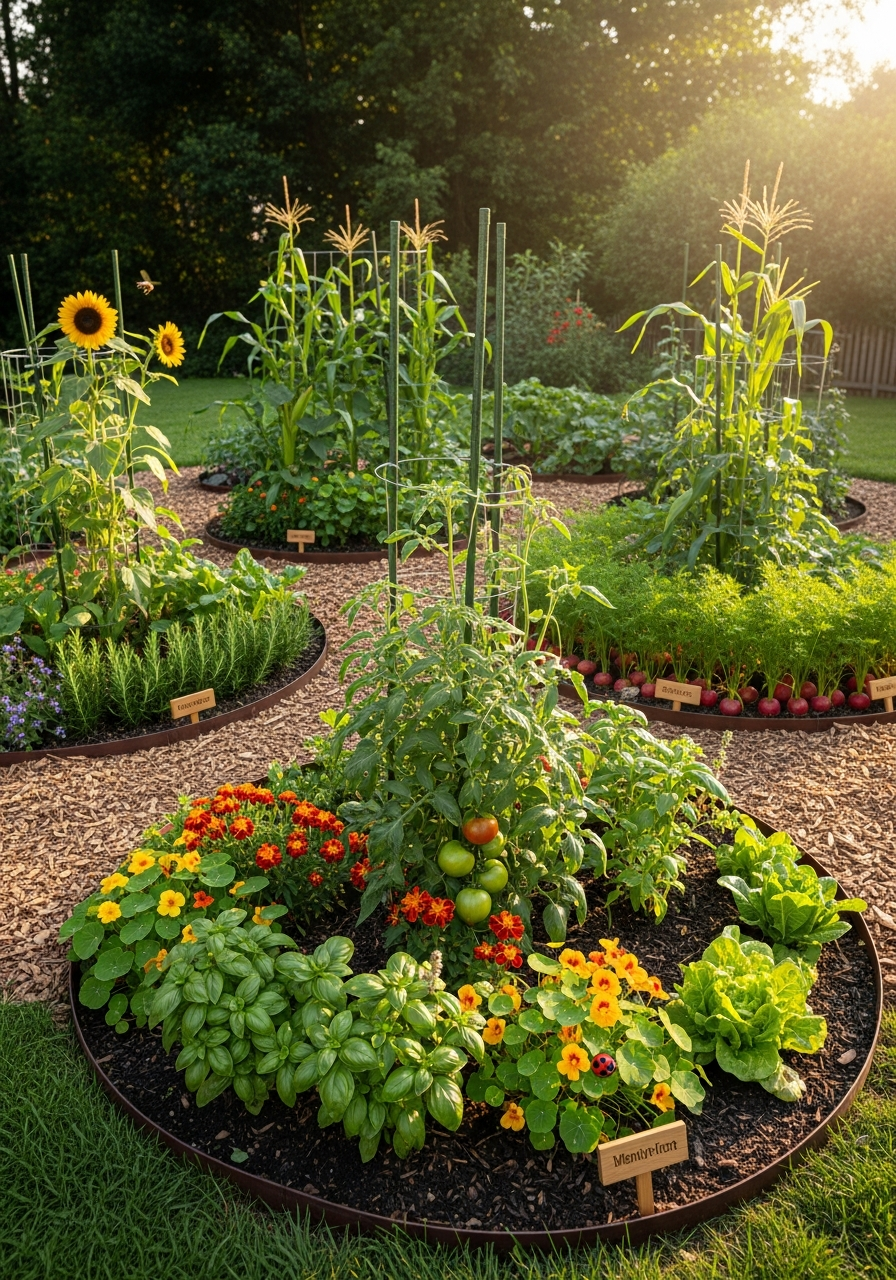
Tomato Guild
- Tomato (primary crop)
- Basil (growth enhancer)
- Marigold (nematode control)
- Lettuce (living mulch)
Brassica Guild
- Cabbage or broccoli
- Dill and thyme (pest deterrence)
- Onions (soil protection)
Cucumber Guild
- Cucumbers (trellised)
- Nasturtiums (trap crop)
- Beans (nitrogen support)
Guild-based planting creates self-supporting systems within each bed.
Step 5: Incorporate Crop Rotation Into the Layout
A perfect companion planting layout plans for multiple seasons, not just one.
Rotation Strategy
- Rotate plant families yearly
- Follow heavy feeders with nitrogen-fixing crops
- Alternate root crops with leafy greens
Design beds so rotation can occur without disrupting companion relationships.
Step 6: Optimize Spacing for Yield and Airflow
Advanced layouts avoid overcrowding while still maximizing space.
- Use block planting rather than rows
- Maintain airflow to prevent fungal diseases
- Thin plants early for stronger growth
More space often leads to higher yields per plant, not fewer harvests.
Step 7: Use Borders and Edges Intentionally
Edges are powerful in companion planting.
Best Border Plants
- Chives and garlic for pest control
- Marigolds for nematodes
- Calendula for beneficial insects
Treat borders as active protection zones, not wasted space.
Step 8: Soil Health and Living Mulch Techniques
Healthy soil is essential for advanced companion planting.
- Add compost annually
- Use living mulches like clover or spinach
- Mulch pathways to reduce weed pressure
Soil biology supports nutrient exchange between companion plants.
Step 9: Avoid Advanced Companion Planting Conflicts
Even experienced gardeners can run into conflicts.
Common Conflicts
- Tomatoes and potatoes (shared diseases)
- Beans near onions or garlic
- Fennel near most crops
Advanced layouts intentionally isolate problematic plants.
Step 10: Sample Advanced Backyard Companion Planting Layout
4×10 Backyard Raised Bed Example
- North zone: Trellised tomatoes with basil and marigolds
- Mid zone: Peppers with onions and oregano
- South zone: Lettuce, spinach, and radishes
- Edges: Chives, dill, and calendula
This design balances light, nutrients, and pest control.
Common Advanced Mistakes to Avoid
- Overengineering the layout
- Ignoring soil biology
- Skipping seasonal planning
- Overcrowding functional groups
Simplicity paired with strategy produces the best results.
Final Thoughts: Designing a Garden That Works With Nature
Learning how to design the perfect backyard companion planting layout is about working with natural systems rather than forcing results. By understanding plant roles, soil health, and spatial dynamics, you can create a backyard garden that is productive, resilient, and sustainable year after year.
A truly perfect layout isn’t static—it evolves with your garden.
Happy advanced gardening!