If you’re new to gardening, companion planting can sound complicated—but it doesn’t have to be. Companion planting is simply the practice of growing certain plants together so they help each other thrive. With the right layout ideas, beginners can reduce pests, improve plant health, and enjoy better harvests without guesswork. This guide shares beginner-friendly companion planting layout ideas that actually work, making it easy to get started with confidence.
What Is Companion Planting (Simple Explanation)
Companion planting means placing plants next to each other because they provide natural benefits, such as:
- Repelling pests
- Attracting pollinators
- Improving soil nutrients
- Supporting healthier growth
For beginners, companion planting works best when layouts are simple and easy to maintain.
Why Companion Planting Is Great for Beginners
Companion planting is forgiving and beginner-friendly when done correctly.
Benefits for New Gardeners
- Fewer pest problems without chemicals
- Healthier plants with less effort
- Better use of small garden beds
- Improved harvests
- Less trial and error
Simple layouts help beginners avoid common gardening mistakes.
1. Tomato and Basil Beginner Layout
This is one of the easiest and most reliable companion planting combinations.
Why it works: Basil helps repel pests and may improve tomato flavor.
Beginner layout tip:
- Plant tomatoes in the center or back of the bed
- Place basil plants around the base of each tomato
2. Lettuce and Radish Easy Garden Layout
Radishes grow quickly and protect lettuce from pests.
Why it works: Radishes mature fast and help deter insects.
Beginner layout tip:
- Plant lettuce in rows or blocks
- Scatter radish seeds between lettuce plants
3. Carrot and Onion Simple Layout
This pairing helps reduce pest issues for both plants.
Why it works: Onions repel carrot flies.
Beginner layout tip:
- Alternate rows or small blocks of carrots and onions
4. Pepper and Herb Companion Layout
Herbs are excellent companions for beginner gardens.
Why it works: Herbs repel pests and attract beneficial insects.
Beginner layout tip:
- Plant peppers in the center
- Surround with basil, oregano, or chives
5. Cucumber and Nasturtium Layout
This pairing is beginner-friendly and visually appealing.
Why it works: Nasturtiums repel aphids and beetles.
Beginner layout tip:
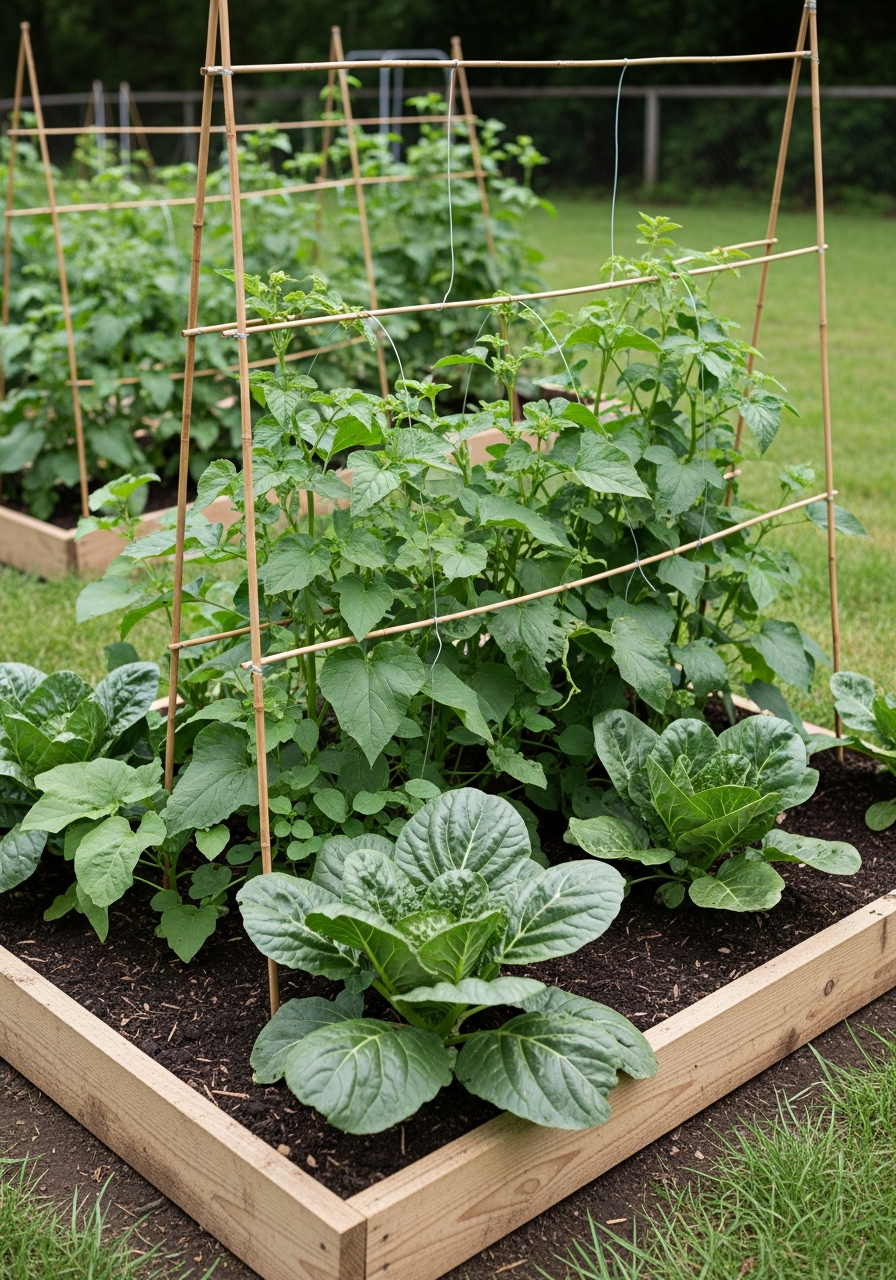
- Grow cucumbers vertically on a trellis
- Plant nasturtiums at the edges of the bed
6. Bean and Corn Beginner Layout
This simple pairing helps improve soil naturally.
Why it works: Beans add nitrogen to the soil for corn.
Beginner layout tip:
- Plant corn in small blocks
- Add beans once corn is established
7. Cabbage Family and Herbs Layout
Brassicas benefit from aromatic herbs.
Why it works: Herbs help repel cabbage pests.
Beginner layout tip:
- Plant cabbage, broccoli, or cauliflower in rows
- Border the bed with rosemary or thyme
Beginner-Friendly Garden Bed Layout Tips
Keep these tips in mind when planning your companion planting layout:
- Place taller plants on the north side
- Avoid overcrowding
- Group plants with similar water needs
- Start with just a few combinations
- Label plants to stay organized
Simple planning leads to better results.
Common Companion Planting Mistakes Beginners Should Avoid
- Planting incompatible crops together
- Overcrowding garden beds
- Ignoring mature plant size
- Forgetting crop rotation
Avoiding these mistakes helps your garden succeed.
Final Thoughts: Companion Planting Made Easy for Beginners
Companion planting doesn’t have to be complicated. By using these beginner-friendly companion planting layout ideas that actually work, you can grow healthier plants, reduce pests naturally, and enjoy more successful harvests—without feeling overwhelmed. Start small, keep layouts simple, and let nature do the rest.
Happy gardening!