A 4×8 garden bed is one of the most popular sizes for home gardeners—and for good reason. It’s large enough to grow a variety of vegetables, yet small enough to manage easily. When combined with companion planting, a 4×8 bed can produce healthy plants, fewer pests, and better harvests without complicated planning. This beginner-friendly guide will show you exactly how to design a 4×8 companion planting garden bed layout step by step.
Why a 4×8 Garden Bed Is Perfect for Beginners
A 4×8 raised or in-ground garden bed offers the ideal balance of space and simplicity.
Benefits of a 4×8 Garden Bed
- Easy to reach from all sides
- Simple to plan and organize
- Great for learning companion planting basics
- Produces a surprising amount of food
- Works well for raised beds or backyard plots
Adding companion planting helps beginners avoid common gardening problems.
What Is Companion Planting?
Companion planting means growing plants together that naturally benefit one another. These benefits may include pest control, improved growth, better soil health, or increased yields.
Why Beginners Should Use Companion Planting
- Reduces pest issues naturally
- Encourages healthier plant growth
- Makes better use of limited space
- Requires less intervention and chemicals
Basic Rules for a 4×8 Companion Planting Layout
Before planting, keep these beginner-friendly rules in mind:
- Place taller plants on the north side of the bed
- Group plants with similar sunlight and water needs
- Avoid overcrowding
- Use herbs and flowers as natural pest deterrents
- Leave space for mature plant size
These simple rules form the foundation of a successful layout.
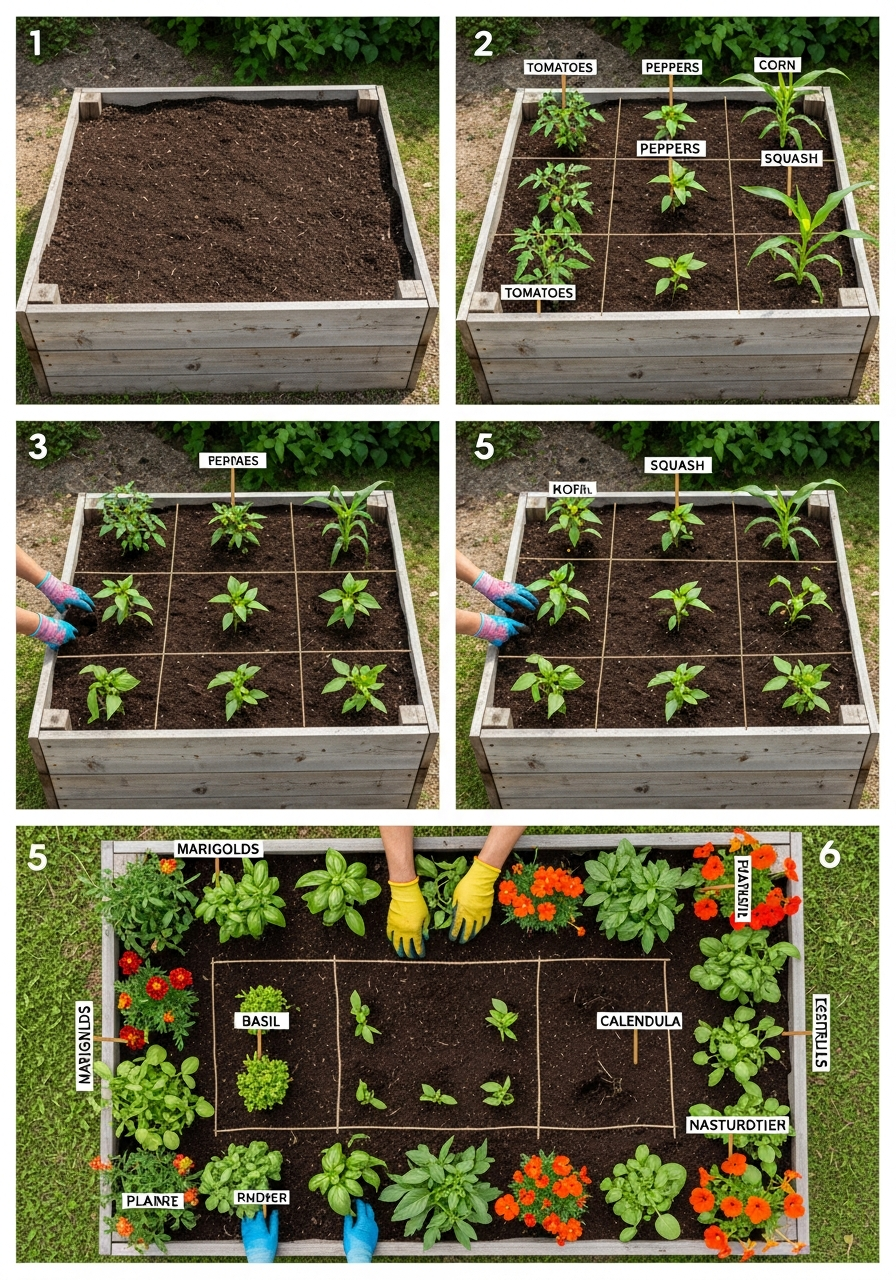
Step-by-Step 4×8 Companion Planting Garden Bed Layout
North Side (Tall Crops)
- Tomatoes (2–3 plants)
- Basil planted around tomatoes
- Marigolds along the edge
Why it works: Basil improves tomato growth and marigolds help deter pests.
Middle Section (Medium-Height Crops)
- Peppers (2–3 plants)
- Onions or green onions
Why it works: Onions help repel pests while peppers thrive with good airflow.
South Side (Low-Growing Crops)
- Lettuce or spinach
- Radishes interplanted between greens
Why it works: Radishes grow quickly and protect leafy greens.
Bed Edges and Corners
- Chives, parsley, or dill
Why it works: Herbs attract beneficial insects and deter pests without taking much space.
Visual Breakdown of the 4×8 Layout
- North: Tomatoes + basil + marigolds
- Middle: Peppers + onions
- South: Lettuce + radishes
- Edges: Herbs
This layout maximizes sunlight, airflow, and companion benefits.
Plants to Avoid in a 4×8 Garden Bed
Because space is limited, avoid these combinations:
- Tomatoes and potatoes
- Onions and beans
- Cucumbers and sage
- Fennel with most vegetables
Keeping incompatible plants separate prevents disease and poor growth.
Soil and Planting Tips for Beginners
- Use high-quality soil mixed with compost
- Water deeply and consistently
- Mulch lightly to retain moisture
- Follow spacing guidelines on seed packets
Healthy soil makes companion planting more effective.
Common Beginner Mistakes to Avoid
- Overcrowding the bed
- Ignoring mature plant size
- Forgetting to label plants
- Skipping crop rotation next season
Avoiding these mistakes helps your garden thrive.
Final Thoughts: A Simple 4×8 Bed That Really Works
A 4×8 companion planting garden bed layout for beginners is one of the easiest and most rewarding ways to start gardening. By pairing compatible plants and following a simple layout plan, you can grow healthier crops, reduce pests naturally, and enjoy a productive garden from your very first season.
Start simple, observe your plants, and adjust as you gain confidence.
Happy gardening!