A 2×4 garden bed may be small, but with smart planning and companion planting, it can be surprisingly productive. Perfect for patios, balconies, small backyards, or urban gardens, a 2×4 raised bed allows you to grow fresh vegetables while keeping maintenance simple. In this guide, you’ll learn how to create an effective 2×4 companion planting garden bed layout for small spaces that maximizes yield and keeps plants healthy.
Why a 2×4 Garden Bed Is Ideal for Small Spaces
The 2×4 size is one of the best options for gardeners with limited room.
Benefits of a 2×4 Raised Bed
- Fits easily in tight spaces
- Easy to reach from all sides
- Requires less soil and water
- Simple to manage for beginners
- Perfect for companion planting techniques
With the right layout, even a small bed can deliver big results.
Basic Companion Planting Rules for Small Beds
Because space is limited, following these rules is essential:
- Choose compact or dwarf plant varieties
- Avoid overcrowding
- Place taller plants toward the back or north side
- Combine deep-rooted and shallow-rooted plants
- Use herbs and flowers for natural pest control
These principles help plants cooperate rather than compete.
Best Crops for a 2×4 Companion Planting Garden Bed
Choose plants that grow well in small spaces and pair easily with companions.
Ideal Vegetables
- Tomatoes (compact or bush varieties)
- Peppers
- Lettuce and leafy greens
- Radishes
- Green onions
Helpful Companions
- Basil
- Chives
- Parsley
- Marigolds
- Dill
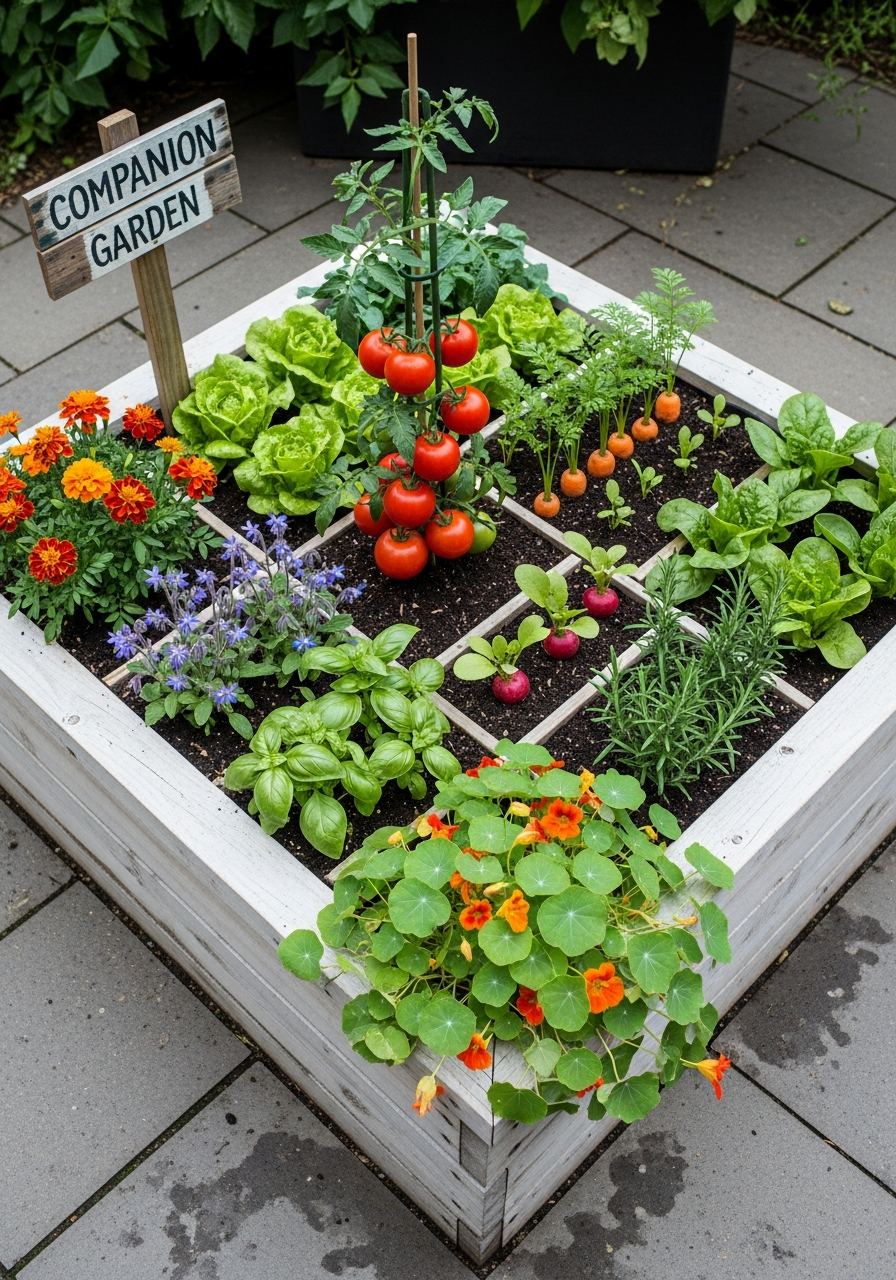
Step-by-Step 2×4 Companion Planting Garden Bed Layout
Back / North Side (Tall Plants)
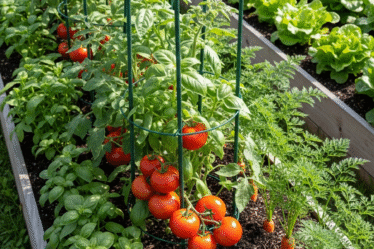
- 1 compact tomato OR 1–2 pepper plants
- Basil planted at the base
Why it works: The main crop uses vertical space, while basil supports growth and repels pests.
Middle Section (Medium & Filler Crops)
- Leafy greens (lettuce or spinach)
- Green onions spaced between greens
Why it works: Leafy greens mature quickly and fill gaps without crowding.
Front / South Side (Fast-Growing Crops)
- Radishes interplanted throughout
Why it works: Radishes grow fast, loosen soil, and are harvested before other crops need more space.
Edges & Corners
- Chives, parsley, or marigolds
Why it works: These companions deter pests and attract beneficial insects without taking up much room.
Visual Layout Summary
- Back/North: Tomato or peppers + basil
- Middle: Lettuce/spinach + green onions
- Front/South: Radishes
- Edges: Herbs or marigolds
This layout balances height, root depth, and harvest timing.
Plants to Avoid in a 2×4 Garden Bed
Because space is limited, avoid incompatible plants:
- Tomatoes and potatoes
- Onions and beans
- Cucumbers and sage
- Fennel with most vegetables
In small beds, poor pairings can significantly reduce yields.
Soil and Watering Tips for Small Raised Beds
- Use high-quality potting mix with compost
- Water consistently—small beds dry out faster
- Mulch lightly to retain moisture
- Feed plants every 2–3 weeks with organic fertilizer
Healthy soil is key to success in compact beds.
Common Mistakes to Avoid
- Overcrowding plants
- Choosing large, sprawling varieties
- Ignoring mature plant size
- Inconsistent watering
Keeping the layout simple prevents these issues.
Final Thoughts: Small Bed, Smart Planting
A 2×4 companion planting garden bed layout for small spaces proves that you don’t need a large garden to grow fresh, healthy vegetables. With careful plant selection, smart spacing, and proven companion planting techniques, a single 2×4 bed can deliver a steady harvest while staying easy to manage.
Start small, plant smart, and enjoy growing more in less space.
Happy gardening!