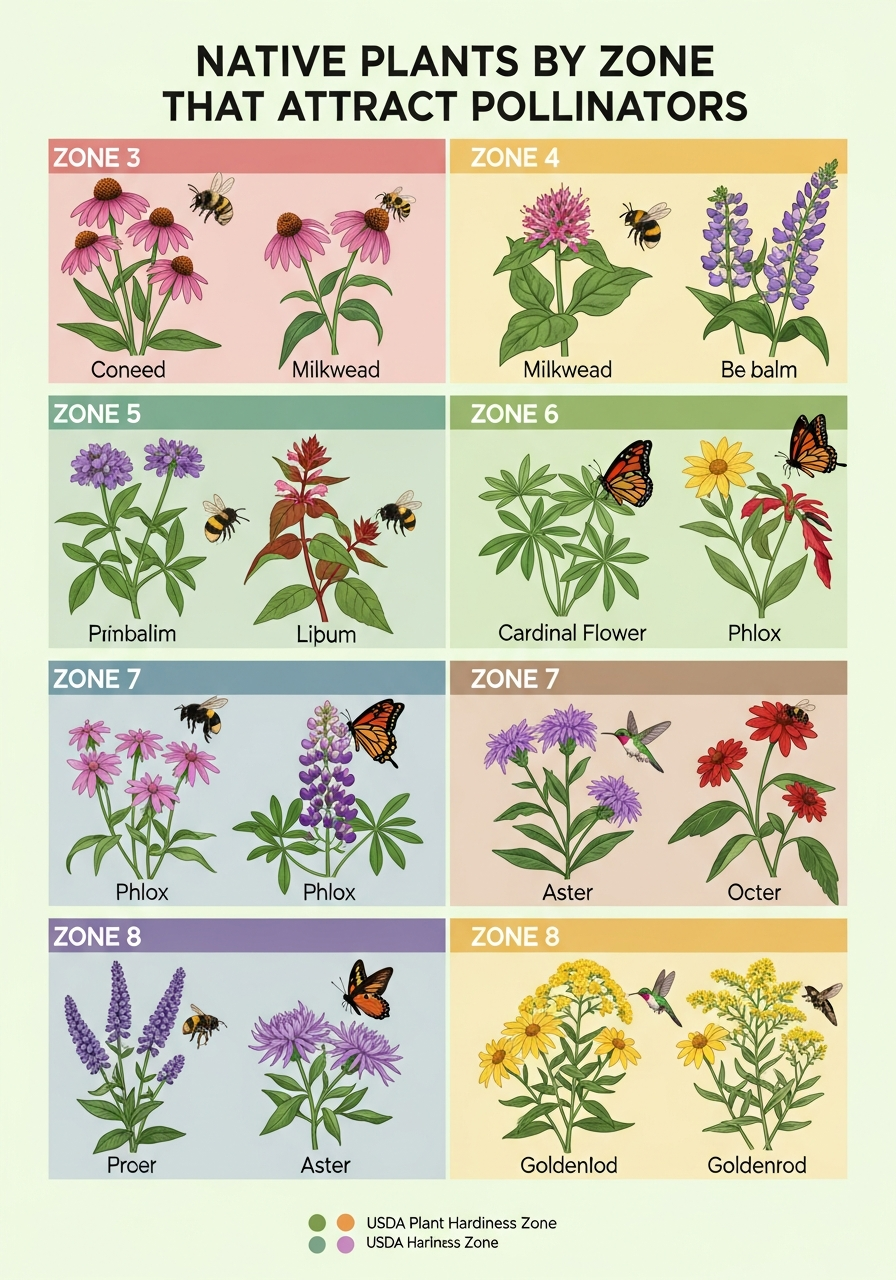
Pollinators like bees, butterflies, hummingbirds, and beneficial insects are essential to healthy ecosystems—and your garden can play a vital role in supporting them. One of the most effective ways to help is by planting native plants suited to your USDA hardiness zone.
Native plants provide the nectar, pollen, and habitat pollinators have evolved alongside, making them far more beneficial than many non-native ornamentals. Below is a zone-by-zone guide to native plants that reliably attract pollinators across the United States.
🌸 Why Native Plants Matter for Pollinators
Native plants are critical for pollinator survival because they:
- 🐝 Produce nectar and pollen pollinators recognize
- 🦋 Support native butterfly and moth larvae
- 🌱 Bloom in sync with local pollinator life cycles
- ❄️ Survive regional weather extremes
- 🌎 Strengthen local ecosystems
❄️ Zone 3–4: Cold-Climate Pollinator Plants
Short growing seasons make early and long-lasting blooms especially important.
Top Native Pollinator Plants:
- Wild Columbine (Aquilegia canadensis) – Early nectar source for hummingbirds
- Purple Coneflower (Echinacea purpurea) – Bees and butterflies love it
- Goldenrod (Solidago spp.) – Vital late-season pollen source
- Serviceberry (Amelanchier spp.) – Early flowers for native bees
Pollinator Tip:
Leave stems and seed heads standing through winter to provide nesting habitat.
🌼 Zone 5–6: Pollinator Powerhouses
These zones offer a wide range of native plants that bloom from spring through fall.
Top Native Pollinator Plants:
- Black-Eyed Susan (Rudbeckia hirta) – Long bloom period for bees
- Wild Bergamot (Monarda fistulosa) – Attracts bees, butterflies, and hummingbirds
- Milkweed (Asclepias spp.) – Essential for monarch butterflies
- Switchgrass (Panicum virgatum) – Provides shelter for insects
Pollinator Tip:
Plant in clusters of 3–5 plants to make flowers easier for pollinators to find.
🌺 Zone 7–8: Extended Bloom Seasons
Longer growing seasons allow for continuous nectar availability.
Top Native Pollinator Plants:
- Coreopsis (Coreopsis spp.) – Long-blooming and bee-friendly
- Eastern Redbud (Cercis canadensis) – Early spring pollen source
- Blazing Star (Liatris spicata) – Butterfly magnet
- Virginia Sweetspire (Itea virginica) – Loved by native bees
Pollinator Tip:
Choose a mix of spring, summer, and fall bloomers to support pollinators year-round.
☀️ Zone 9–10: Heat-Loving Pollinator Plants
Native plants in warm climates are essential for sustaining pollinators through extreme heat.
Top Native Pollinator Plants:
- Blanket Flower (Gaillardia pulchella) – Attracts bees and butterflies
- Salvia (Salvia spp.) – Excellent for hummingbirds
- Yarrow (Achillea millefolium) – Hardy and nectar-rich
- California Poppy (Eschscholzia californica) – Early-season nectar source
Pollinator Tip:
Provide shallow water sources like pebble-filled dishes to help pollinators hydrate.
🌿 How to Design a Pollinator-Friendly Native Garden
- 🌸 Plant a variety of flower shapes and colors
- 🌱 Include native grasses and shrubs for habitat
- 🐝 Avoid pesticides and herbicides
- ✂️ Leave leaf litter for overwintering insects
- 💧 Water deeply but infrequently during establishment
🌻 Final Thoughts
Planting native plants by zone that attract pollinators is one of the most impactful actions you can take for the environment—right in your own yard. With thoughtful plant choices and minimal maintenance, your garden can become a thriving refuge for bees, butterflies, and birds all season long.
Pollinator-friendly landscapes aren’t just beautiful—they’re essential.