One of the biggest keys to a thriving, low-maintenance garden is matching plants not just to your USDA hardiness zone, but also to your light conditions. Even the best native plant will struggle if it’s planted in the wrong amount of sun or shade.
Native plants are naturally adapted to local climates and light patterns, making them ideal for sunny yards, shady spaces under trees, and mixed-light landscapes. Below is a zone-by-zone guide to native plants that perform best in shade, full sun, and partial light.
🌸 Why Light Conditions Matter
Before choosing plants, it helps to understand light levels:
- ☀️ Full Sun: 6+ hours of direct sunlight
- 🌤 Partial Sun / Partial Shade: 3–6 hours of sun
- 🌳 Full Shade: Less than 3 hours of direct sun
Matching plants to these conditions means healthier growth, fewer pests, and less maintenance.
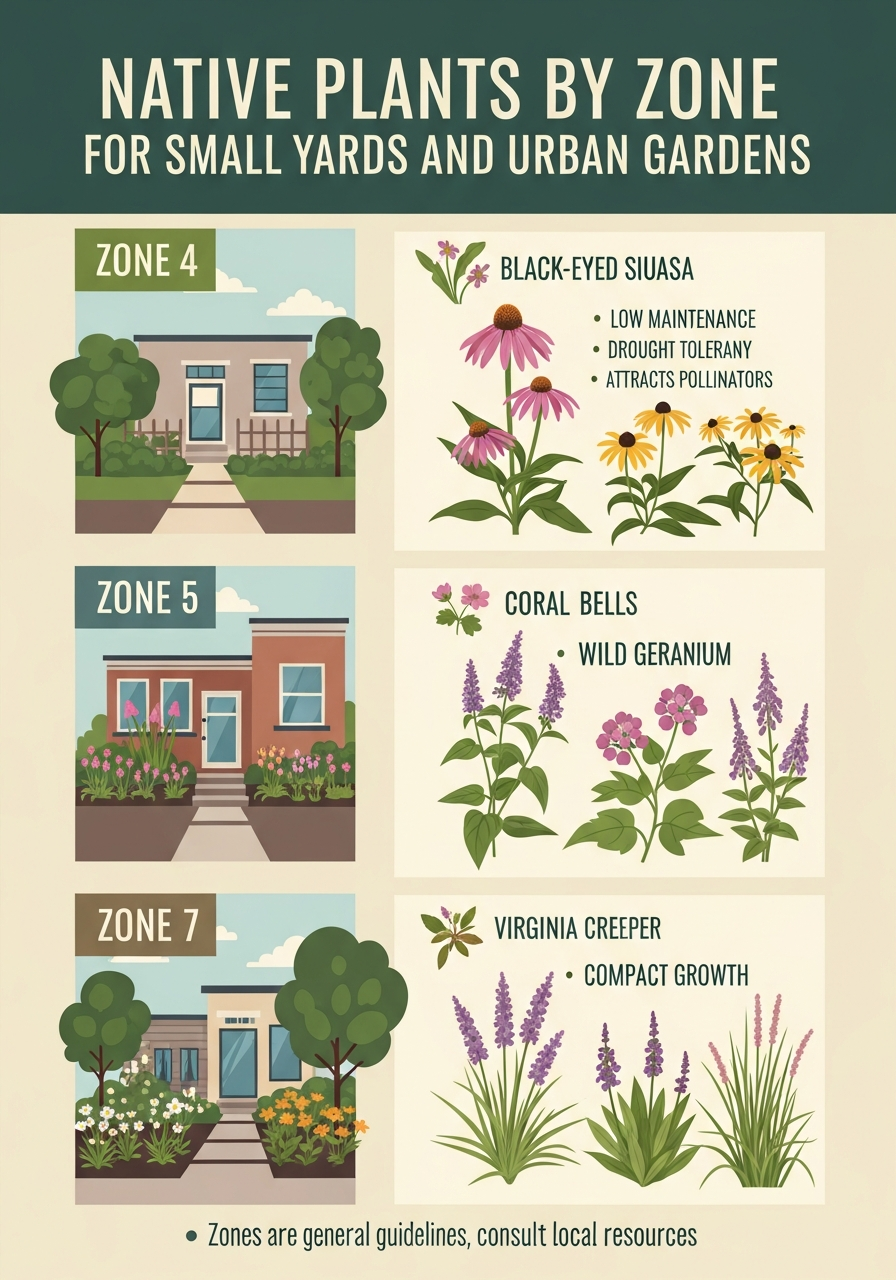
❄️ Zone 3–4: Cold-Climate Native Plants by Light Type
🌳 Shade
- Wild Columbine (Aquilegia canadensis) – Delicate spring blooms
- Wild Ginger (Asarum canadense) – Low-growing groundcover
- Canada Anemone (Anemone canadensis) – Spreads gently in woodland settings
☀️ Full Sun
- Purple Coneflower (Echinacea purpurea) – Pollinator favorite
- Prairie Smoke (Geum triflorum) – Unique seed heads
- Little Bluestem (Schizachyrium scoparium) – Four-season interest
🌤 Mixed Light
- Serviceberry (Amelanchier spp.) – Small tree or shrub
- Golden Alexander (Zizia aurea) – Early-season pollinator plant
🌼 Zone 5–6: Native Plants for Diverse Light Conditions
🌳 Shade
- Virginia Bluebells (Mertensia virginica) – Early spring blooms
- Jacob’s Ladder (Polemonium reptans) – Fine-textured foliage
- Wild Ginger (Asarum canadense) – Excellent groundcover
☀️ Full Sun
- Black-Eyed Susan (Rudbeckia hirta) – Long bloom season
- Wild Bergamot (Monarda fistulosa) – Attracts bees and butterflies
- Switchgrass (Panicum virgatum) – Upright ornamental grass
🌤 Mixed Light
- Blazing Star (Liatris spicata) – Vertical flower spikes
- Eastern Redbud (Cercis canadensis) – Spring flowering tree
🌺 Zone 7–8: Native Plants for Sun, Shade & Partial Light
🌳 Shade
- Foamflower (Tiarella cordifolia) – Excellent woodland perennial
- Virginia Sweetspire (Itea virginica) – Thrives in partial shade
- Ferns (various native species) – Texture and greenery
☀️ Full Sun
- Coreopsis (Coreopsis spp.) – Long-blooming color
- Blazing Star (Liatris spp.) – Butterfly magnet
- Muhly Grass (Muhlenbergia capillaris) – Fall color and movement
🌤 Mixed Light
- Eastern Redbud (Cercis canadensis) – Courtyards and understories
- Blue False Indigo (Baptisia australis) – Long-lived perennial
☀️ Zone 9–10: Native Plants for Bright Sun & Filtered Shade
🌳 Shade
- Frogfruit (Phyla nodiflora) – Groundcover for dappled shade
- Coral Honeysuckle (Lonicera sempervirens) – Shade-tolerant vine
- Native Ferns – Ideal for understory planting
☀️ Full Sun
- California Poppy (Eschscholzia californica) – Spring color
- Blanket Flower (Gaillardia pulchella) – Heat-loving perennial
- Yarrow (Achillea millefolium) – Extremely drought tolerant
🌤 Mixed Light
- Salvia (Salvia spp.) – Pollinator favorite
- Desert Willow (Chilopsis linearis) – Light, airy canopy
🌿 Tips for Planting by Light Conditions
- 🌞 Observe sunlight throughout the day before planting
- 🌱 Choose native plants adapted to both zone and light
- ✂️ Avoid over-pruning trees that provide beneficial shade
- 🐝 Mix bloom times to support pollinators all season
- 🍂 Leave leaf litter in shade gardens for soil health
🌻 Final Thoughts
Understanding sun, shade, and mixed light conditions is just as important as knowing your USDA zone. When native plants are placed in the right light, they thrive with minimal care—saving time, water, and effort while supporting local ecosystems.
Successful native gardening is about working with your landscape, not forcing it.