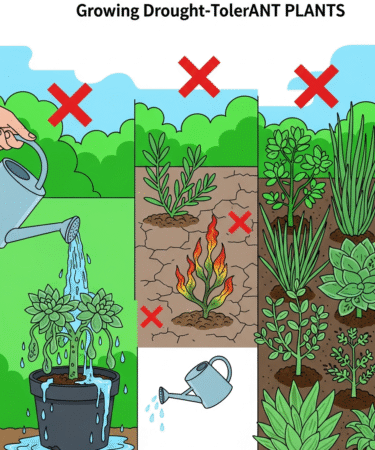
One of the biggest keys to a thriving, low-maintenance garden is matching plants not just to your USDA hardiness zone, but also to your light conditions. Even the best native plant will struggle if it’s planted in the wrong amount of sun or shade. Native plants are naturally adapted to local climates and light patterns, …
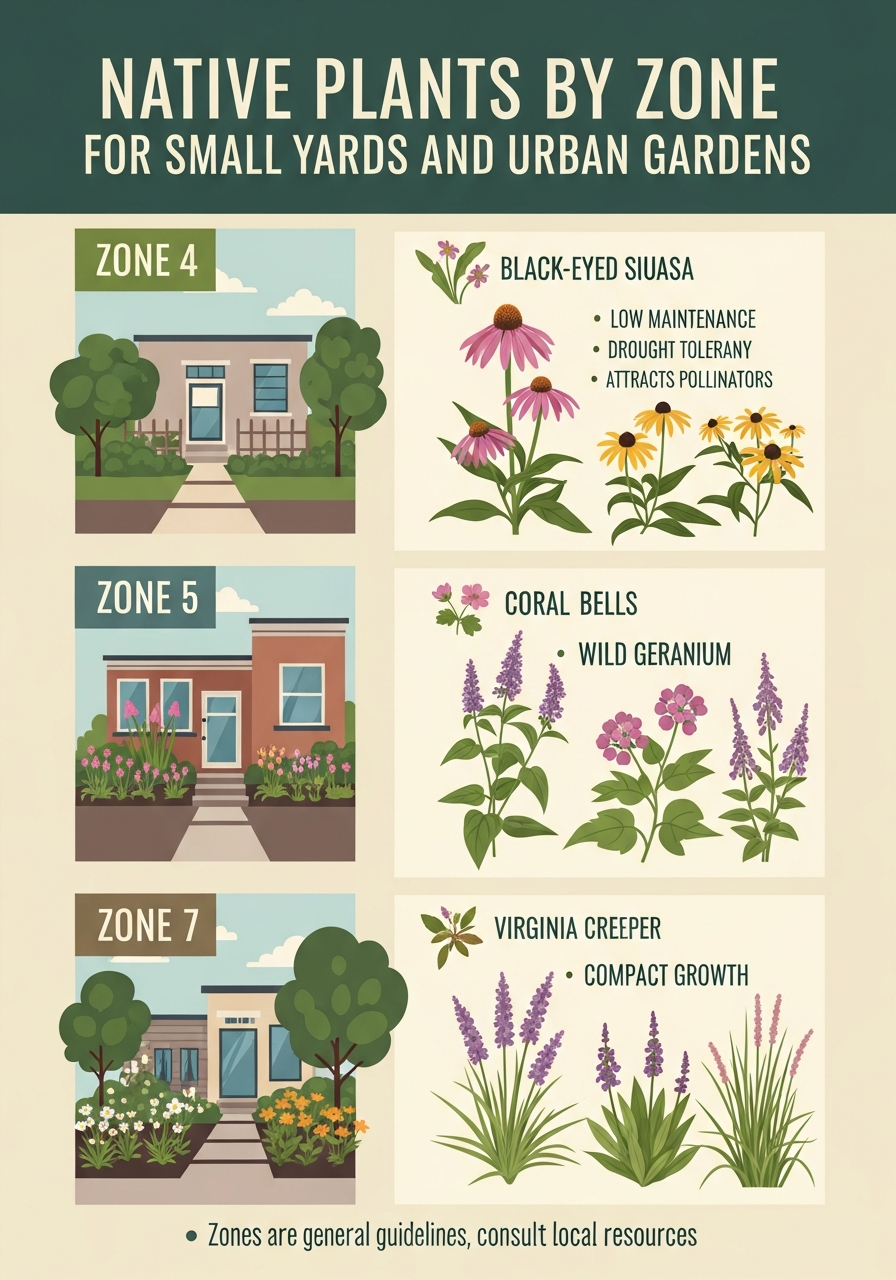
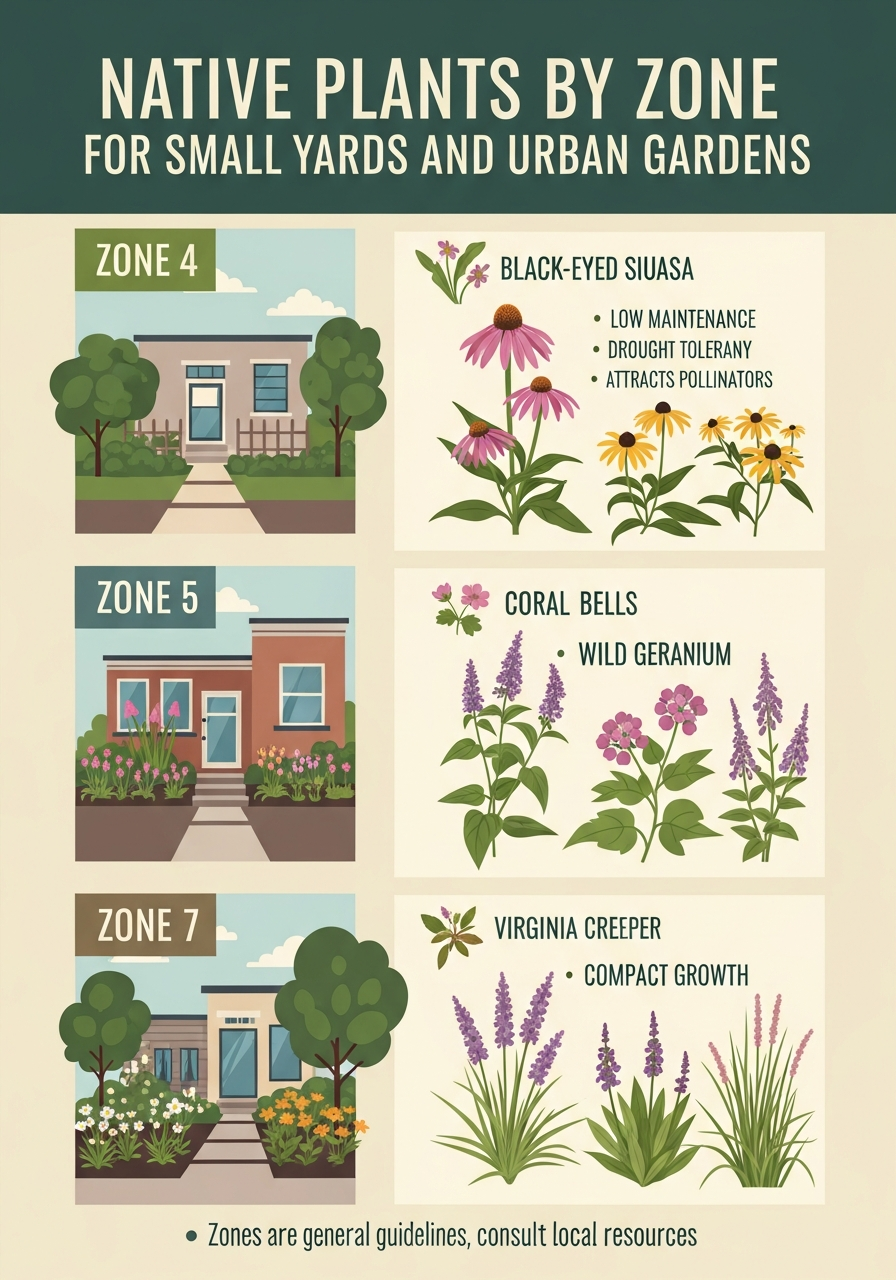
🌿 Native Plants by Zone for Small Yards and Urban Gardens
Limited space doesn’t mean limited impact. Even the smallest yard, courtyard, balcony, or urban garden can support biodiversity and look beautiful year-round—especially when planted with native plants suited to your USDA hardiness zone. Native plants are naturally compact, resilient, and beneficial to pollinators, making them perfect for small-scale and city landscapes. Below is a zone-by-zone …
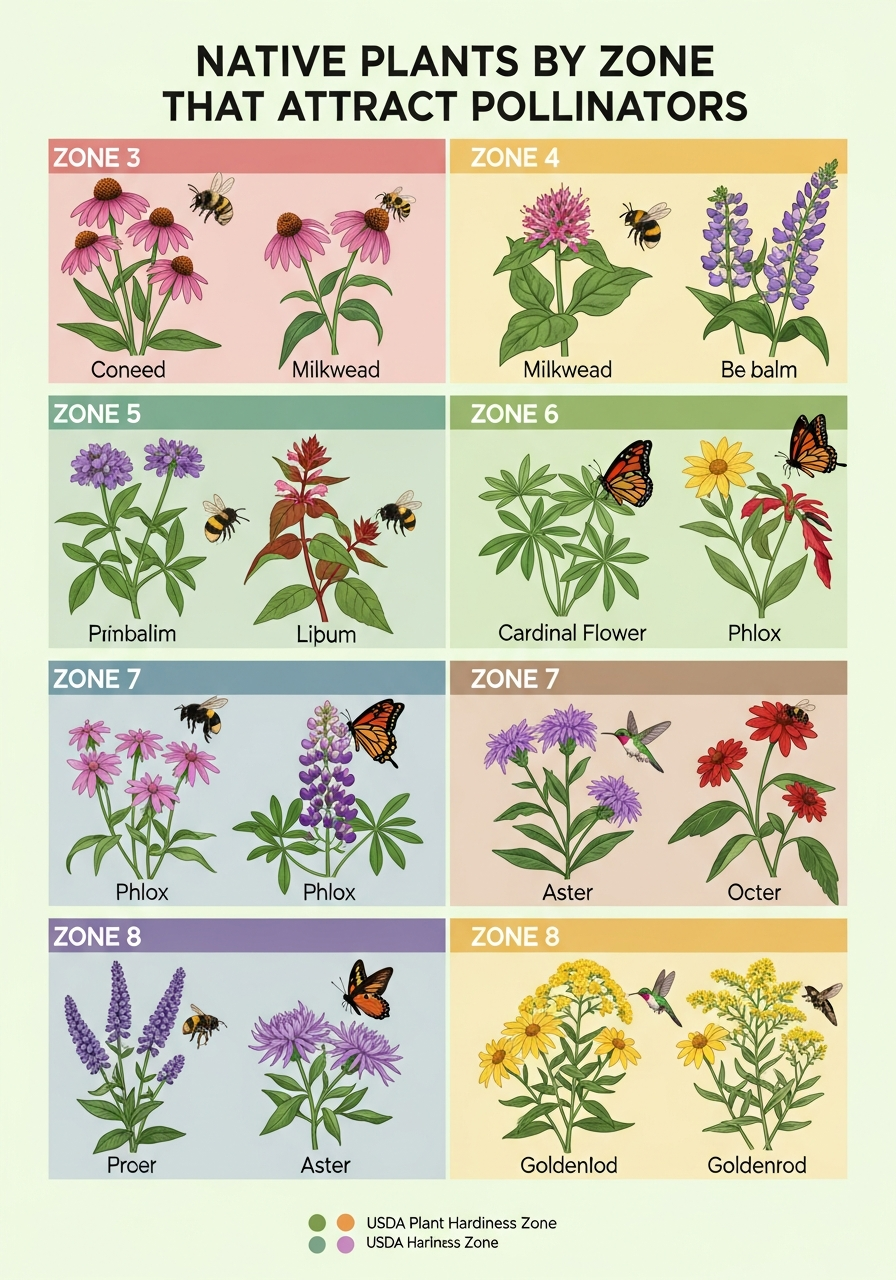
🐝 Native Plants by Zone That Attract Pollinators
Pollinators like bees, butterflies, hummingbirds, and beneficial insects are essential to healthy ecosystems—and your garden can play a vital role in supporting them. One of the most effective ways to help is by planting native plants suited to your USDA hardiness zone. Native plants provide the nectar, pollen, and habitat pollinators have evolved alongside, making …
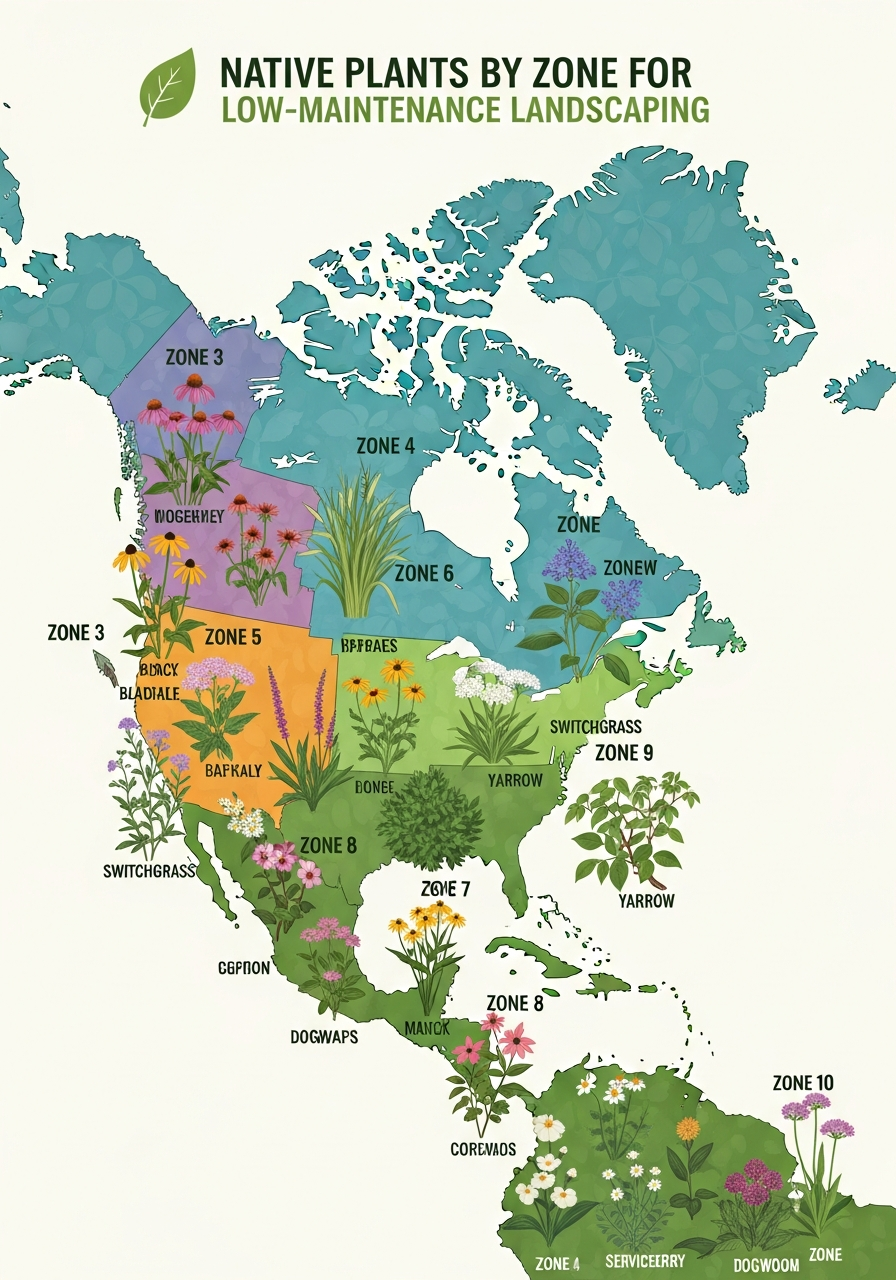
🌿 Native Plants by Zone for Low-Maintenance Landscaping
Creating a beautiful landscape doesn’t have to mean endless watering, fertilizing, or pruning. By choosing native plants suited to your USDA hardiness zone, you can design a low-maintenance landscape that thrives naturally, supports local wildlife, and looks great year-round. Native plants are adapted to local climates, soils, and rainfall patterns—making them the foundation of sustainable, …
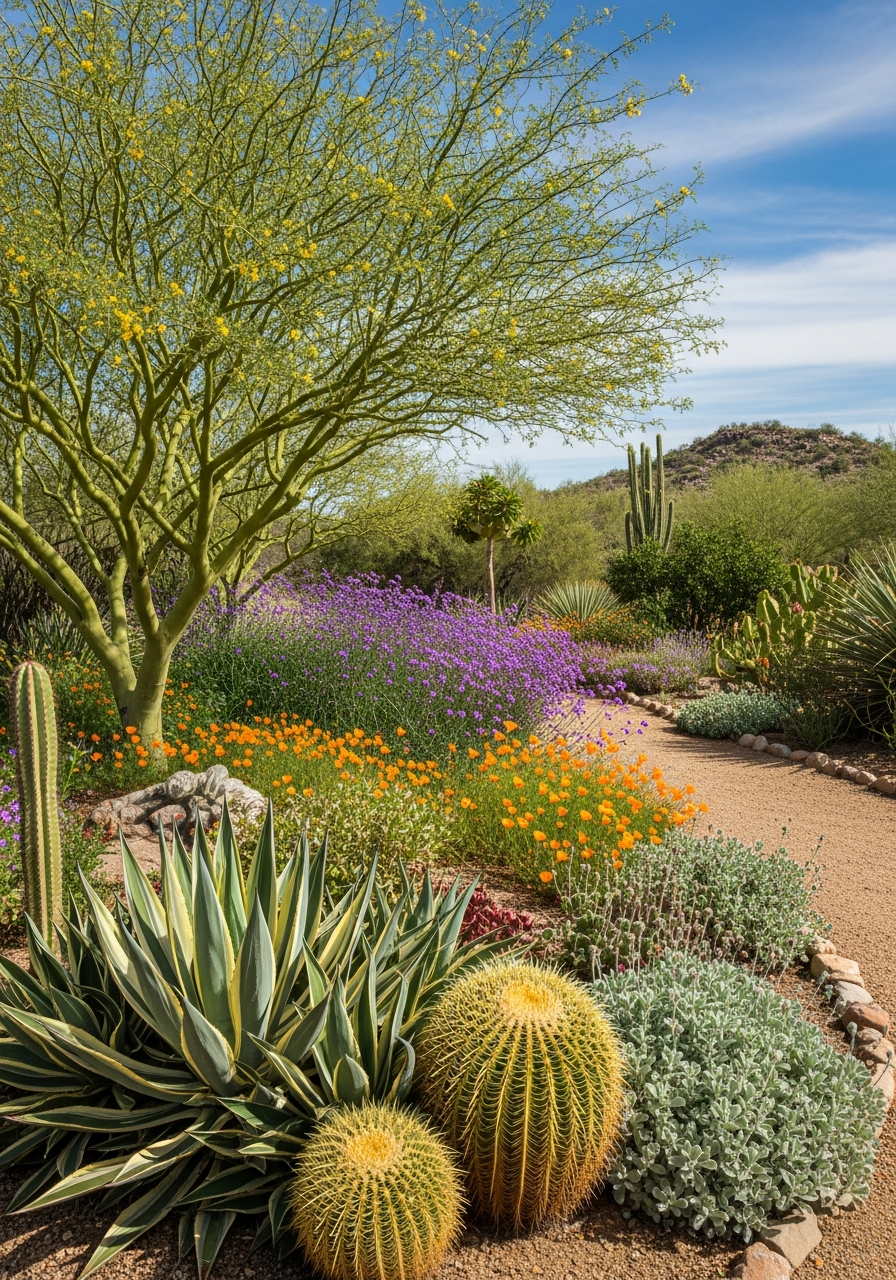
Native Plants for Hot Climates: Zone 9–10 Garden Ideas
Gardening in USDA Zones 9–10 means working with intense sun, high temperatures, and often limited rainfall. The good news is that many native plants are perfectly adapted to these conditions. By choosing natives suited to hot climates, you can create a vibrant, low-water garden that thrives with minimal maintenance while supporting local wildlife. Understanding USDA …
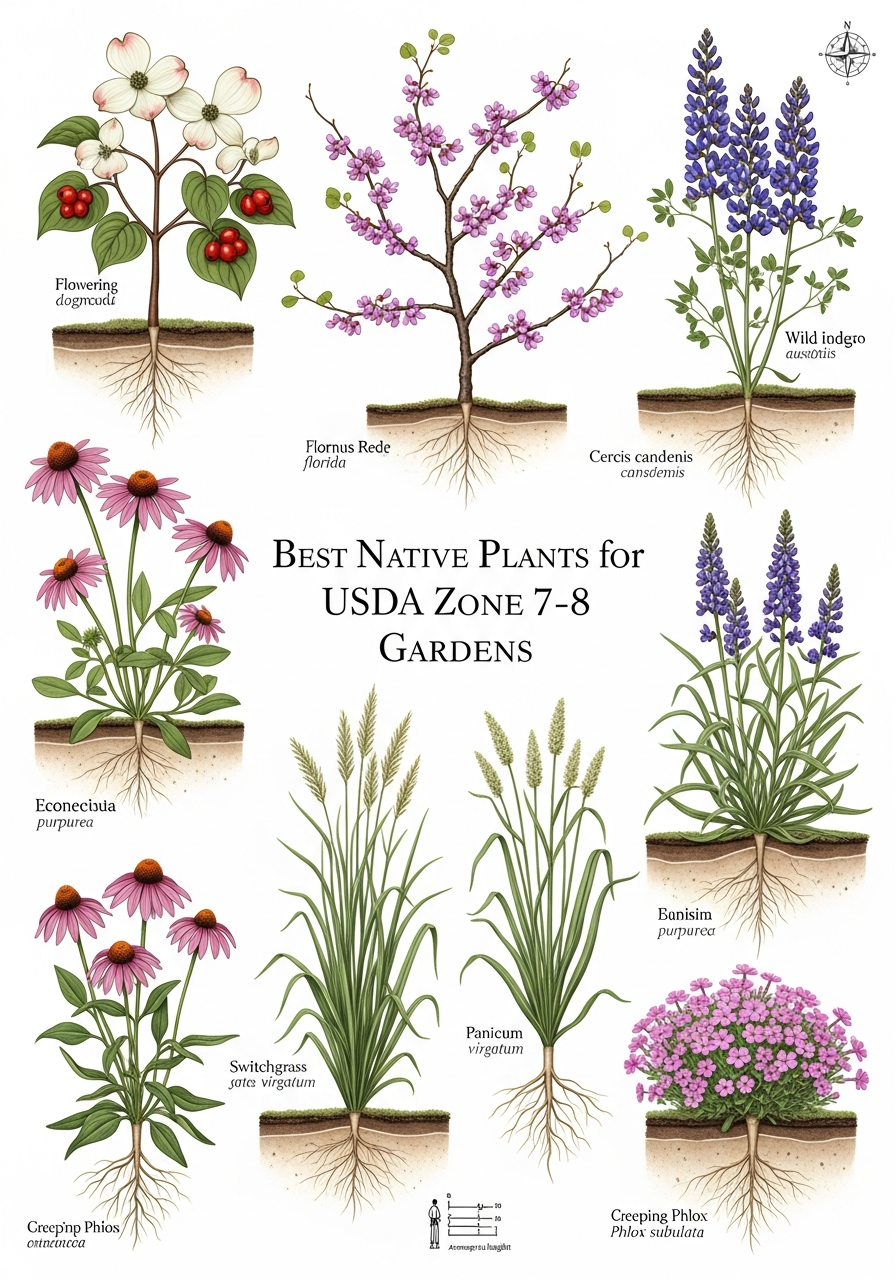
Best Native Plants for USDA Zone 7–8 Gardens
USDA Zones 7–8 offer long growing seasons, mild winters, and diverse climate conditions that support a wide range of native plants. From flowering perennials to ornamental grasses and hardy shrubs, native plants in these zones thrive with less water, minimal maintenance, and strong resistance to local pests. Choosing the right natives helps create beautiful, resilient, …
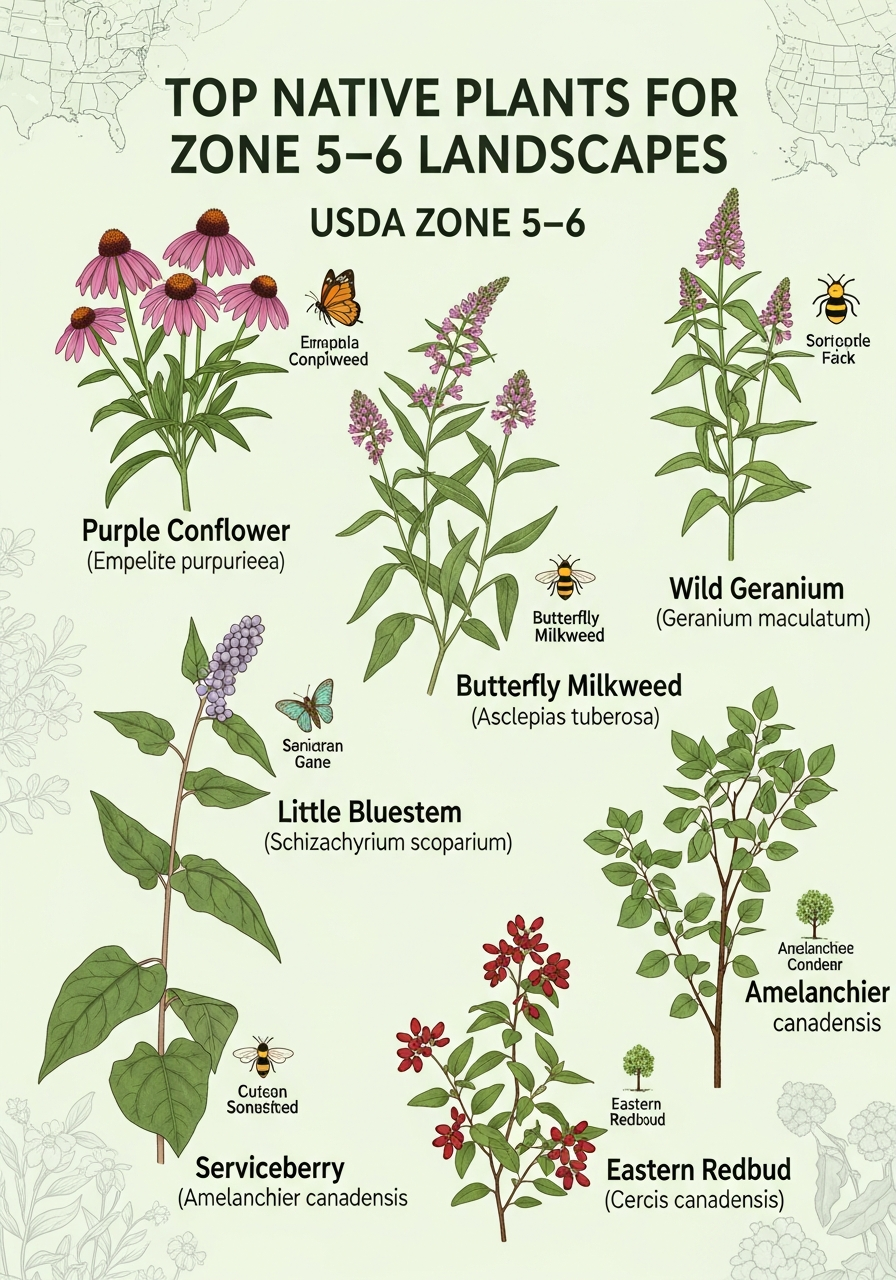
Top Native Plants for USDA Zone 5–6 Landscapes
USDA Zones 5–6 offer ideal conditions for a wide variety of native plants. With moderate winters, warm summers, and diverse rainfall patterns, these zones support many perennials, grasses, shrubs, and trees that are both beautiful and resilient. Choosing native plants adapted to Zones 5–6 helps reduce water use, improve soil health, and support local wildlife. …
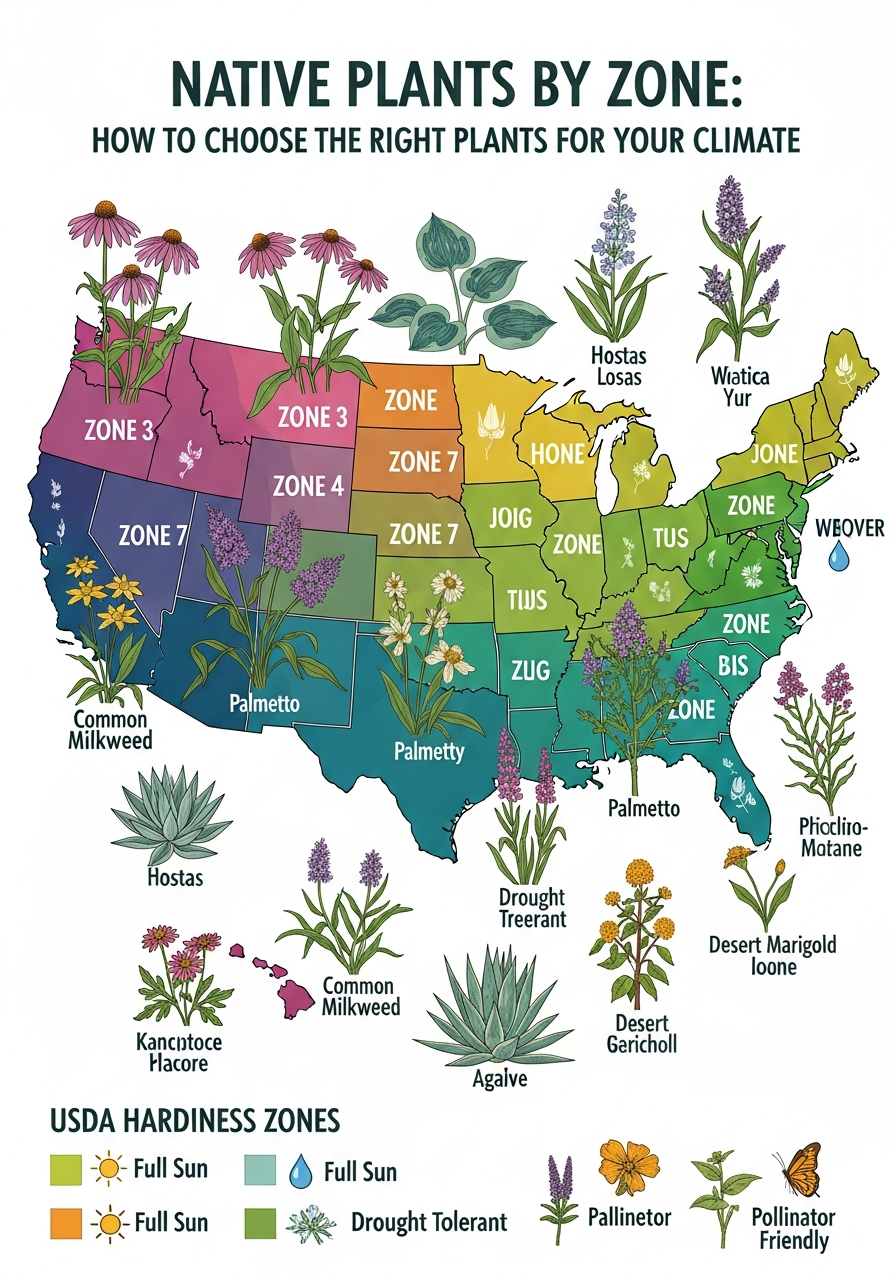
Best Native Plants for USDA Zone 3–4 Gardens
Gardening in USDA Zones 3–4 comes with unique challenges, including long, cold winters, short growing seasons, and temperature extremes. Fortunately, many native plants are perfectly adapted to these conditions. By choosing the right natives, you can create a resilient, low-maintenance, and beautiful garden that thrives despite harsh climates. Understanding USDA Zones 3–4 USDA Zones 3–4 …
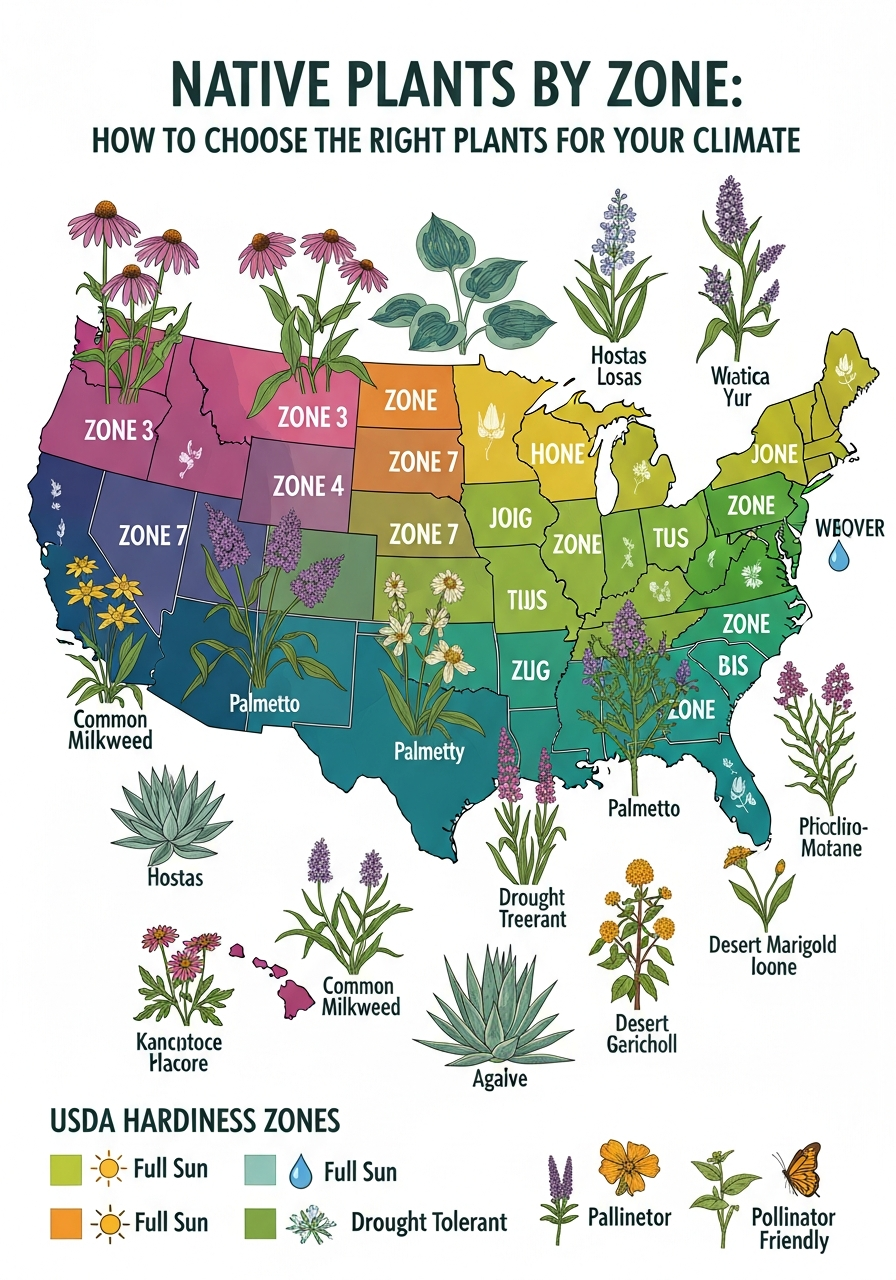
Native Plants by Zone: How to Choose the Right Plants for Your Climate
Choosing the right plants for your garden starts with understanding your climate zone. Native plants, which have evolved to thrive in specific regions, are naturally adapted to local temperatures, rainfall patterns, and soil conditions. By selecting native plants suited to your zone, you can create a healthier, more resilient, and low-maintenance landscape. What Are Plant …
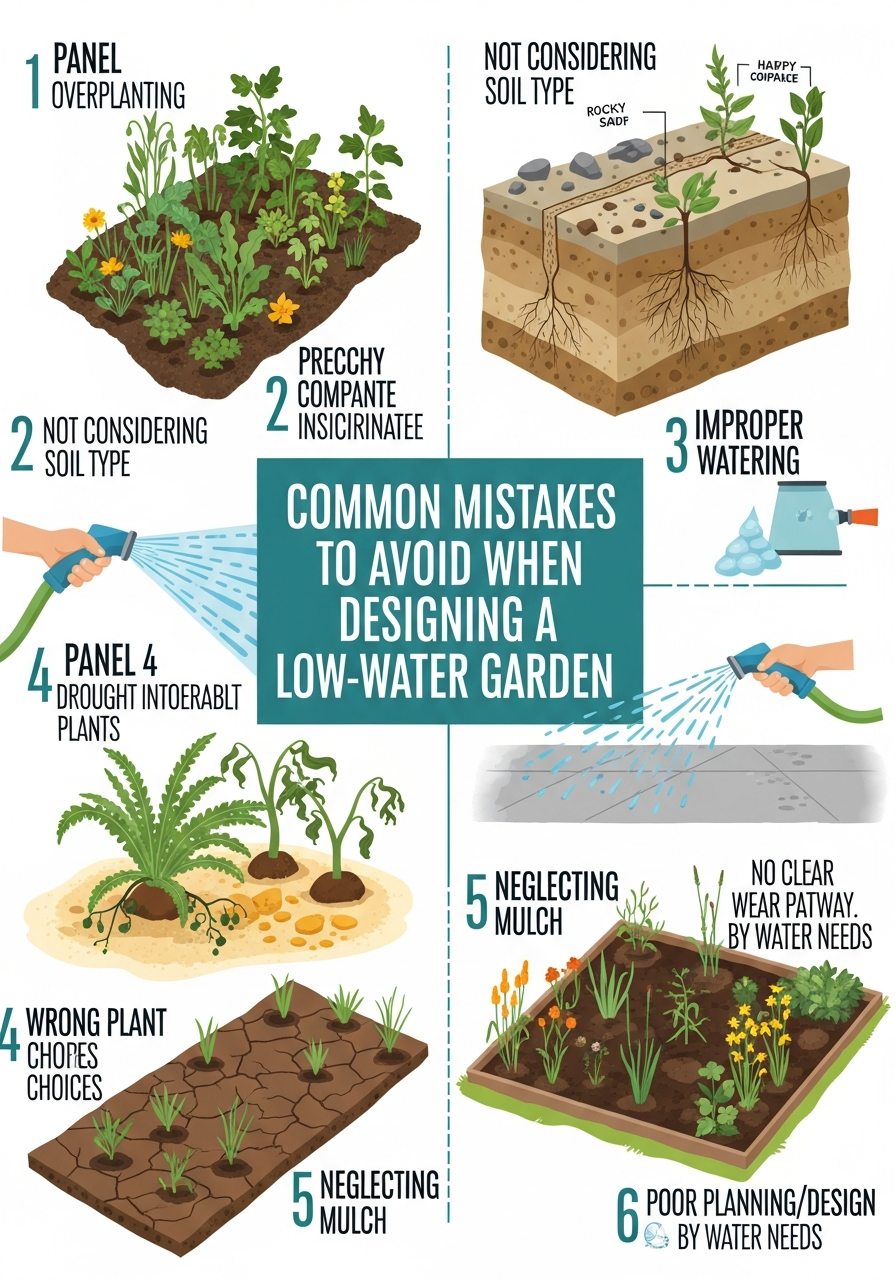
Common Mistakes to Avoid When Designing a Low-Water Garden
Designing a low-water garden is an excellent way to conserve resources, reduce maintenance, and create a resilient landscape. However, many homeowners make common mistakes that can lead to higher water use, struggling plants, and unnecessary expenses. By understanding what not to do, you can design a low-water garden that thrives for years to come. Mistake …